Metal Markets

Gold falls 1.43 percent to $4,124 as strong U.S. dollar and Fed rate hike bets weigh silver drops 4.69 percent to $62


Spot gold prices fell 1.43 percent to $4,124.6 per ounce on Tuesday, while U.S. gold futures for August delivery dropped 1.69 percent to $4,131.65, as a firm U.S. dollar and rising expectations of Federal Reserve rate hikes outweighed geopolitical developments including U.S.-Iran peace discussions. Despite ongoing uncertainty in the Middle East, markets are increasingly driven by monetary policy signals and dollar strength, with traders now pricing an 88 percent chance of a December rate hike, up from 61 percent before the Fed’s latest meeting.
Higher interest rates typically reduce demand for gold because investors can earn stronger returns from interest-bearing assets. This shift in expectations has become a central factor influencing precious metals trading in recent sessions.
The move reflects broad-based pressure across precious metals, with gold reacting to both a stronger dollar and shifting expectations around monetary policy.
The U.S. dollar remained firm near a one-year high, reducing gold’s appeal for international buyers by making it more expensive in other currencies.
Currency markets have been supported by expectations that the Federal Reserve may maintain a tighter policy stance this year, reinforcing demand for dollar-denominated assets and placing additional pressure on non-yielding commodities such as gold.
In the UAE, local gold rates mirrored the global trend, with 24-carat gold falling AED9.75 to AED496.25 per gram and 22-carat gold declining AED9.00 to AED459.50. Meanwhile, 21-carat and 18-carat gold lost AED8.75 and AED7.25 to trade at AED440.50 and AED377.75 respectively, while 14-carat gold slipped AED5.75 to AED294.50 per gram. Trading activity was also lighter than usual as financial markets in mainland China and Hong Kong remained closed for the Dragon Boat Festival holiday.
Geopolitical tensions ease
Geopolitical developments have added complexity to the market narrative. The United States waived sanctions on Iran for 60 days following early peace discussions, while officials signalled a temporary easing of tensions in parts of the Middle East.
U.S. Vice President JD Vance said talks with Iranian officials in Switzerland had laid groundwork for a potential peace deal, although Iran denied any formal discussions regarding its nuclear programme.
Despite these developments, markets appear more responsive to monetary policy signals than geopolitical easing, with investors prioritising inflation and interest rate trajectories.
PCE data ahead
Chicago Federal Reserve President Austan Goolsbee said policymakers are assessing whether inflation will remain elevated or gradually decline as tariff effects fade and geopolitical conditions stabilise.
Attention is now turning to upcoming U.S. Personal Consumption Expenditures data, the Federal Reserve’s preferred inflation measure, which is expected to provide further clarity on the policy outlook.
Other precious metals also moved lower. Silver dropped 4.69 percent to $62.38 per ounce, platinum fell 2.65 percent to $1,633.15, and palladium declined 2.8 percent to $1,216.00.
Related Articles

Gold prices edge higher to $5,030 as investors wei...
17 Mar, 2026 07:58
Gold prices rise to $5,010 as traders await Fed ra...
18 Mar, 2026 11:47
Spot gold drops over 3 percent to $4,353, its lowe...
23 Mar, 2026 08:35
Silver prices rebound to $69.73 as global markets ...
24 Mar, 2026 08:20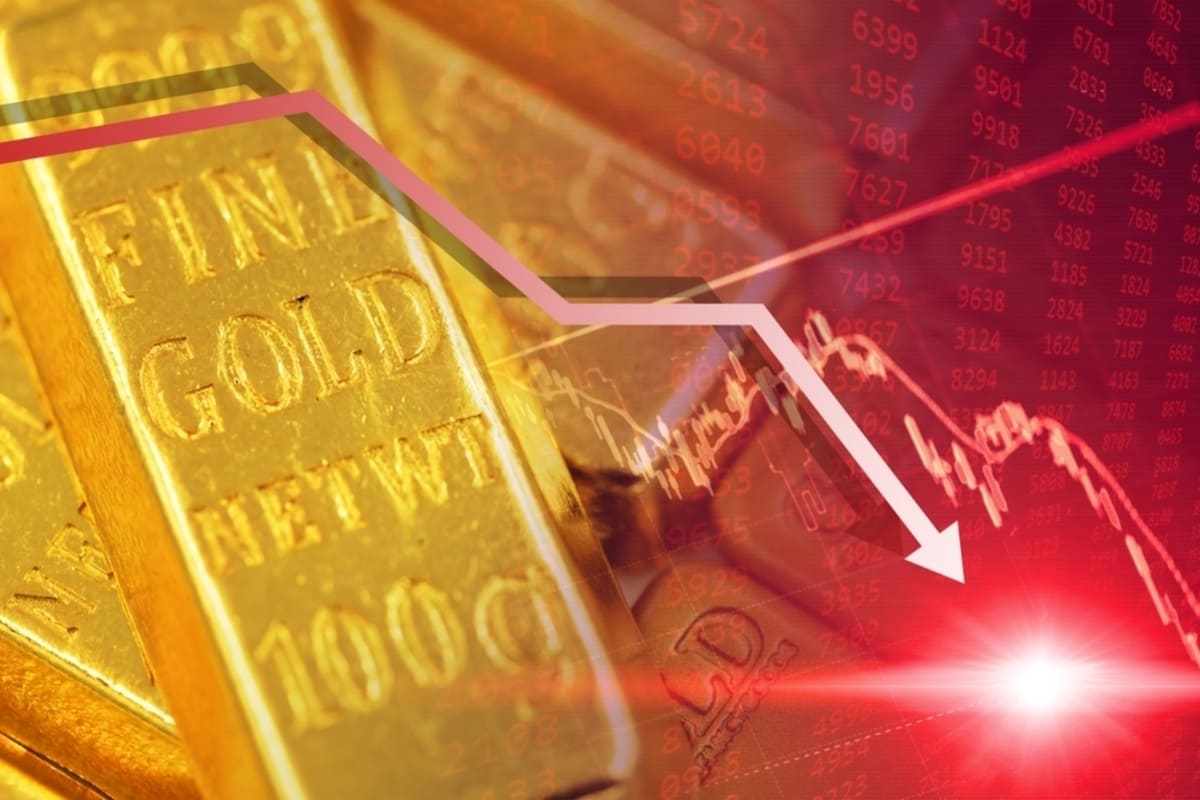
Gold prices extend decline as spot gold drops 0.95...
24 Mar, 2026 08:44
Gold prices surge over 3 percent to $4,558 as weak...
25 Mar, 2026 08:08
Gold prices ease to $4,520.53, silver falls as inv...
26 Mar, 2026 08:33
Gold prices fall to $4,670.2, silver slips as Fed ...
02 Apr, 2026 08:17
UAE gold prices rise to AED563.5 as global markets...
03 Apr, 2026 08:24