Base Metals

Glencore cobalt production slumps 52% under DRC export quota system


By: OrePulse
Glencore's own-sourced cobalt production fell 52% in the first nine months of 2026, the Swiss-based miner said, after it held back material in response to cobalt export quotas introduced by authorities in the Democratic Republic of Congo, which the company's report described as the world's dominant cobalt-producing country.
Glencore produced 13,700 tonnes of own-sourced cobalt between January and September, down from 28,500 tonnes in the same period a year earlier, according to its third-quarter 2026 production report, released Thursday and covering the company's main commodities for the nine months to the end of September. Third-quarter output alone totaled 3,500 tonnes, a 20% decline from the second quarter.
The Democratic Republic of Congo suspended cobalt exports in 2025 after prices slumped to nine-year lows. Authorities later introduced a quota system to replace the suspension, and the DRC is not expected to lift the restrictions before the end of 2027. The quotas govern how much cobalt producers operating in the country may export over that period.
Rather than process all of its cobalt into saleable hydroxide, Glencore has been retaining a portion of material in solution, a step the company said lowers its near-term processing costs. Material held in this form is excluded from its reported production figures, and Glencore has not disclosed the volume involved. Glencore said it anticipates recouping the economic benefit of the cobalt it has held back once export regulations change. Across the industry, companies operating in the country have generally responded to the quotas in a similar way, deferring processing of cobalt rather than converting it for sale.
Glencore said its Kamoto Copper Company and Mutanda operations currently hold sufficient cobalt stocks to meet near-term export allocations under the quota system.
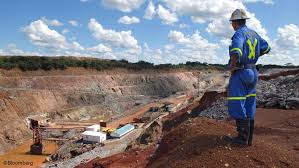
Cobalt output from the company's African Copper division, which covers its Congolese operations, came to 11,600 tonnes over the nine-month period, a year-on-year drop of 56%. Mutanda, the world's largest cobalt mine, accounts for about a fifth of global cobalt output, according to the report.
Copper production performed more strongly over the same period. Own-sourced copper output rose 3% to 598,600 tonnes, up from 583,500 tonnes a year earlier. Stripping out the effect of two portfolio changes — the shutdown of the Mount Isa mine and the divestment of the Kidd operation — copper volumes would have grown 12% year on year.
Glencore held its full-year 2026 copper output guidance at 810,000 to 870,000 tonnes, while signaling that the final tally will likely land toward the lower edge of that band.
Elsewhere, steelmaking coal output fell 13% to 21.5 million tonnes through September, pacing toward the bottom of a 30 million to 32 million tonne full-year target. Energy coal production edged up to 73.9 million tonnes, from 73.5 million tonnes a year earlier, an increase of roughly 0.4 million tonnes. Zinc output is expected to finish near the top of guidance, the company said, without providing a specific figure. Attributable ferrochrome production rose 29% from the second quarter after the Boshoek and Wonderkop smelters, which had been offline, resumed operation.
Glencore said it still expects marketing adjusted earnings before interest and tax to come in above five billion dollars for the full year. Separately, Glencore set a target of lifting annual copper production to 1.6 million tonnes by 2035, roughly double current levels.
Chief Executive Gary Nagle said the company was "pleased to report a strong third quarter production performance," adding that its key assets had largely performed in line with expectations.
BMO Capital Markets analyst Alexander Pearce noted that overall quarterly output fell slightly short of his expectations, while characterizing Glencore's full-year outlook as largely in line with the bank's existing forecasts.
Related Articles
Guinea weighs bauxite export quotas as prices slid...
17 Mar, 2026 07:31
Cobalt shortages driven by Congo curbs seen lastin...
18 Mar, 2026 12:31
Orion to pay final R14.74m for a controlling inter...
19 Mar, 2026 08:39
KoBold Metals targets early-2030s copper output at...
19 Mar, 2026 08:44
Algeria begins construction of Oued Amizour zinc-l...
19 Mar, 2026 11:04
Bahrain’s Alba shuts 19% of aluminum capacity as H...
19 Mar, 2026 11:42
Botswana Minerals to raise £1.15m, makes board cha...
23 Mar, 2026 12:27
Jubilee reports delay in Molefe Phase 1 drilling r...
24 Mar, 2026 13:09
Rio Tinto expects Resolution Copper mine to open b...
25 Mar, 2026 08:48