
Precious Metals

Ghana says big mines may stay foreign-run amid $700m Tarkwa claim


By: OrePulse
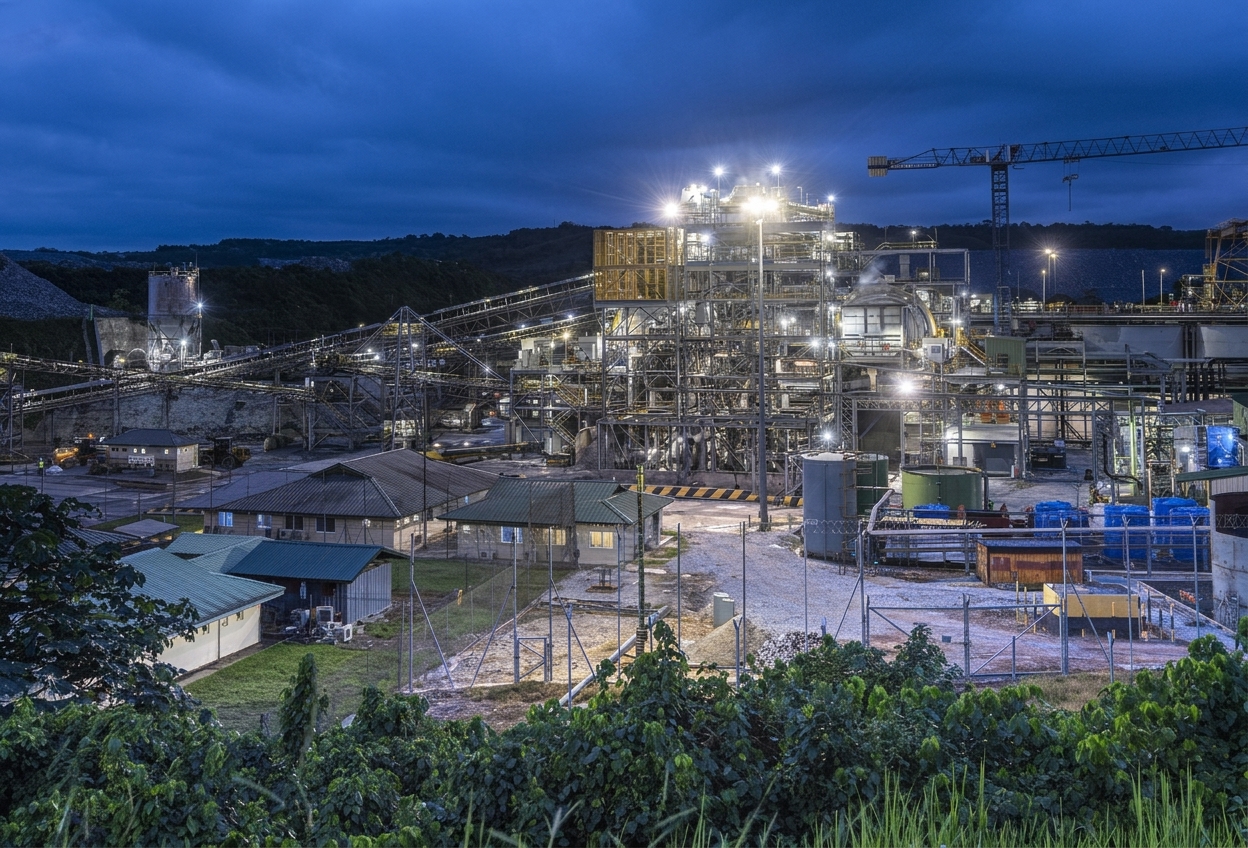
Ghana's government is weighing whether some of its biggest, most durable gold mines are better placed under international management, even as it steps back from automatic lease renewals in favor of case-by-case review. That policy is now playing out over Gold Fields' Tarkwa mine, whose lease runs out in April.
Since President John Mahama returned to office in early 2025, Ghana has moved away from routinely extending mining rights held by foreign investors and toward assessing each lease renewal on its own merits. Emmanuel Armah-Kofi Buah, Ghana's minister for lands and natural resources, said mines with large reserves and many years of productive life remaining might be better suited to international operators. "There are those that can raise money and will take the risk which many indigenous firms cannot take," Buah said.
Buah said the government is not seeking to displace established foreign operators. "It's not a policy of government to go and take a mine from any foreign companies, which have taken years to build," he said. Smaller or shorter-life deposits, he added, are more likely to be set aside for Ghanaian investors: "When there are clear opportunities in the case of marginal fields or something like that, Ghanaians get those opportunities." Buah said the government is also trying to empower Ghanaian companies to take on large-scale mining, while acknowledging that many lack the capital and risk appetite of international firms.
The new approach has already reshaped Gold Fields' footprint in the country. About six months ago, the company was ordered to return its Damang mine to the state, which afterward held a tender open only to Ghanaian firms. A company linked to the president's brother, Ibrahim Mahama, emerged as the winner of that process.
Gold Fields has filed a 20-year mine plan with Ghanaian authorities as it works to keep Tarkwa, which the company ranks as its second-biggest producing asset, operating beyond the April deadline. Buah said he expects the legislation to clear parliament before the end of the year. Under consideration are changes that would cut the length of future leases, expand the government's latitude to decide on renewals case by case, and do away with special agreements that had fixed tax and royalty terms for individual mines.
Gold Fields faces a separate legal dispute tied to the same family. Engineers and Planners Co., a contractor linked to the president's brother that holds a mining-services contract at Tarkwa and previously held one at Damang, has filed an arbitration claim against Gold Fields seeking more than $700 million. The claim alleges Gold Fields underpaid the contractor for work at both mines. Gold Fields rejects the claims.
Gold Fields has called Tarkwa's future "a material uncertainty" for investors. Chief Executive Officer Mike Fraser said in August that the company "will do whatever is required, including under law, to protect the rights that we have available to our shareholders."
Not every foreign-held mine in Ghana has faced the same level of scrutiny. Separately, lawmakers have already signed off on extended leases for two other foreign-run operations, held by Perseus Mining and Chifeng Jilong Gold Mining, suggesting the government's case-by-case review does not automatically disfavor international ownership.
The legislation under discussion would mark a broader change to how Ghana handles mining rights generally, departing from the fixed, long-dated terms that have historically applied once a lease is granted. Under the current system, agreements have in some cases locked in fiscal terms for individual mines for years at a time; the revised law is intended to give the state more flexibility to revisit those terms as leases come up for renewal.
Gold Fields is one of Ghana's largest gold producers, and Tarkwa's scale and remaining mine life have made it a central test case for the government's new approach. How the government ultimately resolves Tarkwa's lease, alongside the unresolved arbitration claim brought by Engineers and Planners Co., is likely to shape how other multinational miners weigh the risks of operating in Ghana once the revised mining law takes effect.
Related Articles

African Rainbow Minerals half-year profit up 10% o...
06 Mar, 2026 10:41
African Gold (ASX:A1G) Dilutes Voting Power as Exp...
16 Mar, 2026 12:35
Perseus sells Sudan gold prospect as civil war rag...
16 Mar, 2026 13:09
Gold’s Middle East disruption confined to region, ...
17 Mar, 2026 07:18
Silver rises Rs 5,000, gold up Rs 1,300 as Middle ...
17 Mar, 2026 07:53
Trafigura, Venezuelan mining firm sign deal for up...
18 Mar, 2026 07:05
Lucara recovers 36.92 ct blue diamond from Karowe...
18 Mar, 2026 08:28
Many more ‘great’ gold opportunities in South Afri...
18 Mar, 2026 11:04
Ghana Moves to Localise $1 Billion Damang Mine Rev...
18 Mar, 2026 12:25