
Mining Other

Egypt cuts mining rents 60%, opens tender for 260 gold blocks


By: OrePulse
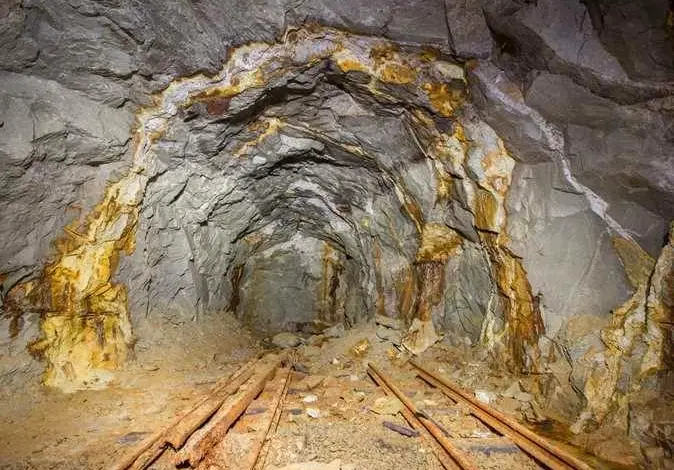
Egypt's Mineral Resources Authority has unveiled a package of reforms intended to streamline mining licensing and expand gold exploration, the authority's chief of mines and quarries said in remarks broadcast Thursday.
Dr. Tarek Khater, who heads the Central Administration for Mines and Quarries at the Mineral Resources Authority, said in an interview on the television program "Misr fi al-Qalb" that the government has introduced a unified mining license allowing a single permit to cover up to five minerals, replacing a system that previously required a separate license for each mineral. Khater cited gold, copper and lead as examples of minerals that could now fall under one license.
Khater said annual rents for mining concessions have been cut by as much as 60%, and that royalties will now be charged on a limited number of minerals rather than across the board. He added that imports of exploration equipment and infrastructure will receive tax and customs exemptions.
According to Khater, licensing, security clearances and environmental approvals that previously took several months, and in some cases up to a year, will now be completed within 30 to 45 days. He said a digital platform for processing applications is about 80% complete. He described the authority's work as organized across four units: company follow-up, licensing and inspection, environmental studies, and agreements and technical cooperation.
The authority has also opened a tender for approximately 260 exploration blocks for gold and associated minerals, with blocks as large as about 175 square kilometers each. Khater said the tender aims to attract large international mining companies that report reserves under internationally recognized standards, which he described as the Australian and Canadian reporting codes.
Khater pointed to Centamin's Sukari mine, Egypt's main producing gold operation, and a company he identified as Ayqad [uncertain: exact corporate identity could not be independently confirmed], as holding combined reserves of about 2 million ounces. He said a separate project, Abu Marawat, is expected to begin production within 1.5 to 2 years, and that roughly 14 companies currently hold exploration licenses in Egypt.
To enforce the new rules, Khater said the authority will carry out daily field inspections and station resident inspectors at production sites, and will calculate royalty payments through a system he referred to by an acronym rendered as "SAB" [uncertain: full name not specified in the broadcast]. He also said a company called Shalatin has been established to formalize licensing for small-scale and artisanal mining operations on plots of 5 to 16 square kilometers.
Separately, Khater said Egypt has banned the export of raw phosphate ore, raw white sand and quartz, requiring that these materials be processed domestically before being sold abroad. He said companies that build processing plants inside Egypt will be given priority in future allocations.
Khater said companies from Canada, the United Kingdom, Turkey and Australia are currently investing in Egypt's mining sector, and that the government's target is to raise mining's contribution to gross domestic product from about 1% to 6%.
Related Articles

Oil prices seesaw as markets weigh IEA reserves re...
11 Mar, 2026 08:40
Commissioning comes closer at Premier African’s Zu...
26 Mar, 2026 09:01
Hamak Strategy puts drilling in place at Akoko...
26 Mar, 2026 09:11
Congo, China deepen mining ties as US pushes rival...
27 Mar, 2026 12:05
Guinea’s Simandou to become largest driver of seab...
01 Apr, 2026 12:37
Record-setting sulphur rally squeezes Indonesia ni...
02 Apr, 2026 09:20
Ventilation, battery tech at forefront of deeper m...
03 Apr, 2026 08:33
U.S. Targets Cameroon’s Critical Minerals, but Fla...
06 Apr, 2026 08:53
Kholo Capital, Tensai back Isambane Mining managem...
07 Apr, 2026 11:22