Energy Markets

EBRD Sees Mediterranean Economies Shrinking 0.7% on Iraq Oil Collapse


By: OrePulse
The European Bank for Reconstruction and Development said on September 24 that it now expects economies across the southern and eastern Mediterranean to contract 0.7% in 2026, a sharp downgrade driven largely by a collapse in Iraq's oil exports following the closure of the Strait of Hormuz.
The bank, which groups the region under the acronym SEMED, had projected 2.5% growth for the area as recently as June. Its newly published Regional Economic Prospects report puts 2027 growth at 7.1%, a bounce-back the lender attributes mainly to Iraq and Lebanon, the two economies driving the downward revision.
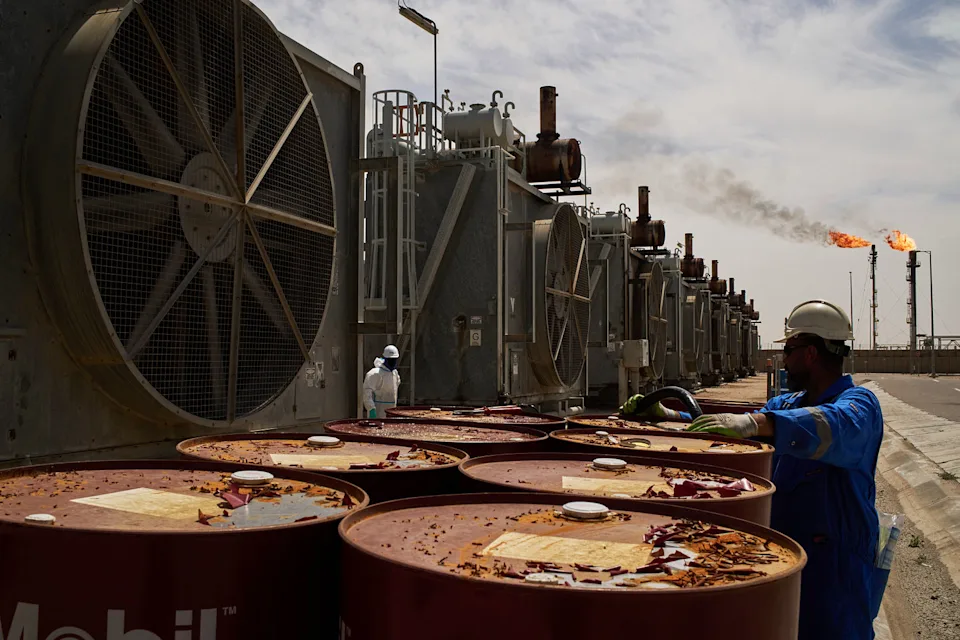
Iraq's economy is projected to shrink 12.0% this year, compared with a 1.5% contraction forecast just three months earlier. Baghdad shut down its Rumaila oilfield, one of the country's largest, in March after the Hormuz closure cut off its usual export routes. The government has since shifted flows onto the Kirkuk-Ceyhan pipeline through Turkey. Still, the bank said those substitute channels are handling barely a quarter of the volume Iraq typically ships out.
The lost revenue has strained government finances and foreign-currency reserves in an economy still heavily reliant on hydrocarbons. A 14.0% rebound is penciled in for Iraq in 2027, but only if oil exports return to pre-closure levels. Stripped of Iraq's decline, growth across the wider region is put at 3.9% for 2026 and 4.3% for 2027, indicating that the regional downturn is concentrated almost entirely in the two conflict-affected economies rather than reflecting a broader slowdown.
Lebanon is the other major drag on the regional outlook. Its economy is now expected to contract 5.0% in 2026, far worse than the 2.0% contraction the EBRD had penciled in during June, after fighting with Israel resumed in the first half of the year. Consumer price inflation roughly doubled to about 20% year on year by April before slowing to 15.7% in July. Fresh damage, concentrated in the south of the country, adds to an existing $11 billion reconstruction bill left by earlier rounds of conflict. A return to 4.0% growth in 2027, the bank said, hinges on a durable ceasefire holding.
Elsewhere in the region, the picture is more positive. Egypt is forecast to expand 4.6% this year and 5.0% in 2027, supported by strong remittance inflows and tourism receipts in the first quarter; its foreign reserves reached a record after authorities completed the seventh review of the country's IMF program in July. The EBRD nonetheless flagged that Egypt still needs to raise financing equivalent to roughly half of GDP for the 2027 fiscal year, a reminder that the improved growth outlook has not eliminated the country's underlying fiscal pressures.
Morocco is projected to lead the region with 4.8% growth in 2026 as agricultural output recovers from several years of drought. Jordan's economy is expected to slow to 2.5% growth, though its reserve cushion still covers more than eight months of imports. In Tunisia, forecast growth of 2.4% comes even as the cost of energy imports climbed 31.6% between January and July.
The EBRD's membership spans 77 countries plus the European Union and the European Investment Bank, and its investment portfolio covers 40 economies across three continents.
The downgrade underscores how the closure of the Strait of Hormuz has rippled well beyond the Gulf, hitting an economy — Iraq — that depends on oil sales for the bulk of its government revenue and foreign-exchange earnings. With alternative pipeline capacity still covering only a fraction of lost volumes, the bank's 2027 rebound projections for both Iraq and the broader region remain contingent on exports normalizing and, in Lebanon's case, on hostilities not resuming.
Related Articles

Oil prices jump over 3 percent to $84.41 as supply...
05 Mar, 2026 07:30
Oil prices fall 1 percent to $84.56 as U.S. grants...
06 Mar, 2026 07:40
Oil prices drop to $86.98 on report of IEA plannin...
11 Mar, 2026 07:16
Oil prices surge back above $100 as Mideast tensio...
12 Mar, 2026 08:07
Oil gains 9 percent this week as prices remain abo...
13 Mar, 2026 07:50
Oil prices surge to $104.87 as Trump seeks naval c...
16 Mar, 2026 07:48
Oil prices recoup losses, surge to $102.85 as supp...
17 Mar, 2026 08:01
Oil prices contract by 2.21 percent to $101.13 fol...
18 Mar, 2026 11:34
Oil prices rise to $107.34 as investors balance ge...
23 Mar, 2026 08:30