
Precious Metals

Can gold remain the winning bet after sliding from its $5,595 peak?



For generations, gold has occupied a rare place in investors’ minds—not merely as a commodity, but as insurance against almost everything that can go wrong. Wars, inflation, excessive government borrowing and distrust in paper currencies have repeatedly sent capital toward the precious metal when confidence elsewhere begins to fracture.
Yet gold’s enduring appeal does not make it a one-way bet. Its dramatic journey in 2026 is a reminder that even the world’s most celebrated safe haven can be caught between competing market forces. The real question is no longer whether gold can protect wealth, but whether investors are paying the right price for that protection.
A powerful ascent
Gold has shone increasingly brightly in recent years, supported by sustained central-bank demand and growing investor interest in portfolio diversification. Central banks purchased 863 metric tons in 2025, according to the World Gold Council’s full-year demand report.
That total was lower than the exceptional buying recorded during the previous three years, when annual purchases exceeded 1,000 tons. It nevertheless remained considerably above the 473-ton annual average recorded between 2010 and 2021, providing the market with a powerful structural foundation.
Central-bank buying matters because it is generally driven by long-term considerations rather than short-lived market sentiment. Monetary authorities use gold to diversify their reserves, reduce exposure to individual currencies and strengthen protection against financial or geopolitical shocks. Their continued presence therefore reinforces gold’s role as a strategic reserve asset.
The World Gold Council’s 2025 survey showed that 95 percent of participating reserve managers expected official global gold holdings to increase over the following 12 months. A record 43 percent said their own institutions could raise their reserves, compared with 29 percent in the previous survey.
Those intentions do not guarantee that purchases will continue at the same pace. Central banks are not insensitive to price, and the extraordinary rally encouraged more cautious buying during parts of 2025. But the strategic reasons for holding gold remained firmly in place.
Records invite risk
The rally ultimately carried spot gold to an intraday record of $5,595.47 per ounce on January 29, 2026. The benchmark LBMA Gold Price reached a separate record of $5,405 on the same day, according to the World Gold Council’s Gold Mid-Year Outlook.
Such an ascent inevitably attracted investors seeking both safety and returns, strengthening the belief that gold remained the market’s winning bet. During 2025 alone, gold recorded 53 new all-time highs, while its annual average price increased 44 percent to $3,431.50 per ounce.
Total gold demand, including over-the-counter transactions, surpassed 5,000 tons for the first time in 2025. Investment demand reached 2,175 tons, supported by 801 tons of inflows into physically backed gold exchange-traded funds. Bar and coin purchases climbed to a 12-year high of 1,374 tons.
But record prices also increased the potential for a sharp correction, particularly for investors entering the market after much of the advance had already occurred. Gold subsequently fell toward $4,000 and briefly moved below that level in late June.
Its 30-day realized volatility rose above 50 percent during the first half before retreating below 30 percent. Even after that decline, volatility remained higher than its 20-year average of approximately 17 percent.
That distinction is crucial. Gold can remain attractive as a long-term portfolio diversifier even when its short-term price becomes vulnerable. A strategic allocation is fundamentally different from buying at elevated levels in anticipation of immediate gains. Gold may offer protection, but it does not eliminate timing risk—and the higher the market climbs, the more important that difference becomes.
Gold investment outlook
War changes everything
The opening half of 2026 exposed a striking contradiction in gold’s relationship with geopolitical risk. After touching its record high, the metal retreated as the conflict involving the United States and Iran disrupted energy markets, pushed oil prices higher and revived inflationary concerns.
The same turmoil that might normally strengthen demand for a safe haven began working against gold through another channel.
Higher oil and natural gas prices can spread across an economy by increasing transportation, manufacturing and household costs. If the shock keeps inflation elevated, central banks may be forced to maintain higher interest rates or tighten monetary policy further.
That prospect is challenging for gold because the metal does not pay interest. When government bonds and other relatively secure assets offer stronger yields, investors sacrifice more potential income by holding bullion. This opportunity cost can weigh on demand even when geopolitical uncertainty remains elevated.
The World Gold Council identified risk and uncertainty, foreign-exchange movements and market momentum as important forces behind gold’s volatile first-half performance. Momentum alone accounted for 24 percent of the metal’s price variability, reflecting the influence of investor positioning, trend-following activity, portfolio rebalancing and profit-taking.
Risk and uncertainty contributed 17 percent, while foreign-exchange movements accounted for 14 percent. Interest rates contributed a smaller 3 percent directly, although their wider influence extended through currencies and investor expectations.
This is the paradox at the heart of the market. War can initially lift gold by driving investors away from risk, but an energy shock can later weaken it by increasing inflation and keeping borrowing costs high. Gold responds not only to fear itself, but also to how central banks and financial markets interpret the economic consequences of that fear.
Three possible paths
The World Gold Council’s mid-year assessment suggested that gold was broadly aligned with a macroeconomic environment characterized by moderate growth, cooling but still elevated inflation and expectations of limited additional monetary tightening.
If those conditions remain largely unchanged, the council said gold could trade within a range of approximately 5 percent above or below $4,100 during the second half of 2026.
A renewed upward move would require a clearer catalyst. A worsening economic outlook, another geopolitical shock, lower interest-rate expectations or stronger long-term investor participation could push gold toward $4,500. A powerful combination of those signals could potentially carry it sustainably toward $5,000 again.
Under the World Gold Council’s hypothetical uptrend scenario, gold could gain between 5 percent and 20 percent. Its macro-consensus scenario implies movement between a 5 percent decline and a 5 percent increase.
The bearish price-consolidation scenario would produce a decline of between 5 percent and 15 percent. Stronger economic growth, rising bond yields, a firmer U.S. dollar and calmer markets could encourage investors to reduce defensive allocations and return to equities and other risk assets.
The council nevertheless suggested that bargain hunting from consumers, investors and central banks could limit the downside following a substantial correction. Gold has already moved considerably below its January record, potentially making the metal more attractive to buyers who considered its earlier valuation excessive.
Historical experience still calls for caution. Since 1971, gold has experienced eight episodes in which prices fell more than 20 percent after reaching a record. The average decline during those episodes was 36 percent, while the median was 29 percent. Safe-haven status has never meant immunity from deep drawdowns.
The debt argument
Despite shorter-term pressure, gold’s importance as a portfolio-diversification tool continues to grow as government debt expands, particularly across advanced economies.
The International Monetary Fund’s April 2026 Fiscal Monitor projected Japan’s gross government debt at 204.4 percent of gross domestic product in 2026. France’s ratio was estimated at 118.4 percent, Canada’s at 110.7 percent and the United Kingdom’s at 103.6 percent.
Different statistical presentations produce different ratios for the United States. The IMF’s principal internationally comparable measure projected gross general-government debt of 125.8 percent of GDP, while another consolidated measure in its fiscal tables placed the ratio at 98.5 percent. Both indicate a substantial and continuing debt burden.
Those ratios do not guarantee an immediate fiscal crisis, nor do they automatically translate into higher gold prices. Governments with deep capital markets, strong institutions and reserve currencies can sustain debt loads that would destabilize less-developed economies.
They do, however, deepen longer-term questions about fiscal sustainability, currency purchasing power and the ability of governments to respond to future shocks without relying on still more borrowing.
Developed-market government debt is expected to reach a record $75.8 trillion by the end of 2026, according to Fitch Ratings. Defense requirements, aging populations, climate-related spending and rising interest costs are adding structural pressure to public finances.
Gold’s attraction often becomes strongest when investors begin questioning the durability of the monetary and fiscal system rather than simply reacting to the latest inflation report. Unlike government bonds or bank deposits, bullion is not another party’s financial liability. It also cannot be created by a central bank in response to political or economic pressure.
That independence helps explain its continuing appeal, but it does not determine what investors should pay for it at any particular moment.
Protection has limits
Recent market behavior supports the case for viewing gold as a strategic holding instead of a simple momentum trade. The World Gold Council expects investor interest and continued central-bank buying to help offset weaker jewelry consumption, which declined 18 percent by volume in 2025 as record prices discouraged buyers.
The total value of jewelry demand still rose 18 percent to a record $172 billion, demonstrating that gold retained cultural and financial appeal even as consumers purchased smaller quantities.
Long-term institutional participation could also provide support. Sovereign wealth funds, pension funds, endowments and insurance companies have gradually become more active in the gold market, adding another source of patient capital beyond central banks and retail investors.
But the same market now faces several restraints. High prices can suppress jewelry demand, encourage recycling and motivate investors to lock in profits. Higher bond yields can make income-producing assets more appealing, while a stronger dollar can raise the cost of gold for buyers using other currencies.
Buying gold primarily for speculative purposes can therefore expose investors to significant price changes and losses, even when the metal’s longer-term investment case remains intact. A safe-haven asset is not the same as a risk-free asset.
So, can gold remain the winning bet? Possibly—but not because it will rise without interruption. Its strength lies in diversification, scarcity, liquidity and the confidence it commands during periods of instability.
Gold may still deserve a place in a diversified portfolio, but conviction should never be confused with immunity from volatility. The most important question is not whether gold will always shine. It is whether the protection it offers is worth the price investors are being asked to pay.
Gold investment outlook
A longer perspective
Gold’s modern investment role began taking shape after the collapse of the Bretton Woods system and the end of the dollar’s formal convertibility into gold in 1971. Once prices were allowed to move more freely, bullion became increasingly sensitive to inflation, real interest rates, currencies and investor confidence.
Its performance has never followed a single reliable formula. Gold can rise during inflationary periods, but it can also struggle when central banks respond by lifting real yields. It may gain during wars and financial crises, yet fall when investors need cash or when geopolitical fear strengthens the dollar and government bonds.
The expansion of gold-backed exchange-traded funds has made the market more accessible and more responsive to global investment flows. At the same time, the growing influence of Asian buyers has changed price discovery. The World Gold Council found that many first-half rebounds occurred during Asian trading hours, while several pullbacks were concentrated during U.S. sessions.
Central banks have added another structural layer. They purchased an average of approximately 1,000 tons annually from 2022 through 2025, compared with a longer-term average closer to 600 tons. The World Gold Council estimates that an additional 20 to 30 tons of official demand above the long-term average can, with other conditions unchanged, correspond to an approximately 1 percent increase in gold prices.
None of those relationships is guaranteed. Together, however, they show why gold continues to command attention centuries after it became a store of wealth. Its price may be volatile, but the reasons investors turn to it have proved remarkably persistent.
Related Articles

China’s ‘encouraging’ hydrogen progress witnessed ...
03 Mar, 2026 07:55
Lucara posts lower 2025 revenue, says additional f...
04 Mar, 2026 07:48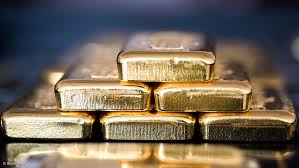
Gold bulls say broader rally is intact despite inv...
04 Mar, 2026 08:00
WorldVest Launches Gold Finance Africa, Building a...
04 Mar, 2026 10:44
Gold and silver rallies likely on pause despite ne...
04 Mar, 2026 11:49
Gold prices climb over 1 percent to $5,164 as Midd...
04 Mar, 2026 11:59
‘Extremely robust’ platinum investment demand expe...
04 Mar, 2026 13:08
Trigon Metals Launches Silver Exploration Drive in...
05 Mar, 2026 08:00
The Ekapa Mine liquidation – A tragedy compounded...
05 Mar, 2026 08:05