Base Metals

Bikita Minerals to pass $1bn in Zimbabwe lithium processing by 2027


By: OrePulse
Bikita Minerals, the Zimbabwean lithium producer owned by China's Sinomine Resource Group, says its investment in local lithium processing is set to exceed $1 billion by 2027, as the company builds out beneficiation capacity rather than exporting raw ore.
The company's assistant general manager, Thomas Mufumi, said Bikita Minerals has already put more than $380 million into completed beneficiation projects. "We have invested more than US$380 million in beneficiation projects," Mufumi said.
The centerpiece of the next phase is a $400 million lithium sulfate plant, which the company expects to complete in the second quarter of 2027. The plant is designed to produce 100,000 tonnes of lithium sulfate a year once operational.
Alongside the new plant, Bikita Minerals is expanding one of its spodumene processing circuits, raising its ore-handling capacity from 2 million tonnes a year to 3.3 million tonnes a year. The company is also investing further in tantalum extraction, broadening its mineral processing beyond lithium, though no cost or timeline was given for the tantalum work.
Zimbabwe has been encouraging miners to process more of their output domestically, seeking to retain a greater share of the economic benefits generated by the country's mineral resources through local processing, technology transfer and industrial development, rather than exporting unrefined ore.
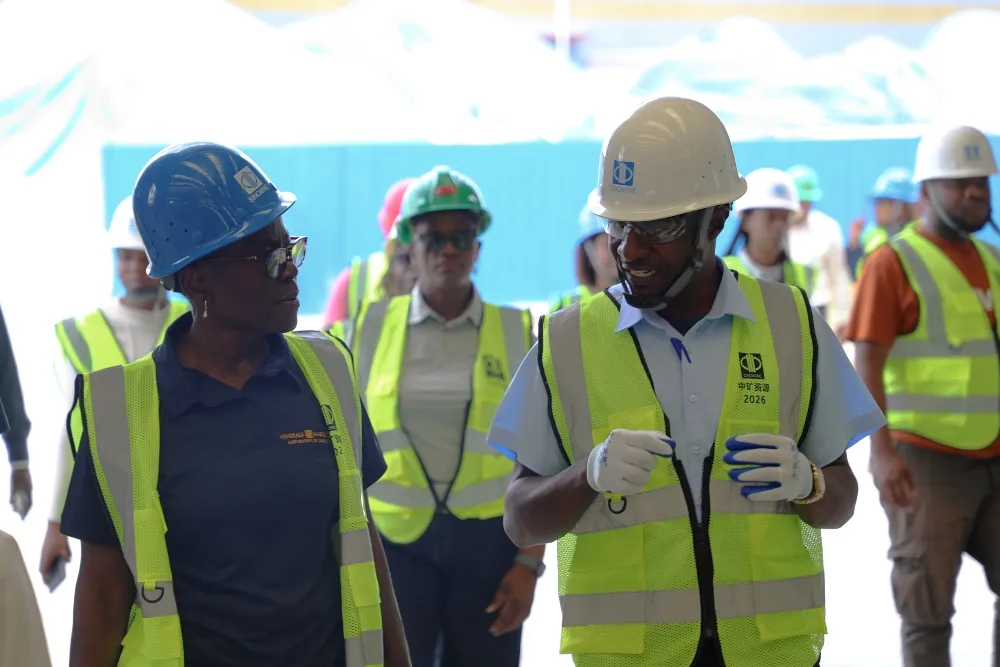
The general manager of the Minerals Marketing Corporation of Zimbabwe, Dr. Nomusa Jane Moyo, said beneficiation can turn mining into "a broader driver of economic growth." She said the push toward processing is "about increasing mineral revenue, creating employment, and transferring technology into Zimbabwe," and that it could also create opportunities for local suppliers, technical skills development and infrastructure investment.
Mufumi said lithium prices remain volatile and demand uncertain, and that the industry faces significant working capital requirements. "Lithium prices are volatile, demand is uncertain, and the working capital requirements are significant," he said. Citing those conditions, he asked the government to review the tax obligations and allowable deductions applied to lithium producers. He did not specify which taxes or deductions the company wants reviewed, and there has been no public government response to the request so far. [uncertain]
Bikita Minerals employs about 1,400 people directly, a figure that rises to more than 2,000 when contractors are included, according to the company. It also funds community programs in areas surrounding its operations, including rural electrification, schools, clinics and road construction.
Moyo framed the broader goal of Zimbabwe's beneficiation drive in terms of building domestic industry around the country's mineral wealth. "The opportunity is to ensure that Zimbabwe does not simply export its minerals but builds an industry around them," she said.
No completion date was given for the spodumene circuit expansion beyond the plan to raise capacity to 3.3 million tonnes of ore a year, and current output levels at Bikita Minerals' existing operations were not disclosed. Company officials presented the lithium sulfate plant, the spodumene circuit expansion and the tantalum investment as part of the same beneficiation program, which has already drawn more than $380 million in completed spending and is projected to exceed $1 billion in total by 2027.
Related Articles
Jubilee secures additional high-grade feed, progre...
13 Mar, 2026 10:39
Africa’s Alumina Boom Signals Next Phase in Mining...
16 Mar, 2026 08:06
Guinea weighs bauxite export quotas as prices slid...
17 Mar, 2026 07:31
Cobalt shortages driven by Congo curbs seen lastin...
18 Mar, 2026 12:31
Orion to pay final R14.74m for a controlling inter...
19 Mar, 2026 08:39
KoBold Metals targets early-2030s copper output at...
19 Mar, 2026 08:44
Algeria begins construction of Oued Amizour zinc-l...
19 Mar, 2026 11:04
Bahrain’s Alba shuts 19% of aluminum capacity as H...
19 Mar, 2026 11:42
Botswana Minerals to raise £1.15m, makes board cha...
23 Mar, 2026 12:27