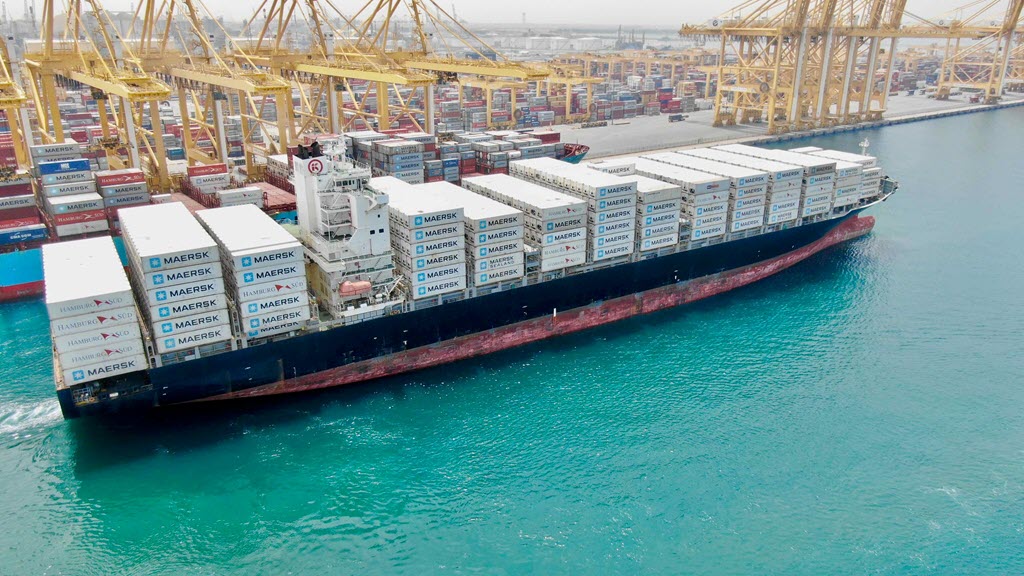
Sea

UK Says Ethiopia’s Drive for Sea Access Is Understandable



The United Kingdom’s Ambassador to Ethiopia, Darren Welch, has expressed broad understanding of Ethiopia’s longstanding aspiration to secure access to seaports, calling for continued peaceful negotiation and regional cooperation to address the landlocked nation’s trade challenges.
The remarks come as discussions over maritime access remain a central strategic theme in Horn of Africa diplomacy.
In a recent interview with Pulse of Africa, Ambassador Welch said the UK, with its deep maritime heritage and reliance on global ports, appreciates why Ethiopia seeks diversified and reliable access to the sea for its growing economy. “We understand the desire to be connected to the world for trade,” he said, adding that such strategic needs should be pursued through dialogue and negotiation, not conflict.
Ethiopia lost its direct coastal access in 1993 after Eritrea’s secession, which turned one of Africa’s largest and fastest-growing economies into the world’s most populous landlocked state.
Since then, Ethiopia has depended heavily on neighbouring Djibouti’s ports for over 95 per cent of its exports and imports, with the Addis Ababa–Djibouti Railway linking the two, facilitating the bulk of cargo movement.
For Ethiopia, whose economy has registered rapid growth and whose population is projected to exceed 150 million, the limitations of relying on a single supply corridor have driven policymakers to explore alternatives that strengthen logistics resilience and long-term competitiveness.
Over the past decade, Addis Ababa has advanced multiple diplomatic tracks to improve maritime access. In 2018, the government enhanced cooperation with Djibouti, deepening infrastructure links and securing port usage rights.
More recently, Ethiopia signed an MoU with the self-declared Republic of Somaliland, granting Addis Ababa access to the Berbera port on the Red Sea and even discussing potential recognition of Somaliland’s sovereignty, a move that stirred regional debate because Mogadishu views Somaliland as part of Somalia.
Diplomacy has also opened alternative avenues: Somalia and Ethiopia have been in talks to grant Addis Ababa commercial access to Somali ports, aimed at diversifying Ethiopia’s export routes while respecting Somalia’s sovereignty.
Despite these moves, challenges persist. Ethiopia’s push for sea access has historically generated concerns among neighbouring coastal states, including Somalia, Djibouti and Egypt, wary that shifts in control or influence along vital maritime corridors could unsettle regional dynamics.
Egypt, for instance, has long insisted that direct sea access should be rooted in regional consensus rather than unilateral claims.
Ambassador Welch’s comments align with ongoing efforts by regional and international partners to encourage constructive engagement and conflict de-escalation.
He echoed Prime Minister Abiy Ahmed’s repeated emphasis that maritime ambitions must be pursued through cooperation, mutual benefit, and respect for international norms.
Welch also noted practical UK engagement in supporting Ethiopian transit connectivity, citing assistance in developing the Port of Berbera corridor to make goods movement more efficient, a testament to how external partners are seeking to bolster commercial linkages without fuelling regional friction.
Analysts say Ethiopia’s desire for diversified sea access is driven by both economic and strategic considerations. Heavy reliance on a single route exposes the country to external bottlenecks and logistics cost volatility, a structural vulnerability for a nation with expanding industrial, agricultural and export sectors.
Beyond economics, there are historical and geopolitical dimensions. Ethiopia once maintained sovereign access to the Red Sea, with ports such as Assab and Massawa under its control before Eritrean independence.
This historical memory, combined with contemporary development imperatives, sustains political support for new, peaceful arrangements.
As Ethiopia continues to engage with its neighbours and international partners, Ambassador Welch’s message reinforces a core diplomatic line: solving the maritime access puzzle must prioritize peace and partnership.
In a region where geopolitical concerns and economic ambitions intersect, the commitment to negotiation may be the most sustainable route to shared prosperity.
Related Articles

Transport & Logistics in Action – Connecting the M...
22 Oct, 2025 08:40
Appeal made for cargo harmonization across the SSA...
22 Oct, 2025 08:46
4 deals signed between Turkiye, Kuwait...
22 Oct, 2025 13:31
Beit Logistics invests $10.50mln to develop Safaga...
23 Oct, 2025 12:18
Khalifa Port rises to 39th position in Lloyd’s Lis...
23 Oct, 2025 12:24
ASCELA awarded Africa Logistics Zone Development P...
23 Oct, 2025 12:49
FG begins procurement for port modernization proje...
23 Oct, 2025 12:56
NZF delay extends unlevel playing field for EU por...
27 Oct, 2025 09:30
DP World Launches $85 Million Logistics Hub in Egy...
27 Oct, 2025 10:48