Mining Other

Tsodilo continues research collaboration with Botswana university


In 2024, the department’s Dr RVS Prasad and Thapelo Shomana were awarded a research grant to continue their research in exploring the high value use of Botswana iron-ore, limestone, dolomite and coals.
The grant was awarded by Botswana Digital and Innovation Hub through Botswana Innovation Fund.
This research project is aimed at applying a novel metallurgical coke blend in pig-iron-making, by using it in an experimental blast furnace by reducing iron-ores that are available in Botswana.
Additionally, fluxing agents such as limestone and dolomite would be used in this research project, and sourced locally, to explore the technical feasibility to base this process on local resources.
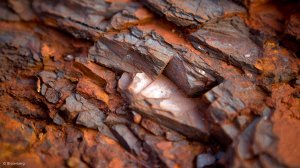
Tsodilo provided the BIUST with 18 m of core extracted at XIF, containing an average iron magnetite content of 45%, for testing.
The ore will be extensively characterised to aid in furnace design, furnace operations and possible blending opportunities.
Further to this, bulk sampling will follow for 2 t of each target sample.
An oven and experimental blast furnace will be designed and built at the BIUST to produce metallurgical coke and pig iron, respectively using these bulk samples as inputs.
Moreover, product optimisation will follow by systematically changing the operation parameters and continuously testing the product quality.
The project is expected to expand Botswana’s knowledge value with the use of specified natural resources that are of high abundance in the country, especially coal and iron-ore.
The knowledge obtained will advise resource owners on the proven technical possibilities to take the next step in the production of final products that will increase the country’s export value to reduce the import bill, Tsodilo points outs.
The study’s authors believe “that Botswana’s true sustainable wealth rests in its ability to transform its natural resources into high-value finished products that can be competitively exported, thereby securing a healthy trade balance. The primary product of the target in this project is pig iron, from which steel will be produced, using a basic oxygen furnace or electric arc furnace (EAF).
“Further, the list of final products from steel billets is endless, varying from household, construction, mining, and engineering products”.
Tsodilo highlights the shift that is under way in the steel industry, with steel producers under pressure to reduce their carbon footprint and produce steel with lower carbon emissions.
Climate change issues globally and smog-lowering-related steel mill curbs on sintering and coal use in China, in particular, have focused investors towards projects with higher-grade iron content, driving the change that is occurring in the type of iron-ore consumed by steel mills from lower-grade energy-intensive fines that require sintering towards higher-grade ores and steelmaking products such as pellet feed and DRI materials, the company explains.
Tsodilo highlights that direct reduced iron (DRI) to EAF production is growing and has good decarbonisation potential.
“Emission controls and demand for less carbon intensive steel production will become the norm and steel producers’ demands for DRI-quality pellet feed will continue to increase. This shift represents significant opportunities for high-grade magnetite projects like the XIF project,” the company acclaims.
Its metallurgical results show that the XIF magnetite product is expected to be a premium high-grade product containing +67% iron magnetite that will be ideal pellet feed material.
This quality grade will place the XIF in the top 4% to 5% of producers in the world by iron grade.
The collaboration study with the BIUST will identify if the XIF magnetite can be further beneficiated to a pellet feed and upgraded to a DRI pellet or similar product using Botswana coal as the reductant.
Coal produced at the Morupule mine has proven to be a viable substitute for reductants in metalliferous ores processing, hence the confidence that it can be viable in the DRI process, Tsodilo explains.
This DRI product can then be used to produce steel in EAFs in Botswana, the region and international markets.
Related Articles
Endeavour announces transaction in own shares...
10 Sep, 2024 07:27
Ivanhoe Mines Announces MOU with Government of Zam...
10 Sep, 2024 12:24
Feasibility Study on Lumwana Super Pit Expansion E...
12 Sep, 2024 14:21
Endeavour achieves commercial production at BIOX e...
13 Sep, 2024 08:20
Roscan Gold Announces Changes to the Board of Dire...
16 Sep, 2024 10:40
Minerals Council pays tribute to Pravin Gordhan...
16 Sep, 2024 12:17
Notification of an acquisition of beneficial inter...
18 Sep, 2024 08:39
Newmont on track to get at least $2 billion from a...
18 Sep, 2024 10:49
UAE firm plans to invest $500m in Tanzania...
19 Sep, 2024 08:37