
Energy Markets

Top 10 African Countries with the Largest Solar Energy Markets in 2025


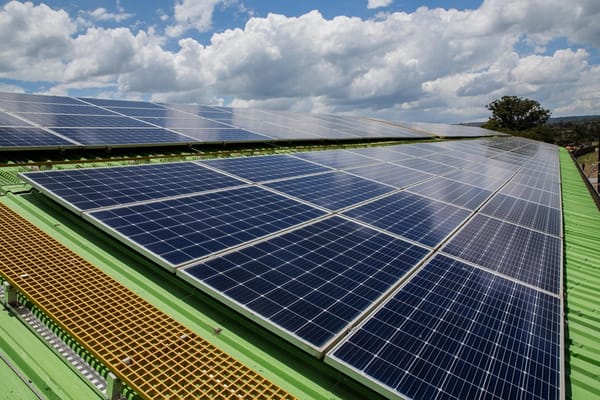
Africa's solar energy capacity surpassed 20 gigawatts (GW) by mid-2025, marking a significant expansion driven by falling costs, infrastructure improvements, and policy support. In 2024 alone, the continent added 2.4–2.5 GW, with South Africa and Egypt accounting for nearly 80% of new installations. While utility-scale projects dominate current construction, distributed rooftop and off-grid systems are expanding rapidly, broadening energy access beyond urban centers.
The top 10 solar markets in Africa reflect diverse growth strategies:
South Africa leads in cumulative capacity, supported by competitive auctions, a mature commercial rooftop sector, and strong private investment.
Egypt maintains a major utility-scale footprint, anchored by the multi‑gigawatt Benban complex and ongoing large‑scale tenders.
Morocco combines utility PV with concentrated solar power and integrated renewable planning, leveraging advanced project pipelines and industrial synergies.
Kenya balances competitive utility tenders with a thriving mini‑grid and commercial rooftop market, driven by industrial demand and last‑mile electrification efforts.
Algeria is advancing multi‑gigawatt national programs and competitive tenders to reduce fossil fuel dependence.
Tunisia has implemented policy reforms that streamline approvals, supporting steady growth in both distributed and utility solar.
Nigeria’s growth is fueled by distributed adoption—commercial rooftops, pay‑as‑you‑go systems, and mini‑grids—amid grid constraints.
Ethiopia is expanding utility‑scale PV alongside rural solar programs, using public‑private partnerships to diversify from hydropower.
Namibia leverages high irradiance and investor‑friendly policies to target mining, industrial, and agricultural solar applications.
Ghana shows robust growth across off‑grid electrification, commercial rooftops, and emerging utility‑scale projects, supported by regulatory adjustments and blended finance.
This solar surge illustrates a broader shift in Africa’s energy landscape, where solar is becoming integral to national energy strategies, enhancing grid resilience, reducing diesel dependence, and empowering communities and industries alike.
Related Articles
Renewable Energy Storage Market 2025 Forecast - La...
21 Oct, 2025 07:12
Solar power mistake in South Africa costs homeowne...
21 Oct, 2025 07:54
An Investor’s Guide to Africa...
21 Oct, 2025 09:47
Doha Strike Shakes Global Energy Assumptions...
22 Oct, 2025 13:01
GCC and Russia Deepening ties in a multipolar Midd...
23 Oct, 2025 11:59
Tesla prepares first steps into Africa with Morocc...
23 Oct, 2025 13:29
Off-Grid Solar Energy Market to grow at 17.42 GW b...
23 Oct, 2025 13:39
Petroleum Institute Urges Early Take Off of Africa...
23 Oct, 2025 13:45
Algeria inks $5.4 billion energy pact with Saudi M...
23 Oct, 2025 14:03