Metal Markets

South Africa’s High-Value Rare Earths Revolution Targets 2026 Market


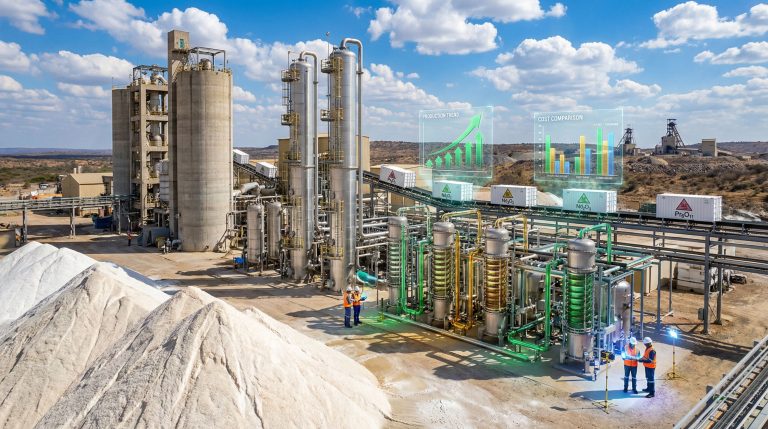
The global rare earth market is undergoing a fundamental transformation driven by innovative extraction methodologies that offer superior cost structures and bypass the capital-intensive processes of conventional mining. South Africa’s emerging rare earth sector, exemplified by projects like Phalaborwa, is demonstrating how waste-stream utilization and ultra-high-grade deposits can deliver competitive advantages, particularly in supplying magnet-grade elements critical for electric vehicles, wind turbines, and advanced electronics.
The Phalaborwa project redefines rare earth economics by processing phosphogypsum—a surface-level waste material from decades of phosphate fertilizer production. Unlike traditional operations that require extensive drilling, blasting, crushing, and milling, this approach accesses a pre-cracked mineral resource, significantly reducing both capital and operating costs. With an estimated 35 million tonnes of phosphogypsum containing approximately 0.4% rare earth elements, the project offers a 17-year operational lifespan and high resource confidence.
A key strategic focus is the production of high-value neodymium and praseodymium (NdPr), which constitute about 30% of the rare earth content at Phalaborwa—a notably higher concentration than in many global deposits. The project employs continuous ion exchange (CIX) technology, developed locally, to efficiently concentrate rare earths with lower energy consumption compared to conventional methods. This technology, supported by partnerships with South Africa’s state-owned metallurgical research organization Mintek, enables on-site refinement into market-ready oxides, capturing greater value within the supply chain.
The operation aligns with growing Western demand for diversified and secure rare earth supplies, especially as electric vehicle production and renewable energy infrastructure expand rapidly. By integrating environmental remediation—systematically reclaiming gypsum for industrial use—the project also addresses sustainability concerns while extracting commercial value.
The model established at Phalaborwa has significant replication potential across global phosphoric acid production facilities, offering a scalable blueprint for converting industrial waste streams into strategic mineral resources. This positions South Africa not only as a future low-cost producer but also as an innovator in sustainable rare earth extraction, capable of influencing global supply dynamics and supporting the transition to green technologies.
Related Articles

Saudi Arabia champions global partnerships to powe...
21 Oct, 2025 06:51
Can Turkey Become a Rare Earth Element Power?...
23 Oct, 2025 13:24
Orion Minerals Set to Develop Secure, Responsible,...
23 Oct, 2025 14:12
Investing in Platinum Stocks...
24 Oct, 2025 06:56
Copper And Aluminum Prices Climb As Supply Worries...
24 Oct, 2025 07:09
Dubai 24-carat gold prices dip AED3.75 as global r...
24 Oct, 2025 12:06
Bauxite sales up but tariffs on Chinese metal ship...
27 Oct, 2025 13:15
Angola bids for majority stake in De Beers, source...
28 Oct, 2025 07:02
Dubai 24-carat gold price today drops AED479; glob...
28 Oct, 2025 08:15