Energy Markets

Oil trades sideways above $60 amid Venezuela turmoil, supply glut prevails


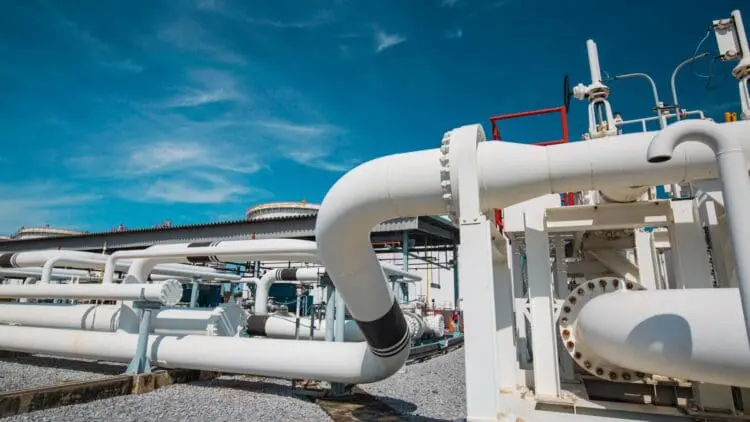
Oil prices remain stable amid Venezuela’s escalating political crisis, driven by abundant global supply that overshadows supply disruption fears. Recent events, including the U.S. capture of President Nicolás Maduro, have failed to spark significant rallies in crude benchmarks. Traders focus on oversupply forecasts rather than short-term Venezuelan risks.
The U.S. captured Venezuelan President Nicolás Maduro over the weekend, injecting fresh uncertainty into the oil-rich nation’s future. President Donald Trump announced plans for American companies to invest billions in revitalizing Venezuela’s crumbling energy infrastructure following the operation. This move builds on long-standing U.S. sanctions imposed since 2015, which have already curtailed Venezuelan exports and production due to nationalization under Hugo Chávez and ongoing mismanagement. Despite holding the world’s largest oil reserves, Venezuela now contributes less than 1 percent to global supplies, hampered by corruption, infrastructure decay, and sanctions.
Brent crude futures slipped 34 cents to $60.41 a barrel in early Asian trade, while West Texas Intermediate (WTI) fell 41 cents to $56.91. Prices fluctuated briefly, with Brent dropping as much as 1.2 percent before recovering near $61 and WTI around $57, showing limited volatility. Weekend retail trading indicated a brief $2 spike in U.S. crude, but analysts predict only modest gains of $1-2 upon market open, citing the market’s capacity to absorb such shocks.
Supply glut dominates
Global oil markets face a projected surplus of 3.8 million barrels per day by 2026, the highest on record, per the International Energy Agency, fueling price pressure. OPEC+ members, led by Saudi Arabia and Russia, ratified plans in a brief video call to maintain steady production through March, avoiding adjustments amid the Venezuelan uncertainty. Non-OPEC growth from the U.S., Brazil, Guyana, and Canada continues to swell inventories, while seasonal demand weakness and prior production increases exacerbate the glut.
Analysts describe short-term risks as “ambiguous but modest,” depending on U.S. sanctions evolution, with Goldman Sachs noting potential brief disruptions but gradual production recovery. Restoring Venezuela’s output could require $10 billion annually in investments and a stable environment, potentially adding hundreds of thousands of barrels within a year if sanctions lift smoothly. However, experts caution against chaotic scenarios like Libya’s, emphasizing years needed for infrastructure repairs. Rystad Energy’s Jorge Leon highlights OPEC+’s caution preserves flexibility in this fragile market.
Related Articles
Renewable Energy Storage Market 2025 Forecast - La...
21 Oct, 2025 07:12
Solar power mistake in South Africa costs homeowne...
21 Oct, 2025 07:54
An Investor’s Guide to Africa...
21 Oct, 2025 09:47
Doha Strike Shakes Global Energy Assumptions...
22 Oct, 2025 13:01
GCC and Russia Deepening ties in a multipolar Midd...
23 Oct, 2025 11:59
Tesla prepares first steps into Africa with Morocc...
23 Oct, 2025 13:29
Off-Grid Solar Energy Market to grow at 17.42 GW b...
23 Oct, 2025 13:39
Petroleum Institute Urges Early Take Off of Africa...
23 Oct, 2025 13:45
Algeria inks $5.4 billion energy pact with Saudi M...
23 Oct, 2025 14:03