Energy Markets

Oil prices rise to $62.43 on supply disruption fears amid geopolitical tensions



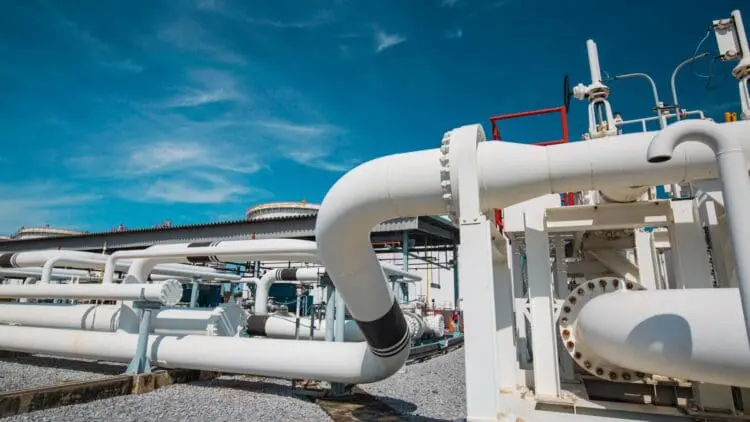
Oil prices extended gains for a second consecutive session on Friday and were on track for a third weekly increase, driven by uncertainty over future supplies from Venezuela and rising concerns that unrest in Iran could disrupt crude production.
As of 5:07 GMT, Brent crude futures climbed 44 cents, or 0.71 percent, to $62.43 a barrel, while U.S. West Texas Intermediate (WTI) rose 43 cents, or 0.74 percent, to $58.19.
Both benchmarks jumped more than 3 percent on Thursday after two days of losses. For the week, Brent is poised to rise 2.7 percent, while WTI is up 1.4 percent.
Geopolitical tensions trigger supply worries
“Markets are watching how the U.S. decision to manage Venezuelan crude will affect supply. President Trump said Venezuela will hand over 30 to 50 million barrels of oil, and the U.S. will oversee PDVSA, Venezuela’s national oil company, and direct exports,” said Vijay Valecha, chief investment officer, Century Financial.
Oil prices have advanced after U.S. President Donald Trump detained Venezuelan President Nicolas Maduro last week and said Washington would take control of the South American nation’s oil industry.
Trump has pressed Venezuela to grant the United States full access to its oil industry, only days after Maduro was captured on Saturday. U.S. officials have said Washington intends to take control of the country’s oil sales and revenues for the foreseeable future.
Read| Stock market today: Japan’s Nikkei retreats as S&P 500, Nasdaq futures ease ahead of key jobs data
Supply worries intensify amid civil unrest in Iran
Supply worries have also intensified amid civil unrest in key Middle Eastern producer Iran and fears that the Russia–Ukraine conflict could expand to include Russian oil exports.
Oil prices jumped after several muted sessions, in part making up for what traders saw as an earlier underpricing of geopolitical risks.
In Iran, a nationwide internet shutdown was reported on Thursday, according to monitoring group NetBlocks, as protests fueled by economic hardship persisted in Tehran and major cities including Mashhad and Isfahan, as well as other parts of the country.
“According to the U.S. EIA, global oil production currently stands at 107.4 million barrels per day. While a one-time release of 30–50 million barrels won’t move the needle on its own for long relative to ongoing daily production, this has raised expectations that more oil will enter an already oversupplied market. As a result, most short-term price moves following the announcement are driven more by geopolitical sentiment and expectations of future production changes than by the physical volume alone,” added Valecha.
He added that concerns about a growing surplus through 2026 continue to limit price rallies. Geopolitical news adds some volatility, but the dominant force remains the supply glut.
“WTI is likely to stay weak in the medium term unless demand picks up or there is a clear move to cut supply,” he said.
Related Articles

Renewable Energy Storage Market 2025 Forecast - La...
21 Oct, 2025 07:12
Solar power mistake in South Africa costs homeowne...
21 Oct, 2025 07:54
An Investor’s Guide to Africa...
21 Oct, 2025 09:47
Doha Strike Shakes Global Energy Assumptions...
22 Oct, 2025 13:01
GCC and Russia Deepening ties in a multipolar Midd...
23 Oct, 2025 11:59
Tesla prepares first steps into Africa with Morocc...
23 Oct, 2025 13:29
Off-Grid Solar Energy Market to grow at 17.42 GW b...
23 Oct, 2025 13:39
Petroleum Institute Urges Early Take Off of Africa...
23 Oct, 2025 13:45
Algeria inks $5.4 billion energy pact with Saudi M...
23 Oct, 2025 14:03