Generation

Kenya seeks to procure 1112 MW from IPP’s


Kenya has embarked on its most sweeping energy-sector reforms in nearly a decade after the National Assembly lifted a long-running freeze on new Power Purchase Agreements (PPAs) and ordered unprecedented transparency measures for Independent Power Producers (IPPs).
The move has paved the way for Kenya Power to resume negotiations to procure 1112 MW of new generation capacity, ending a moratorium that had stalled private investment and complicated national planning.
Lawmakers voted by acclamation on November 12 to end the freeze, initiating a broad overhaul intended to restore public trust in an industry long criticised for opaque ownership structures and costly contracts. In a landmark directive, Parliament ordered the Business Registration Service (BRS) to publish the full list of shareholders and beneficial owners of all IPPs within six months. The requirement aims to eliminate secrecy associated with offshore-registered developers and politically connected stakeholders believed to have contributed to inflated tariffs.
According to the Ministry of Energy and Petroleum, new PPA negotiations with 54 developers are already at various stages, with further engagement expected in the weeks ahead. Kenya Power is prioritising a diverse mix of technologies to strengthen grid stability, reduce electricity imports, and support long-term economic growth.
A significant portion of the anticipated capacity will come from hydropower. Sixty-five hydropower projects, forty of them small hydro facilities, are currently under review. Developers have begun updating draft PPAs and financial models, though commercial and technical terms remain under negotiation.
Wind power is also receiving renewed attention. Talks have resumed on four 50MW wind projects developed by Chania Green, Prunus Energy Systems, Aperture Green, and Sub-Sahara W. Additionally, a 100-MW wind project by Hewani Energy, owned in part by South Africa’s Seriti Green and Envision Energy, is back on the table after earlier discussions were halted by the moratorium.
Competitive auctions and new currency rules
Parliament simultaneously approved major regulatory changes, including a shift to competitive auctions for wind and solar generation—replacing the bilateral negotiation model widely blamed for expensive power deals. The Energy Ministry and the Energy and Petroleum Regulatory Authority (EPRA) have been instructed to embed competitive BESS (Battery Energy Storage System) procurement into the Auction Policy and conduct market-based tariff studies modelled after South Africa and the United States.
All amendments or variations to PPAs will now require mandatory review by the Attorney General to prevent unauthorised or non-transparent negotiations.
MPs also endorsed a new flexible currency framework allowing PPAs to be denominated in Kenyan shillings, foreign currency, or a hybrid of both. The hybrid model will see local costs paid in shillings while debt and financing obligations may remain in hard currency, addressing investor fears over shilling-only contracts without exposing consumers to excessive forex-driven tariff increases.
Industry officials say these combined measures are intended to end the pattern in which Kenya Power paid disproportionate amounts to private generators. In the year to June 2024, the utility paid IPPs KSh 73.7 billion (around 60% of total power purchase costs) even though they supplied just 41% of electricity. Some private geothermal plants were charging as high as KSh 17.28 per kWh, more than double KenGen’s KSh 8.24.
“We have agreed as a committee that any agreement must not go beyond 7 cents per kWh,” said Nakuru East MP David Gikaria, noting that some developers have been billing almost KSh 23 per kWh.
Rising demand drives urgent need for new generation
The reforms come at a time of surging electricity consumption. Energy Principal Secretary Alex Wachira reported that on July 25, 2025, power demand reached a record 2,362 MW, an increase of 250 MW over three years driven by industrial expansion, urbanisation, and growing household usage.
To bridge supply gaps, Kenya is accelerating geothermal development and continuing to import 200 MW from Ethiopia. Simultaneously, President William Ruto’s administration has approved captive and industrial power projects, allowing companies to generate electricity for their own use or for industrial parks without relying solely on Kenya Power.
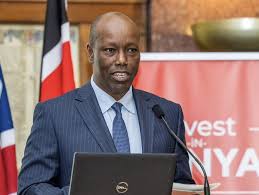
Cabinet Secretary for Investments, Trade and Industry Lee Kinyanjui welcomed the reforms, calling them “a significant shift in Kenya’s energy landscape.” He noted that wholesale electricity prices currently stand at Sh9.04 ($0.07) per kWh and argued that new investments will help stabilise tariffs, expand capacity, and reduce outages.
With Kenya Power now free to sign new PPAs and negotiations advancing across multiple technologies, the focus shifts to execution. The effectiveness of ownership transparency rules, competitive auctions, and stricter regulatory oversight will determine whether the reforms finally deliver affordable power to homes and businesses.
If implemented as designed, energy officials say Kenya could strengthen grid reliability, attract long-term investment, and solidify its position as a regional leader in renewable energy.
Related Articles

Parliament Committee says no need to review three ...
10 Sep, 2024 07:57
Zimbabwe’s Biggest Miners Seek $182 Million for So...
12 Sep, 2024 06:57
GreenGo Energy Expands into Namibia with Strategic...
12 Sep, 2024 07:51
OPEC Fund approves $1.2 billion for development pr...
13 Sep, 2024 08:59
Floating solar starts to gather pace in Africa, as...
13 Sep, 2024 13:18
Prominent South African energy company files for l...
16 Sep, 2024 11:00
Libyan Export Decline and Fed Speculation Propel O...
17 Sep, 2024 08:00
South Sudan says it is ready to restart pumping oi...
17 Sep, 2024 13:23
Interest grows in Africa’s oil and gas hotspot...
18 Sep, 2024 10:42