Energy Markets

Iraq’s oil supply vital for Jordan’s energy security: Official


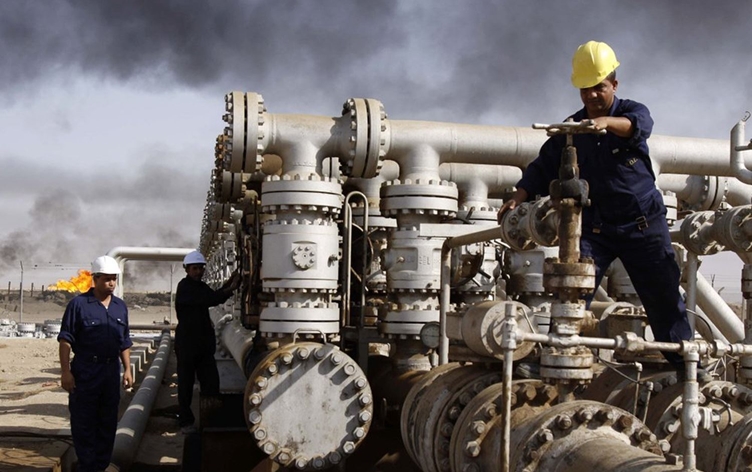
Jordan's Energy and Mineral Resources Ministry stated on Wednesday that Amman imports an average of 300,000 barrels of Iraqi crude oil per month under a 2023 agreement with Baghdad, describing the supply as a key component of the Hashemite Kingdom’s energy security.
According to the ministry’s spokesperson, Linda Abadi, the imports are based on a memorandum of understanding signed with Iraq's Oil Ministry in May 2023. "We import a daily amount of 10,000 barrels of crude from Iraq, and that amount increases or decreases by 15 percent depending on circumstances," Abadi told Rudaw, noting the monthly average is 300,000 barrels.
She stressed the significance of Iraqi oil to Jordan's energy security, noting that it constitutes seven percent of the kingdom's crude oil needs.
Under the MoU, the price per barrel is set based on the monthly Brent crude price, with a deduction of $16 per barrel to account for quality differences and transportation costs, Abadi explained. She added that Jordanian tankers transport half of the monthly shipment.
Information obtained by Rudaw from Iraq’s state-run North Oil Company indicates that approximately 328,000 barrels of crude are exported to Jordan each month, all transported by tanker trucks from Kirkuk province.
Abadi added that Jordan anticipates deeper energy cooperation once the planned Basra-Aqaba pipeline is developed. The project would transfer crude from Iraq’s southern Basra province to the Jordanian port city of Aqaba on the northeastern tip of the Red Sea.
"The new export route will strengthen Jordan's position as a regional logistics gateway," she said. Aqaba is Jordan’s only coastal city.
Regarding electricity, Abadi said the first phase of a power interconnection line between Jordan's Risha Power Station and Iraq’s al-Rutba district entered service in March 2024 with a capacity of 40 megawatts. The interconnection is expected to carry 150-200 MW across a 330-kilometer line and is scheduled to be fully operational by the beginning of 2026.
For his part, Iraq’s Electricity Ministry spokesperson, Ahmed Mousa, told Rudaw that regional power link projects are progressing on several fronts. "The electricity connection project with the Gulf [Arab] states is ongoing, and 95 percent of the work related to Kuwait has been completed," Mousa said, adding that in Basra’s Faw area, the work is 100 percent complete.
"At the beginning of next year, 500 megawatts of electricity will be added through the Gulf states as the first phase. In the second phase, it will rise to 1,000 megawatts, and in the third phase it will reach 2,000 megawatts," he added.
Mousa elaborated that, in addition to Jordan, Iraq is also expanding electricity cooperation with Turkey and Saudi Arabia. "All work on the [Saudi] agreement has been completed, and only the announcement of the start of operations remains," he said.
Iraq currently produces more than 27,000 megawatts of electricity but requires around 54,000 megawatts to meet nationwide 24-hour demand, according to Mousa.
Related Articles

Renewable Energy Storage Market 2025 Forecast - La...
21 Oct, 2025 07:12
Solar power mistake in South Africa costs homeowne...
21 Oct, 2025 07:54
An Investor’s Guide to Africa...
21 Oct, 2025 09:47
Doha Strike Shakes Global Energy Assumptions...
22 Oct, 2025 13:01
GCC and Russia Deepening ties in a multipolar Midd...
23 Oct, 2025 11:59
Tesla prepares first steps into Africa with Morocc...
23 Oct, 2025 13:29
Off-Grid Solar Energy Market to grow at 17.42 GW b...
23 Oct, 2025 13:39
Petroleum Institute Urges Early Take Off of Africa...
23 Oct, 2025 13:45
Algeria inks $5.4 billion energy pact with Saudi M...
23 Oct, 2025 14:03