Logistic Other

Gulf logistics industry prepares for a pivotal year


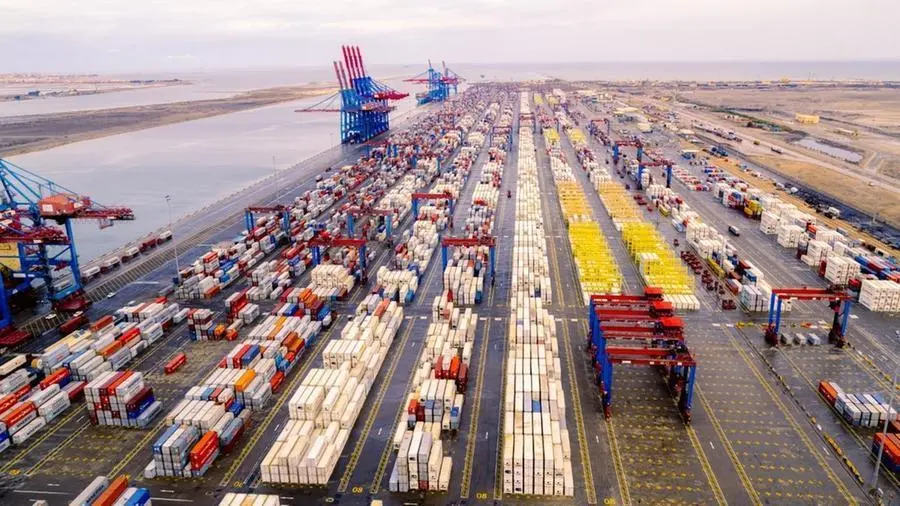
As we look to 2026, the Gulf’s logistics industry will hope that the volatile nature of international trade relations over the past year settles into a more predictable pattern.
The impact of US President Donald Trump’s tariffs has been keenly felt in the air cargo and maritime sectors, buffeted regularly by trade deal-induced peaks and troughs in volumes.
Nevertheless, the upheaval in the global trading system that Trump’s tariffs precipitated may even bring benefits to the Gulf in the coming year.
Many manufacturers and retailers have been forced to diversify their procurement strategies, replacing or adding options to their China-based sourcing model, and this will involve integrating suppliers across South and Southeast Asia, Africa and Southern Europe.
The Gulf ports will play an essential role as hubs for these flows, encouraging supply-chain and logistics companies, including regional behemoths such as DP World and AD Ports, to continue their local and overseas investments.
At the same time, the industry will benefit from government plans to support domestic manufacturing. In particular, a huge investment is planned to build out automotive supply chains in the region, particularly those related to electric vehicles.
For example, a deal between Khalifa Economic Zones Abu Dhabi (Kezad Group) and Titan Lithium will result in bulk shipments of lithium imported from Zimbabwe to produce EV batteries locally.
Downstream, US group Faraday Future Intelligent Electric has invested in a production site at Ras Al Khaimah Economic Zone to assemble its FX Super One electric minivan for regional markets. The move highlights how the Gulf is using its role as a logistics hub, its emergence as a consumer market, and its growing appeal as a “third pole” – a strategic bridge between the US and China.
New landscape
As supply chains fragment under geopolitical pressure, companies will design more flexible, multi-node frameworks, and the Gulf is well positioned to serve as a credible alternative in this new landscape.
With the region’s public accounts still highly dependent on oil and gas revenues, GCC governments will be watching energy prices closely for signs of a recovery. The signals are not good. The International Energy Agency describes the market as one in which “surging supply meets tepid demand”.
Such a scenario is likely to necessitate the postponement of logistics-intensive capital infrastructure projects, some of which are already facing delays and scale reductions. The flipside is that weak oil demand will keep shipping and aviation fuel prices low, stimulating international freight markets.
However, while some large public investment projects are likely to see delays as government hydrocarbon income stagnates, private-sector investment in others will surge.
To meet the high demand for AI compute capacity, the construction of data centres will be a major growth driver, benefiting not only the transport and logistics companies involved in high-value-add construction projects but also those who fit out the facilities and keep them operational with spare parts.
The needs of the tourism industry and the infrastructure required to support the booming immigrant population will also require investment in projects such as transport, housing, water, education and utilities.
Rising household incomes, low unemployment and subdued inflation will keep consumer demand high, boosting imports and supporting the growth of ecommerce.
The Gulf’s supply-chain and logistics industry should also benefit from the improving geopolitical situation in the region.
A stable economic and political environment will allow the Gulf’s governments and private sector to make significant progress in 2026
Shipping lines are beginning to discuss normalising shipping routes through the Suez Canal, which would provide a huge boost to Red Sea and Gulf ports.
Furthermore, the change of regime in Syria has allowed reconstruction of the war-ravaged economy to get underway.
The World Bank has estimated that the costs of rebuilding Syria’s housing, water, sanitation, and transport sectors will amount to $216 billion, and the Gulf will be an important centre for many of the material flows to the country, as well as for the provision of associated logistics services.
If a ceasefire can be maintained in Gaza, there will also be a “peace dividend” in this part of the region, with the estimated cost of recovery exceeding $70 billion, according to the UN. As with Syria, many of the materials for its reconstruction will pass through Gulf ports.
Overall, a stable economic and political environment will allow the Gulf’s governments and private sector to make significant progress in 2026 towards their strategic goals.
The region has shown that it can survive – and prosper – during periods of uncertainty and volatility. The coming year will see the Gulf come of age as it continues its evolution from a functional East-West “crossroads” to a powerhouse of global economic growth.
Related Articles
South African table grape industry and Transnova A...
22 Oct, 2025 08:25
Spiro Raises US$100 Million in Africa’s Largest-Ev...
22 Oct, 2025 09:33
NXN and SAEED unite within Sharjah’s logistics sec...
24 Oct, 2025 07:48
TAHA Unveils HortiMarket A Digital Platform Revolu...
24 Oct, 2025 08:21
Chinese technology takes center stage at Ghana's t...
27 Oct, 2025 09:17
Kenya Airways flies first African route, from Nair...
27 Oct, 2025 09:23
Madbouly inaugurates $85mln DP World's logistics p...
27 Oct, 2025 12:56
Airbus cargo outlook shows 3.3% annual growth and ...
28 Oct, 2025 08:21
Nominations now open for the Logistics Saudi Award...
28 Oct, 2025 08:27