Metal Markets

Gold prices retreat to $5,135 as surging dollar, high yields dampen bullion demand


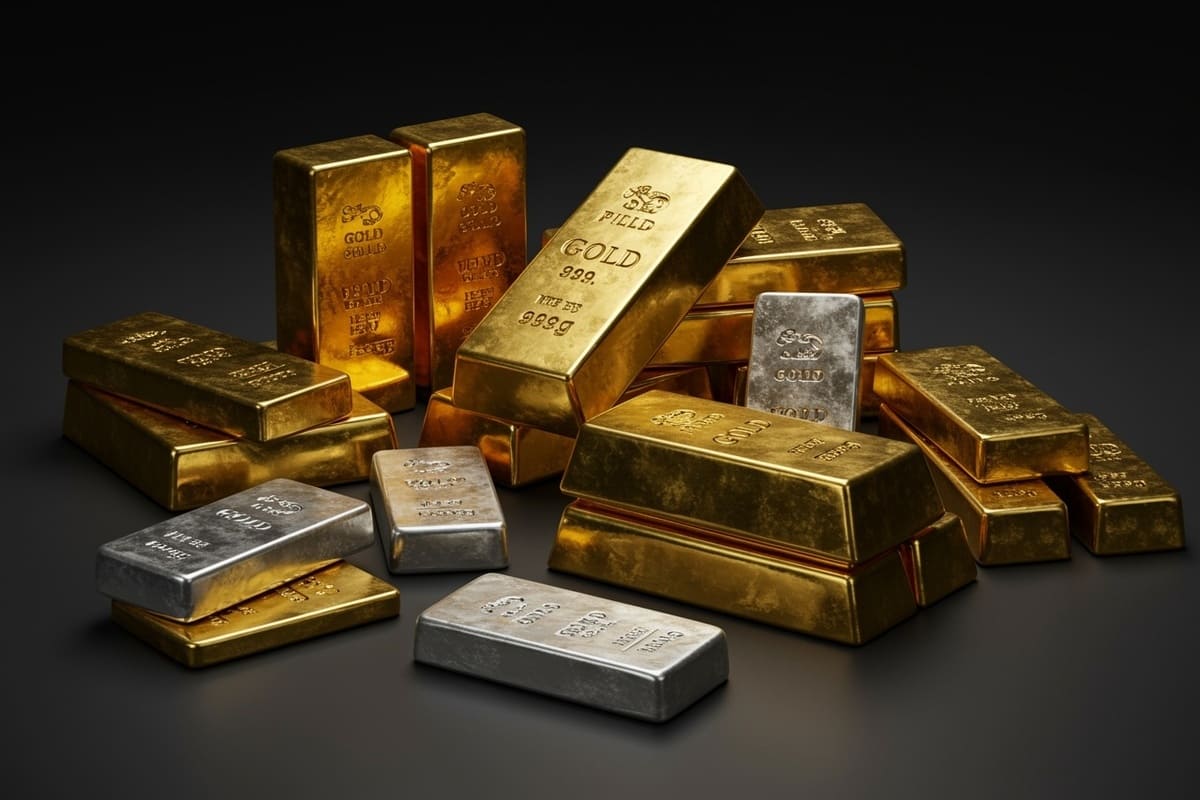
Gold prices retreated on Monday as a surging U.S. dollar made the greenback-priced metal more expensive for international buyers. The pullback was further intensified by soaring energy costs, which heightened inflation fears and led investors to bet that the Federal Reserve will keep interest rates higher for longer.
Spot gold slipped 0.71 percent to trade at $5,135.15 per ounce, recovering slightly after an earlier 2 percent plunge. Meanwhile, U.S. gold futures for April delivery eased by 0.35 percent, settling at $5,140.84.
Gold rates in the UAE saw a broad decline on Monday, with 24-carat gold dropping AED10.00 to reach AED613.25 per gram. Other carats followed suit: 22-carat fell AED9.50 to AED577.25, while 21-carat and 18-carat varieties decreased by AED9.00 and AED7.75, respectively. The lowest purity, 14-carat gold, also eased, sliding AED6.00 to close at AED364.00.
Industrial and precious metals softened alongside gold on Monday. Spot silver slid 0.22 percent to $84.16 per ounce, while platinum and palladium followed suit, dropping 0.70 percent to $2,130.00 and 0.99 percent to $1,595.00, respectively, as the stronger dollar dampened demand across the sector.
The U.S. Dollar Index (DXY) climbed to 99.70, hitting a three-month high and increasing the cost of gold bullion for buyers using other currencies.
U.S. 10-year Treasury yields jumped to a one-month high of 4.21 percent on Monday. This increase in bond returns creates a higher “opportunity cost” for investors, making gold less attractive since the metal pays no interest or dividends.
Crude oil prices soared past the $110-per-barrel threshold on Monday, marking a 20 percent surge as the U.S.-Israeli conflict with Iran deepened. Faced with a potential long-term blockade of the Strait of Hormuz, several key Middle Eastern producers have begun preemptively slashing output.
Financial markets are pricing in a pause from the Federal Reserve at their upcoming March 18 meeting. According to the CME FedWatch Tool, the likelihood of the Fed holding rates steady through June has jumped to over 51 percent—a significant rise from the 43 percent seen just last week, as the energy-driven inflation spike alters the central bank’s path.
Gold typically performs best when interest rates are low because, as a non-yielding asset, it does not provide investors with regular payouts like dividends or interest.
Related Articles

Saudi Arabia champions global partnerships to powe...
21 Oct, 2025 06:51
Can Turkey Become a Rare Earth Element Power?...
23 Oct, 2025 13:24
Orion Minerals Set to Develop Secure, Responsible,...
23 Oct, 2025 14:12
Investing in Platinum Stocks...
24 Oct, 2025 06:56
Copper And Aluminum Prices Climb As Supply Worries...
24 Oct, 2025 07:09
Dubai 24-carat gold prices dip AED3.75 as global r...
24 Oct, 2025 12:06
Bauxite sales up but tariffs on Chinese metal ship...
27 Oct, 2025 13:15
Angola bids for majority stake in De Beers, source...
28 Oct, 2025 07:02
Dubai 24-carat gold price today drops AED479; glob...
28 Oct, 2025 08:15