Logistic Other

Egypt sees 17 percent surge in non-oil exports to $48.567 billion in 2025, 9 percent decrease in trade deficit to $34.447 billion


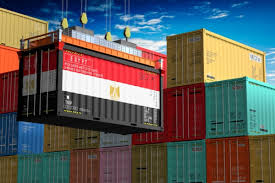
Egypt’s non-oil exports in 2025 reached around $48.567 billion, compared to $41.507 billion in 2024—a growth rate of 17 percent, according to official data.
Engineer Hassan ElKhatib, Egypt’s Minister of Investment and Foreign Trade, reviewed the country’s foreign trade indicators for the year 2025. This came via the latest report submitted by Engineer Essam El-Naggar, Chairman of the General Organization for Export and Import Control (GOEIC).
The minister noted that the imports saw a slight increase of 5 percent, totaling $83.014 billion in 2025 compared to $79.376 billion the previous year. Consequently, the trade deficit dropped by 9 percent, reaching $34.447 billion compared to $37.869 billion in 2024.
Strategic objectives
The Ministry aims to position Egypt among the top 50 countries globally in trade indicators, with several key future targets in place. These include increasing annual exports to $145 billion and further reducing the trade deficit while streamlining procedures. Additionally, the Ministry seeks to maximize benefits from trade agreements with international partners and protect the local industry by utilizing trade remedy tools in accordance with international agreements.
Top export destinations (2025)
The largest markets for Egyptian non-oil exports were the UAE, followed by Türkiye and Saudi Arabia. Italy and the United States also ranked among the top markets for these exports.
Sector performance breakdown
The following sectors formed the backbone of Egypt’s non-oil exports in 2025:
In 2025, Egypt’s non-oil exports were primarily supported by several key sectors. Building materials led the way with a value of $14.88 billion, followed closely by chemical products and fertilizers, which brought in $9.419 billion. Gold exports experienced significant growth, reaching $7.6 billion, up from $3.2 billion in 2024.
The food industries contributed $6.803 billion, while engineering and electronic goods added $6.468 billion to the total. Agricultural crops generated $4.692 billion, and ready-made garments accounted for $3.394 billion. Additionally, the spinning and textiles sector reported $1.167 billion, with medical industries generating $996 million. The printing, packaging, paper, and books sector contributed $935 million, followed by home textiles with $638 million. Finally, furniture exports reached $427 million, and leather, footwear, and leather products totaled $107 million.
Related Articles
South African table grape industry and Transnova A...
22 Oct, 2025 08:25
Spiro Raises US$100 Million in Africa’s Largest-Ev...
22 Oct, 2025 09:33
NXN and SAEED unite within Sharjah’s logistics sec...
24 Oct, 2025 07:48
TAHA Unveils HortiMarket A Digital Platform Revolu...
24 Oct, 2025 08:21
Chinese technology takes center stage at Ghana's t...
27 Oct, 2025 09:17
Kenya Airways flies first African route, from Nair...
27 Oct, 2025 09:23
Madbouly inaugurates $85mln DP World's logistics p...
27 Oct, 2025 12:56
Airbus cargo outlook shows 3.3% annual growth and ...
28 Oct, 2025 08:21
Nominations now open for the Logistics Saudi Award...
28 Oct, 2025 08:27