Logistic Other

DP World shows Dubai’s ruthless instinct for self-preservation


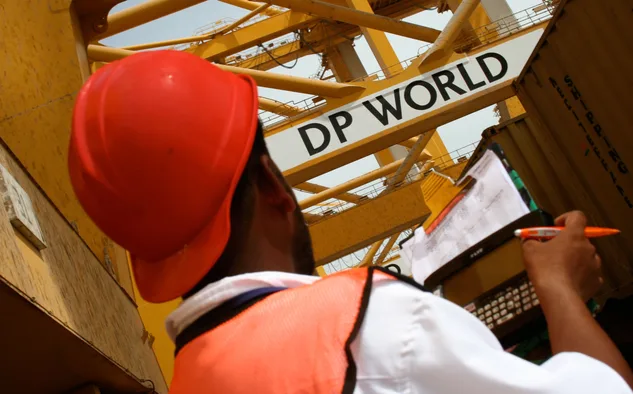
The departure of Sultan Ahmed bin Sulayem from the leadership of DP World closes a consequential chapter in modern Dubai’s commercial history.
For more than two decades, bin Sulayem was synonymous with the emirate’s rise as a global trading power. Under his leadership, DP World grew from a regional ports operator into one of the world’s dominant logistics platforms – a network spanning dozens of countries and continents, linking Dubai’s fortunes directly to the arteries of global commerce.
Few non-royals have exercised comparable influence over the emirate’s commercial trajectory.
DP World became not merely a corporate success but a pillar of Dubai’s international projection: the physical embodiment of Sheikh Mohammed bin Rashid’s vision of the emirate as the indispensable crossroads of East-West trade.
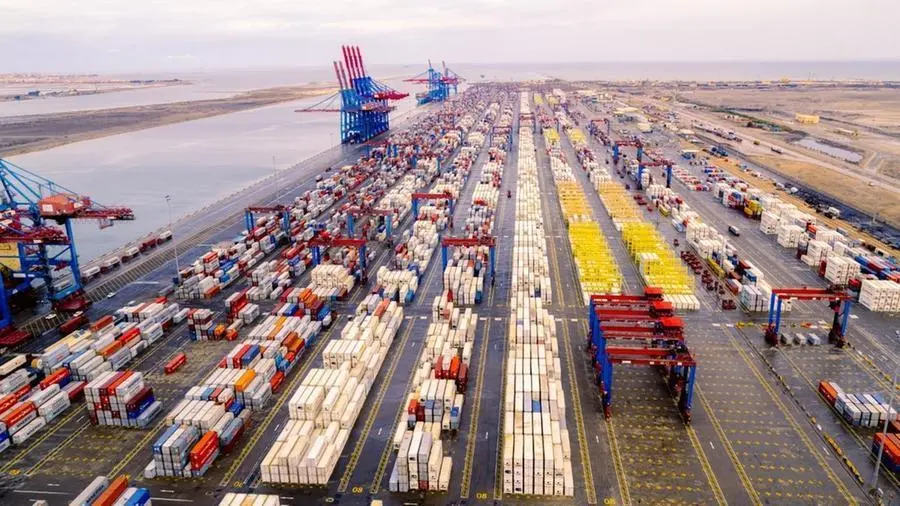
The cranes of Jebel Ali multiplied into terminals across Africa, Europe, Asia and the Americas, carrying with them Dubai’s brand of commercially driven globalisation.
That expansion encountered its first challenge during the financial crisis of 2009.
When Dubai World, the state conglomerate that housed DP World and was chaired by bin Sulayem, was pushed to the brink by the emirate’s debt shock – triggered by a default in bonds issued by its own subsidiary Nakheel – the ports group found itself caught in the meltdown.
The very survival of Dubai Inc’s international expansion model was in question. Bin Sulayem kept DP World operationally intact through that period, preserving its global footprint and commercial credibility at a moment when both were vulnerable.
Dubai’s response was swift and pragmatic. It cannot have been easy given the long-standing relationship between bin Sulayem and Dubai leadership
But survival came at a cost, both personal and corporate. The restructuring that followed the crisis fundamentally changed the character of Dubai World. Control and oversight were tightened, while financial discipline replaced expansionary autonomy – without bin Sulayem in the chair.
He remained the face of the ports empire, but the governance environment around him had changed permanently. Today Dubai World itself sits in a reduced but still strategically vital position within the emirate’s economic superstructure.
If Investment Corporation of Dubai represents the sovereign investment core and Dubai Holding the domestic development platform, Dubai World endures as the global logistics arm.
As the outward-facing trade engine that connects the emirate to maritime flows, DP World remains its crown asset and one of the few UAE entities to achieve a global footprint.
Against that backdrop, the appointment of Essa Kazim as chairman signals continuity.
Kazim is among Dubai’s most trusted institutional figures: the long-time governor of the Dubai International Financial Centre and an architect of the emirate’s financial credibility with global investors.
His reputation has been marked by regulatory clarity and investor assurance – qualities that carry particular weight in the current geopolitical and capital-market climate.
He also has a reputation within Dubai’s leadership circles as a “fixer” in complex corporate situations, as in the way he defused governance tensions at the Majid Al Futtaim conglomerate.
That experience will be relevant at DP World, where global partnerships, sovereign sensitivities and capital-market perceptions intersect.
DP World’s international expansion has long relied on deep partnerships with global institutional investors and host governments. The withdrawal of major Canadian and British investment partners was a threat to that model.
For a company whose strength lies in multinational integration, the erosion of Western institutional confidence carried strategic implications far beyond individual projects.
Dubai’s response was swift and pragmatic. It cannot have been easy given the long-standing relationship between bin Sulayem and Dubai leadership.
But leadership change in such circumstances is not about personalities or reputational theatre; it is about preserving economic credibility. Significantly, both foreign investment partners have given the changes their blessing and pledged to continue as DP World partners.
Dubai Inc has always operated on a simple principle: when core strategic interests are threatened, governance adjusts. That instinct has been visible repeatedly across Dubai’s corporate history, from the post-2009 restructurings to the fall-out from the Abraaj collapse to recent interventions in major family conglomerates.
Dubai’s calculus is rarely ideological. The emirate has built its prosperity on openness to capital, trade and international partnership, and it acts decisively when those relationships come under strain. The current shift reflects the instinct of self-preservation as much as concession to external pressure.
None of this diminishes bin Sulayem’s corporate legacy, but Dubai’s model has never rested on individuals alone. It is a system that prizes continuity, credibility and adaptability – sometimes ruthlessly so. When circumstances change, leadership changes with them.
The transition at DP World is an affirmation of that system. The bin Sulayem era established Dubai as a global ports power. Kazim’s task will be to ensure that it remains trusted, investable and aligned with the next phase of the economic strategy.
Frank Kane is Editor-at-Large of AGBI and an award-winning business journalist. He acts as a consultant to the Ministry of Energy of Saudi Arabia
Related Articles
South African table grape industry and Transnova A...
22 Oct, 2025 08:25
Spiro Raises US$100 Million in Africa’s Largest-Ev...
22 Oct, 2025 09:33
NXN and SAEED unite within Sharjah’s logistics sec...
24 Oct, 2025 07:48
TAHA Unveils HortiMarket A Digital Platform Revolu...
24 Oct, 2025 08:21
Chinese technology takes center stage at Ghana's t...
27 Oct, 2025 09:17
Kenya Airways flies first African route, from Nair...
27 Oct, 2025 09:23
Madbouly inaugurates $85mln DP World's logistics p...
27 Oct, 2025 12:56
Airbus cargo outlook shows 3.3% annual growth and ...
28 Oct, 2025 08:21
Nominations now open for the Logistics Saudi Award...
28 Oct, 2025 08:27