Logistic Other

Corridor & Mobility Risk in Ethiopia: A Critical Factor for 2026 Operations


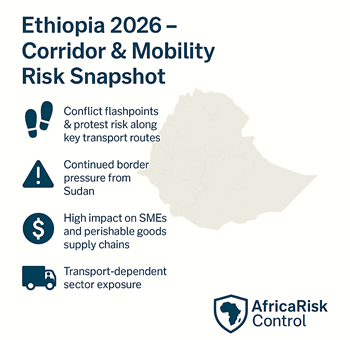
A recent analysis highlights that cross-regional mobility in Ethiopia has become increasingly unpredictable, posing a significant operational risk. This unpredictability stems not from large-scale conflict, but from localized clashes, community tensions, and irregular security operations that disrupt transport corridors, project sites, and supply chains—factors often absent from official reports.
The risk is particularly acute in border regions adjacent to Sudan, where spillover effects from the ongoing conflict—including population movements and fluctuating informal trade—complicate logistics and stability. For businesses in sectors like agribusiness, logistics, construction, and energy, these corridor disruptions can lead to costly delays, rerouting, and heightened operational expenditures. Subnational political dynamics further shape risk, as differing administrative controls and inconsistent security protocols across regional boundaries can impede the movement of teams and goods.
Sector exposure varies, with logistics companies being directly vulnerable, agribusinesses heavily dependent on seasonal transport, and energy projects challenged by moving equipment through unstable areas. The analysis, part of a detailed country risk report, maps stable corridors and volatile zones to aid investors in planning deployments and supply chains. For Ethiopia in 2026, the report concludes that integrating a detailed understanding of mobility dynamics into operational planning is a strategic necessity for protecting timelines and managing costs.
Related Articles
South African table grape industry and Transnova A...
22 Oct, 2025 08:25
Spiro Raises US$100 Million in Africa’s Largest-Ev...
22 Oct, 2025 09:33
NXN and SAEED unite within Sharjah’s logistics sec...
24 Oct, 2025 07:48
TAHA Unveils HortiMarket A Digital Platform Revolu...
24 Oct, 2025 08:21
Chinese technology takes center stage at Ghana's t...
27 Oct, 2025 09:17
Kenya Airways flies first African route, from Nair...
27 Oct, 2025 09:23
Madbouly inaugurates $85mln DP World's logistics p...
27 Oct, 2025 12:56
Airbus cargo outlook shows 3.3% annual growth and ...
28 Oct, 2025 08:21
Nominations now open for the Logistics Saudi Award...
28 Oct, 2025 08:27