Generation

African Nations Promote Locally Produced Solar Panels


A Shift in Stance at COP30
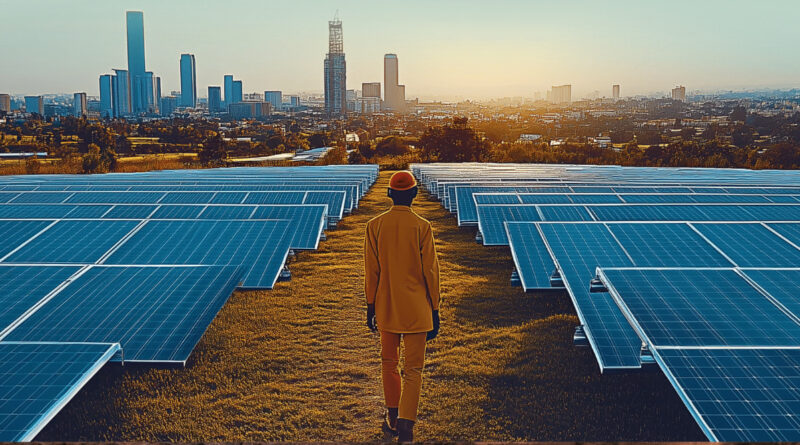
The prevailing message from the global south at this year's COP30 is one of profound frustration with the annual cycle of platitudes and unfulfilled promises from international forums. Consequently, these nations are actively formulating strategies to determine their own sustainable futures rather than remaining dependent on external action. As Carlos Lopes, the special envoy for Africa to the COP30 president, articulated, the continent seeks to redefine its role; it is no longer a passive recipient of aid but is emerging as a frontline source of solutions, particularly in the realm of renewable energy.
The Ambition for Industrial Sovereignty
An old adage—teach a person to fish rather than giving them one—aptly describes the continent's energy aspirations. While Chinese-manufactured solar panels have been instrumental in initiating Africa's renewable energy revolution, African climate leaders argue for a more significant industrial role. Given that Africa possesses over 30 percent of the world's critical minerals, its ambition is to evolve from a mere importer to a central actor in the clean energy supply chain. Data from the think tank Ember highlights this dependency, noting that Nigeria, for instance, imported over 1,700 MW of solar panels from China in a recent one-year period. Carlos Lopes suggests that the capital spent on such imports could be better invested in establishing local design labs and regional research hubs to foster homegrown technological adaptation.
A Precedent in Automotive Manufacturing
The successful model of China's automobile industry serves as a powerful blueprint for this strategy. Decades ago, Western automakers were required to form joint ventures with local Chinese firms to access the market. This policy facilitated a massive transfer of knowledge and expertise, enabling Chinese companies to eventually manufacture vehicles more efficiently and competitively. The result was a self-sufficient industry that retained profits and jobs domestically. African nations envision a parallel path for their solar and renewable sectors, aiming to build local manufacturing capacity rather than perpetually consuming imported finished goods.
Emerging Manufacturing Hubs and Local Value
This vision is already materializing across the continent. Countries like Morocco, South Africa, and Egypt are scaling up their production capabilities with new solar assembly plants. Nigeria, for example, has signed an agreement with Chinese manufacturer LONGi to establish a major solar panel production facility. Energy analyst Dave Jones of Ember Energy notes that by focusing on local assembly of components, African manufacturers can retain over half of the value chain within their own economies. Companies like Nigeria's Salpha Energy exemplify this shift, manufacturing solar systems and products for the local and regional market. Its founder, Sandra Chukwudozie, speaks of the pride in local production and the potential for intra-African exports, signaling a growing confidence in the continent's manufacturing prowess.
A Distributed Energy Future
Nigeria's national strategy underscores this broader movement. The country aims to generate 30 percent of its electricity from renewables by 2030 while simultaneously building local manufacturing capacity. An intriguing aspect of its approach involves leveraging distributed energy resources, such as microgrids, to power rural areas that lack traditional grid infrastructure—much like the leapfrog to mobile phones bypassed landlines. Supported by international partnerships, these initiatives illustrate a determined path toward energy self-sufficiency. While Africa is not yet a renewable energy manufacturing powerhouse, it is decisively moving in that direction by leveraging global technology transfers to ultimately chart its own sustainable course.
Related Articles

Parliament Committee says no need to review three ...
10 Sep, 2024 07:57
Zimbabwe’s Biggest Miners Seek $182 Million for So...
12 Sep, 2024 06:57
GreenGo Energy Expands into Namibia with Strategic...
12 Sep, 2024 07:51
OPEC Fund approves $1.2 billion for development pr...
13 Sep, 2024 08:59
Floating solar starts to gather pace in Africa, as...
13 Sep, 2024 13:18
Prominent South African energy company files for l...
16 Sep, 2024 11:00
Libyan Export Decline and Fed Speculation Propel O...
17 Sep, 2024 08:00
South Sudan says it is ready to restart pumping oi...
17 Sep, 2024 13:23
Interest grows in Africa’s oil and gas hotspot...
18 Sep, 2024 10:42