Métaux précieux

West African States Wants Gold Mines, But Foreign Investors Still Bear the Risk


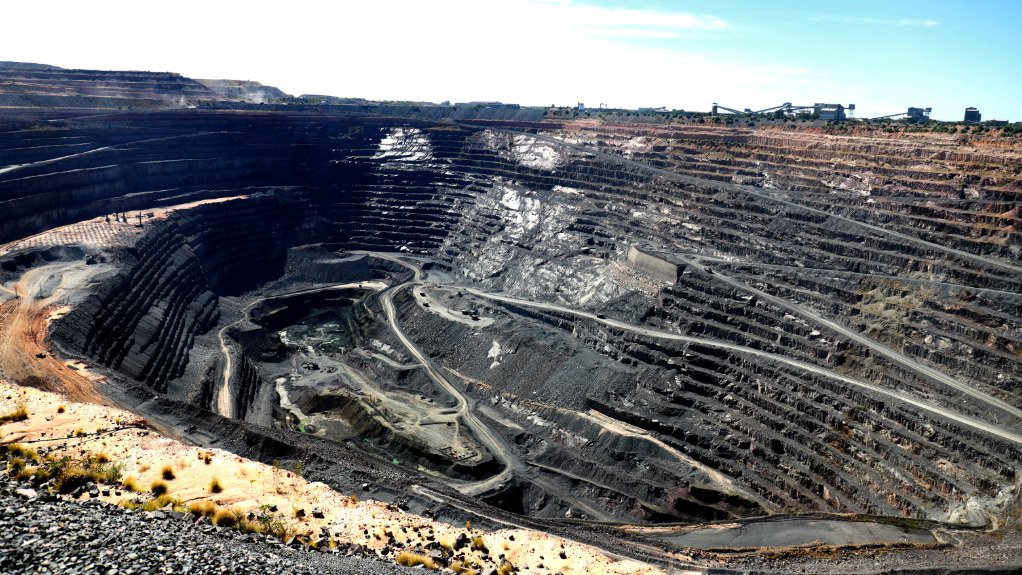
Ghana's authorities opened the door in late May to a possible withdrawal of Gold Fields' operating rights at the Tarkwa mine, ruling out automatic renewal of the lease the South African group has held for more than three decades. The move is a sign of growing state pressure on mining revenues, coming as governments from Abidjan to Ouagadougou demand a larger share of proceeds from mines that others discovered, financed and developed.
The clearest illustration of that trend came weeks earlier, when Accra took back the Damang mine -also owned by Gold Fields and nearing the end of its productive life- and handed it to local firm Engineers & Planners. For Africa's largest gold producer, the two decisions reflect two distinct dynamics playing out across the subregion.
Latecomers to the feast
The first is rent extraction. With gold trading around $5,000 an ounce following a roughly 70% surge in 2025, governments want that windfall to translate into greater revenues, jobs and local value added. Following the example of Côte d'Ivoire and Burkina Faso, Ghana this year replaced its flat 5% royalty with a sliding scale that can reach 12% on gold sales by mining companies. Mali requires investors to allocate a 5% stake to national investors, while Burkina Faso takes equity in its mines through a dedicated state mining company. Royalties, public stakes and local content requirements are now well-established tools of mining sovereignty.
The second dynamic involves the takeover of assets that are already in production, often mature and sometimes close to exhaustion. Whether at Morila in Mali, taken back by the state in 2025 more than two decades after it began operating, at Tongon in Côte d'Ivoire, acquired by Ivorian group Atlantic of Koné Dossongui when Barrick Mining considered reserves nearly depleted, or at Damang in Ghana, public attention almost invariably focuses on mines whose principal value has already been extracted. The state or local actors step in at the end of the chain, after most of the geological, financial and industrial risk has been borne by others.
These measures rarely concern the beginning of the mining cycle. Exploration, resource definition and the financing of initial drilling, the costly and risky early stages, remain largely the domain of foreign players. The state lets others do the heavy lifting, then returns once the risk has dissipated, much like the latecomers in the biblical parable. There is one difference. Unlike in that parable, the late arrivals do not receive the same reward as those who came first.
The financing bottleneck
There is nothing inherently objectionable about states capturing a share of mining rents. The real issue lies elsewhere: in the difficulty local actors face in positioning themselves upstream, where value is created. Australian or Canadian junior miners, the small firms that specialize in finding deposits and then selling or developing them, are not distinguished from their African counterparts by technical expertise. Mining lawyer Charles Bourgeois of the Paris Bar notes that the difference between an Australian junior and a Malian limited liability company, both holding the same permit, comes down mainly to access to financing, which is harder for the Malian firm.
The figures bear that out. In 2025, the mining sector accounted for $16 billion of the $33.3 billion raised in total on the Toronto Stock Exchange and the TSX-V in Canada. On the TSX-V alone, which primarily lists exploration-stage companies, listed firms raised $8.1 billion, just over half of all funds raised by the mining sector across both exchanges. Australia and Canada have deep capital markets and investors accustomed to the specific risks of the mining sector. Africa has nothing comparable.
The Abidjan-based regional stock exchange is not configured for high-risk mining investment, and commercial banks, unfamiliar with the sector's return dynamics, demand tangible collateral that the exploration phase cannot provide. Without sufficient equity, small African companies that secure promising permits see their stakes diluted through successive funding rounds led by better-capitalised partners, until they lose control of the asset they originally identified.
The price of sovereignty
The key question is simple: why can an Australian or Canadian junior raise the necessary funds with relative ease, while a Burkinabe or Malian junior cannot? The geological talent exists on the continent, as do the permits. What is missing is patient capital, the kind willing to back an uncertain discovery.
Against that backdrop, the takeover of mature assets by local capital represents one step toward stronger resource nationalism. The next step requires the emergence of players capable of operating across the entire value chain, from prospecting through to production. Growing interest from West African investors in the gold sector opens a window, but runs into the same question of resources.
Several avenues exist. One would involve steering subregional juniors toward mature Australian and Canadian markets, provided they meet the structural and disclosure standards those exchanges require and build the track record investors demand. Another, advocated by extractive resources governance expert Ahamadou Mohamed Maïga, would play out on the continent itself through instruments designed specifically for the sector, mobilising dormant savings held by commercial banks, opening public lending windows or dedicated sovereign funds, or establishing a regional mining exchange.
Taking back an end-of-life mine enshrines a sovereignty that reaches only to the end of the chain. Mastering the upstream portion, exploration and project launch, means accepting the risk that has long been left to foreign operators. It is on that terrain, more than in royalty rates and asset takeovers, that the success of mining nationalism in West Africa may ultimately be decided.
Articles similaires
China’s ‘encouraging’ hydrogen progress witnessed ...
03 mars, 2026 07:55
Lucara posts lower 2025 revenue, says additional f...
04 mars, 2026 07:48
Gold bulls say broader rally is intact despite inv...
04 mars, 2026 08:00
WorldVest Launches Gold Finance Africa, Building a...
04 mars, 2026 10:44
Gold and silver rallies likely on pause despite ne...
04 mars, 2026 11:49
Gold prices climb over 1 percent to $5,164 as Midd...
04 mars, 2026 11:59
‘Extremely robust’ platinum investment demand expe...
04 mars, 2026 13:08
Trigon Metals Launches Silver Exploration Drive in...
05 mars, 2026 08:00
The Ekapa Mine liquidation – A tragedy compounded...
05 mars, 2026 08:05