Autres (mines)

Mining’s slow burn exposure to Middle East conflict


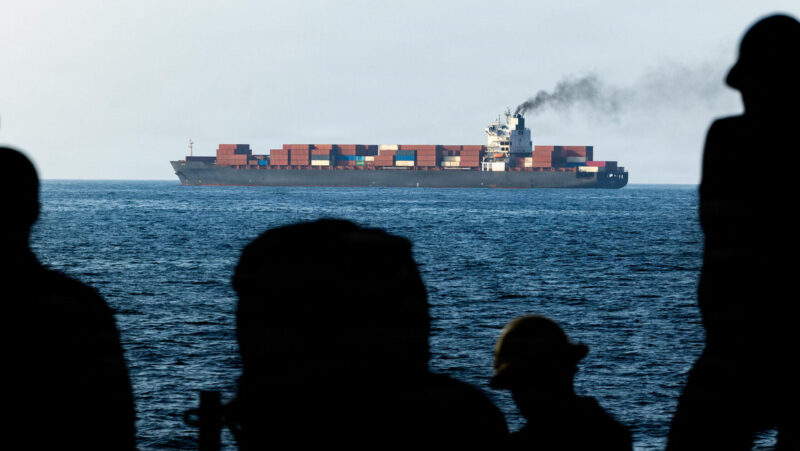
The memorandum of understanding (MoU) signed between the US and Iran appears to have brought a relative calm to the Middle East, the occasional conflagration in the Strait of Hormuz aside. Certainly, the energy markets appear to be pricing in a degree of goodwill: crude is 22% weaker in the last month, supporting the notion that both sides in the conflict need the MoU to become a ceasefire.
But the actual status of shipping in the Strait of Hormuz is less certain and has been wittily described in terms of the Schrödinger’s Cat thought experiment: both open and closed at the same time. That uncertainty is a good analogy for how the Middle East conflict might affect global mining, with consequences both temporary and permanent.
Wood Mackenzie, an industry consultancy, says the MoU may have changed the trajectory of the oil price. But it worries that the full value chain, from wellhead to the ports of the Gulf Co-operation Council members — Bahrain, Kuwait, Oman, Qatar, Saudi Arabia and the UAE — could take the better part of a year to fully recover. Big volatility is inevitable. Oil may not be heading for $150 per barrel anymore, but it’s hard to predict an average price.
Then there have been distortions in the metals markets, especially where hard assets were destroyed. An estimated 3.5 million tons of aluminium output have been removed from the global market this year, after Iran blew up smelter facilities owned by Emirates Global Aluminium, analysts say. London Metals Exchange inventories of the metal fell 60% in the aftermath of the strikes. Futures prices in aluminium surged.
Secondary dislocations caused by the conflict are likely to manifest as significant input inflation, as raw materials become a little scarcer and slower to deliver.
“These effects are a bit softer but still take effort to resolve,” said Peter Schmitz, research director and head of metals and mining at Wood Mackenzie. While those effects are going to “wash their way through”, they are nonetheless inflationary and imply that demand growth is “probably not going to look as great as we would have wanted”, said Schmitz in June at the Junior Indaba conference.
“Those are the third-order effects that will bite us longer term — when we’re wondering what happened to the market, why isn’t demand there, or how it has changed in terms of the various regions.”
It may result in changing product preferences or increased demand for hybrid and electric vehicles (EVs), wind turbines, solar panels and batteries, said Andrew van Zyl, MD of SRK Consulting (South Africa), a consulting engineering company. These may filter through to mining, affecting both demand and pricing, he says.
Project planning is becoming trickier to scope. “You’ve got to allow much longer lead times than you normally would; maybe double the time,” said James Smith, CEO of DRA, a project engineering company. Whether this will lead to fundamental market change is conjectural, however. “I don’t think it’s going to stop a whole bunch of projects,” said Smith. “It will make executing anything in the Middle East region a lot more difficult from a practicality perspective. Does it change the fundamentals? Doubtful.”
For South Africa the immediate inflationary impacts were limited, at least for now. April marked a second consecutive increase of 2.7% in the mining composite input cost index. But this was a moderate rise, says the Minerals Council, which compiles the index. May numbers were different with mining costs accelerating to 5.3% year-on-year which the council attributed to the energy shock.
However, the much-feared shortages of diesel and chemicals have been avoided, suggesting there’s been some unfounded panic caused by the conflict.
Craig Miller, CEO of Valterra Platinum, South Africa’s largest refined producer of the metal, is sceptical the Middle East crisis will affect demand in his sector. “You see greater adoption around hybrids [vehicles], which contain PGMs, and I think that’s because people like the flexibility of a battery and an internal combustion engine,” he said. “I still don’t feel that those issues have necessarily been completely resolved. So why would battery-EV adoption rise substantially just because of geopolitical events?”
The full effects of disruption to the Strait of Hormuz are still emerging, and there remains significant uncertainty regarding how countries will respond, said Van Zyl.
“Rising inflation, along with fuel, fertiliser and food shortages, will place pressure on governments, which are likely to respond through a range of interventions to maintain stability,” he said.
“This may include seeking additional revenue sources to fund subsidies and strategic stockpiles. Profitable sectors may be targeted through new taxes or pressure to increase local beneficiation and employment.”
There is also the outside risk of patience running out on both sides of the Middle East conflict, with President Donald Trump and Iranian leaders exchanging dire threats on a daily basis.
Articles similaires
Endeavour announces transaction in own shares...
10 sept., 2024 07:27
Ivanhoe Mines Announces MOU with Government of Zam...
10 sept., 2024 12:24
Feasibility Study on Lumwana Super Pit Expansion E...
12 sept., 2024 14:21
Endeavour achieves commercial production at BIOX e...
13 sept., 2024 08:20
Roscan Gold Announces Changes to the Board of Dire...
16 sept., 2024 10:40
Minerals Council pays tribute to Pravin Gordhan...
16 sept., 2024 12:17
Notification of an acquisition of beneficial inter...
18 sept., 2024 08:39
Newmont on track to get at least $2 billion from a...
18 sept., 2024 10:49
UAE firm plans to invest $500m in Tanzania...
19 sept., 2024 08:37