Metal Markets

Gold prices plunge 0.68 percent to $4,376.8 near as U.S. inflation cools, September Fed hike odds fall


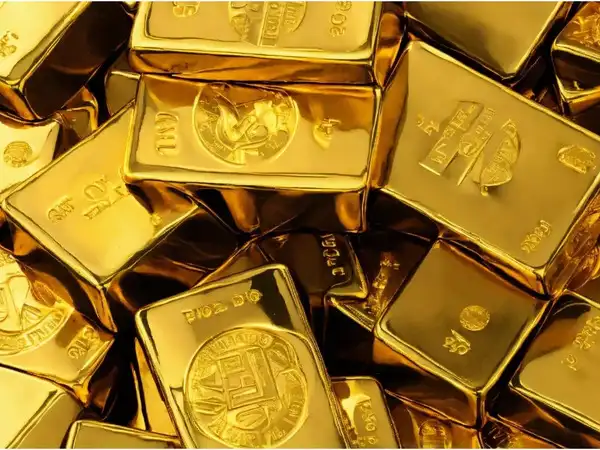
Gold held close to its strongest level in more than two months on Thursday, August 13, as traders paused following a rally driven by cooler U.S. inflation. Attention shifted toward the forthcoming producer price report for further guidance on whether the Federal Reserve could raise interest rates in the near term.
Spot gold fell 0.68 percent at $4,376.8 per ounce by 10:07 UAE time, after rising approximately 1 percent earlier and reaching its highest level since June 5. U.S. gold futures for December delivery remained steady at $4,467 per ounce.
In the UAE, gold rates declined, with 24-carat gold falling AED3.5 to AED529.75 and 22-carat gold dropping AED3.25 to AED490.75.
In addition, 21-carat gold fell AED3 to AED470.5, while 18-carat gold declined AED2.75 to AED403.25.
Meanwhile, 14-carat gold dropped AED2 to AED314.5.
Inflation supports bullion
Federal Reserve policymakers were expected to see little new urgency to increase borrowing costs at their September meeting after Wednesday’s figures showed that annual inflation had cooled for a second consecutive month.
The U.S. Consumer Price Index rose 3.4 percent during the 12 months through July, easing from 3.5 percent in June and matching economists’ expectations, according to the Bureau of Labor Statistics.
Rate expectations retreat
Traders assigned a 40 percent probability to an interest-rate increase at the Federal Reserve’s September meeting, down from approximately 54 percent one week earlier, according to the CME FedWatch Tool. Expectations of lower rates generally benefit gold because they reduce the opportunity cost associated with holding an asset that produces no yield.
Market attention subsequently turned to the U.S. Producer Price Index, scheduled for release at 12:30 p.m. GMT on Thursday, for further evidence that inflationary pressure was moderating.
Geopolitical uncertainty also remained present. A senior Iranian source said Iran and the United States were still divided over efforts to secure a permanent end to the war in the Gulf. The source said negotiations had made no progress toward restoring an interim agreement reached in June.
Other precious metals also moved lower. Spot silver lost approximately 0.89 percent to $64.9 per ounce.
Platinum declined 0.95 percent to $1,746.30 per ounce, while palladium fell 0.91 percent to $1,358.75 per ounce.
Inflation picture broadens
The headline inflation figure contained signals for gold and monetary policy. The July CPI increased 0.1 percent from June after declining 0.4 percent during the previous month. Shelter costs rose 0.1 percent and accounted for about two-thirds of the monthly increase, while food prices advanced 0.1 percent. Energy prices declined 1.5 percent. The index excluding food and energy increased 0.2 percent monthly and 2.5 percent annually, compared with a 2.6 percent annual rise in June.
Producer prices provide another view of inflation earlier in the supply chain. The BLS reported that the June PPI declined 0.3 percent after increasing 0.6 percent in May and 1.1 percent in April. Final-demand goods prices fell 1.4 percent, led by a 6.4 percent decline in energy, while services prices increased 0.2 percent. Even after the monthly decrease, final-demand prices remained 5.5 percent higher than one year earlier, making the July update important to the policy outlook.
Policy signals remain split
The Federal Reserve maintained its target rate at 3.50 percent to 3.75 percent on July 29. The official policy statement passed by a 9-3 vote, with Beth Hammack, Neel Kashkari and Lorie Logan preferring a quarter-point increase. The committee said economic activity continued expanding at a solid pace and employment broadly kept up with workforce growth. It nevertheless described inflation as elevated against its 2 percent objective, partly because supply shocks had raised prices in sectors including energy.
Physical and investment demand will influence the durability of the rally. The World Gold Council’s second-half outlook expects investment to provide the principal source of demand growth, with over-the-counter activity and Asian buying contributing more. It expects central banks to remain significant purchasers, although total annual buying may finish below 2025. The council said Western ETF flows could remain sensitive to real yields, U.S. monetary policy expectations and the dollar, while elevated prices continue weighing on jewelry volumes.
Gold-backed funds returned to inflows immediately before the latest rally. Global gold ETFs attracted $3 billion in July after two consecutive monthly outflows. Assets under management rose 1 percent to $530 billion, while holdings increased by 23 metric tons to 4,068 tons. Year-to-date inflows reached $11 billion, equivalent to 39 tons, with Asian funds contributing the most. North America remained in net outflow territory despite recording a modest return to inflows during July.
Rally path develops
Gold entered 2026 with momentum before a wide correction. The World Gold Council’s midyear review said the metal climbed above $5,500 per ounce intraday during January, then moved below $4,000 in late June. It was approximately 7 percent lower for the year at that stage, illustrating its sensitivity to geopolitical developments, investor positioning, inflation expectations and changes in anticipated monetary policy.
The recovery accelerated on August 5, when spot gold jumped 4.4 percent to $4,253.36 per ounce, its largest daily increase since February. December futures settled 3.7 percent higher at $4,305.20. Lower Treasury yields, a weaker dollar and optimism about discussions involving the Strait of Hormuz supported the move, while the metal broke above its 50-day moving average.
By August 10, spot gold had advanced to $4,356.79 per ounce after reaching $4,371.63 during the previous session, its strongest level since June 17. December futures rose to $4,416. The rally followed an unexpected decline in U.S. nonfarm payrolls, while data showed that China’s central bank made its largest gold addition since October 2023.
Wednesday’s inflation report extended the rebound. Spot gold rose 0.9 percent to $4,406.64 and crossed its 100-day moving average of $4,387.22. December futures settled 0.6 percent higher at $4,467.50.
Related Articles

Saudi Arabia champions global partnerships to powe...
21 Oct, 2025 06:51
Can Turkey Become a Rare Earth Element Power?...
23 Oct, 2025 13:24
Orion Minerals Set to Develop Secure, Responsible,...
23 Oct, 2025 14:12
Investing in Platinum Stocks...
24 Oct, 2025 06:56
Copper And Aluminum Prices Climb As Supply Worries...
24 Oct, 2025 07:09
Dubai 24-carat gold prices dip AED3.75 as global r...
24 Oct, 2025 12:06
Bauxite sales up but tariffs on Chinese metal ship...
27 Oct, 2025 13:15
Angola bids for majority stake in De Beers, source...
28 Oct, 2025 07:02
Dubai 24-carat gold price today drops AED479; glob...
28 Oct, 2025 08:15