Metal Markets

Gold prices hit three-month high above $4,643 as dollar weakens ahead of U.S. inflation data


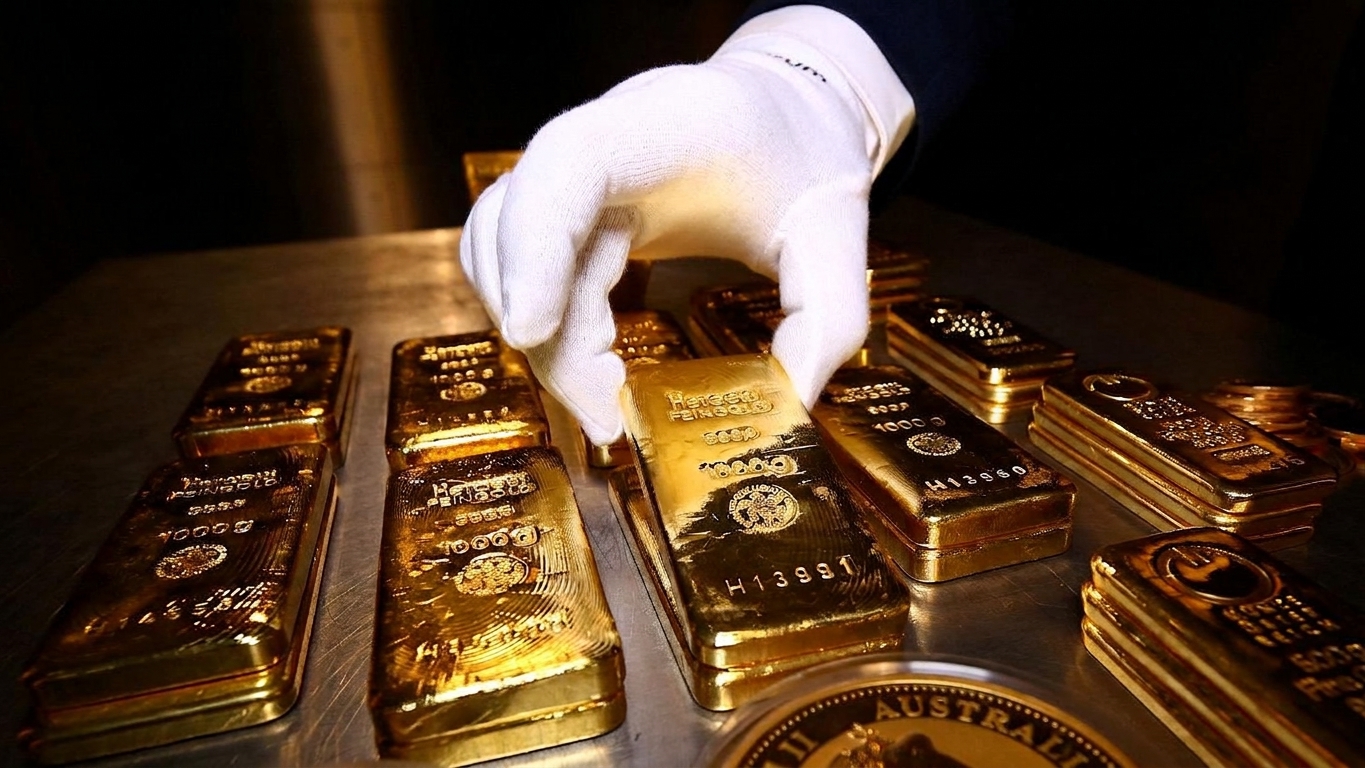
Gold extended its August recovery on Monday, climbing above $4,640 an ounce as weakness in the U.S. dollar increased bullion’s appeal ahead of a closely watched week for inflation and Federal Reserve policy.
Spot gold rose 0.60 percent to $4,643.5 an ounce by 09:19 UAE time after touching its highest level since May 15 earlier in the session. The metal gained more than 5 percent last week, while U.S. gold futures advanced 0.34 percent to $4,696.54. The dollar remained near multi-month lows amid unease over the U.S. Treasury’s plan to increase purchases of longer-dated government bonds.
A weaker U.S. currency generally makes dollar-denominated gold less expensive for buyers using other currencies, providing support to demand.
In the UAE, gold rates rose, with 24-carat gold gaining AED4.75 to AED559.50 and 22-carat gold increasing AED4.25 to AED518.
In addition, 21-carat gold rose AED4.25 to AED496.75 and 18-carat gold gained AED3.50 to AED425.75.
Meanwhile, 14-carat gold added AED2.75 to AED332.
Fed signals awaited
KCM Trade chief market analyst Tim Waterer said gold was drawing support primarily from dollar weakness while investors assessed what elevated bond yields suggested about economic conditions and policy uncertainty.
Attention is now turning to the U.S. Personal Consumption Expenditures price index for July and Federal Reserve Chair Kevin Warsh’s address at the Jackson Hole Economic Policy Symposium later this week. The PCE report is scheduled for Wednesday, August 26, while Warsh is due to deliver keynote remarks on Friday.
Waterer said a balanced or cautious message from the Fed chair that preserves policy flexibility could provide room for gold to extend its gains.
Geopolitical risks are also influencing sentiment as Washington prepares additional economic sanctions targeting Iran and its trading partners, adding another source of uncertainty for global markets.
Among other precious metals, silver fell 0.35 percent to $69.00 an ounce, platinum gained 0.16 percent to $1,894.35 and palladium was up 0.09 percent to $1,354.50.
Dollar pressure builds
The dollar’s weakness has become an increasingly important part of gold’s latest advance. The U.S. currency entered Monday near multi-month lows after the Treasury said it would double buybacks at the long end of the bond market to $4 billion per operation.
The announcement followed a rise in 30-year Treasury yields toward their highest levels in almost two decades. Long-term government borrowing costs have been pushed higher by inflation expectations, concerns surrounding sovereign debt and a relatively resilient economic outlook.
The Treasury intervention initially unsettled currency markets because investors interpreted it as an attempt to restrain longer-term yields. The resulting pressure on the dollar has supported alternative assets, including gold and bitcoin.
The move has been particularly significant for bullion. Gold gained more than 5 percent during the week ended August 21, including a 2.4 percent jump on Friday to $4,623.94 an ounce. It briefly reached $4,631.99 during that session before Monday’s advance established a new three-month high. U.S. futures settled Friday at $4,680.60.
Inflation takes focus
The upcoming PCE report will provide investors with another indication of whether inflation pressures are strong enough to keep the Federal Reserve cautious on interest rates.
The latest Consumer Price Index showed U.S. inflation easing slightly in July. Headline CPI increased 0.1 percent month over month and 3.4 percent from a year earlier, compared with a 3.5 percent annual increase in June. Core inflation, excluding food and energy, rose 0.2 percent during July and 2.5 percent year over year.
The Fed’s preferred core PCE measure remained higher. Core PCE inflation stood at 3.3 percent year over year in June, little changed from recent months and still above the central bank’s 2 percent objective. July figures are scheduled for release on August 26.
That makes Wednesday’s report particularly important for gold because expectations for U.S. interest rates affect the opportunity cost of holding non-yielding bullion.
A softer inflation reading could reduce expectations for tighter monetary policy, while an unexpectedly strong result could reinforce the case for keeping rates elevated or potentially raising them.
Fed holds rates
The policy backdrop remains unusually uncertain. At its July 28-29 meeting, the Federal Open Market Committee kept the federal funds target range unchanged at 3.5 percent to 3.75 percent.
The decision was approved by a 9-3 vote, with Beth Hammack, Neel Kashkari and Lorie Logan preferring a quarter-percentage-point increase. The Fed said economic activity continued to expand at a solid pace but acknowledged elevated uncertainty and inflation above its 2 percent target, partly because of supply shocks affecting areas including energy.
That divided vote has increased attention on Warsh’s first Jackson Hole appearance as Fed chair.
Warsh took office as chairman of the Federal Reserve on May 22, succeeding Jerome Powell and beginning a four-year term that runs through May 2030. He also chairs the FOMC.
The Jackson Hole symposium runs from August 27 through August 29 under the theme “Financial Innovation: Implications for Payments and Policy.” Warsh is scheduled to give keynote remarks at 10 a.m. on Friday.
Gold rebounds sharply
Monday’s rise also extends a broader recovery from gold’s sharp decline earlier this year.
Bullion reached a record $5,595 an ounce in January before falling below $4,000 in June as the Iran conflict triggered a rush for liquidity and some institutional holders reduced positions. By mid-August, prices had recovered about 9 percent during the month to around $4,400 as safe-haven demand began to return.
The recovery accelerated last week. Gold moved above its 200-day moving average, around $4,513, a development watched by technical traders as a sign of stronger price momentum. Market participants also reported increased interest in gold options and rate-sensitive investment products as expectations for further U.S. monetary tightening moderated.
Geopolitical uncertainty remains another potential source of support, particularly as markets assess the economic and financial consequences of continued U.S.-Iran tensions.
The recovery nevertheless leaves gold below its January record, underscoring how dramatically the precious metal has moved during 2026.
Investment demand returns
Longer-term demand indicators provide another layer of support for the market.
Total global gold demand, including over-the-counter activity, reached 2,522 tonnes during the first half of 2026, up 2 percent from a year earlier. The value of that demand reached a record $380 billion, according to the World Gold Council.
Central banks purchased a net 289 tonnes during the second quarter, up 62 percent year over year and sharply higher than the revised 57 tonnes recorded in the first quarter. First-half central bank purchases totaled 345 tonnes.
Investment flows have also begun improving after weakness during the second quarter. Global gold-backed exchange-traded funds attracted $3 billion of net inflows in July, increasing collective holdings by 23 tonnes to 4,068 tonnes and lifting assets under management to $530 billion.
The World Gold Council expects investment to remain the principal source of gold-demand growth during the second half of 2026, supported increasingly by over-the-counter activity and Asian buying, while central banks are expected to remain significant purchasers.f
Related Articles

Saudi Arabia champions global partnerships to powe...
21 Oct, 2025 06:51
Can Turkey Become a Rare Earth Element Power?...
23 Oct, 2025 13:24
Orion Minerals Set to Develop Secure, Responsible,...
23 Oct, 2025 14:12
Investing in Platinum Stocks...
24 Oct, 2025 06:56
Copper And Aluminum Prices Climb As Supply Worries...
24 Oct, 2025 07:09
Dubai 24-carat gold prices dip AED3.75 as global r...
24 Oct, 2025 12:06
Bauxite sales up but tariffs on Chinese metal ship...
27 Oct, 2025 13:15
Angola bids for majority stake in De Beers, source...
28 Oct, 2025 07:02
Dubai 24-carat gold price today drops AED479; glob...
28 Oct, 2025 08:15