Precious Metals

Gemological Institute of America reflects on extraordinary diamonds recovered


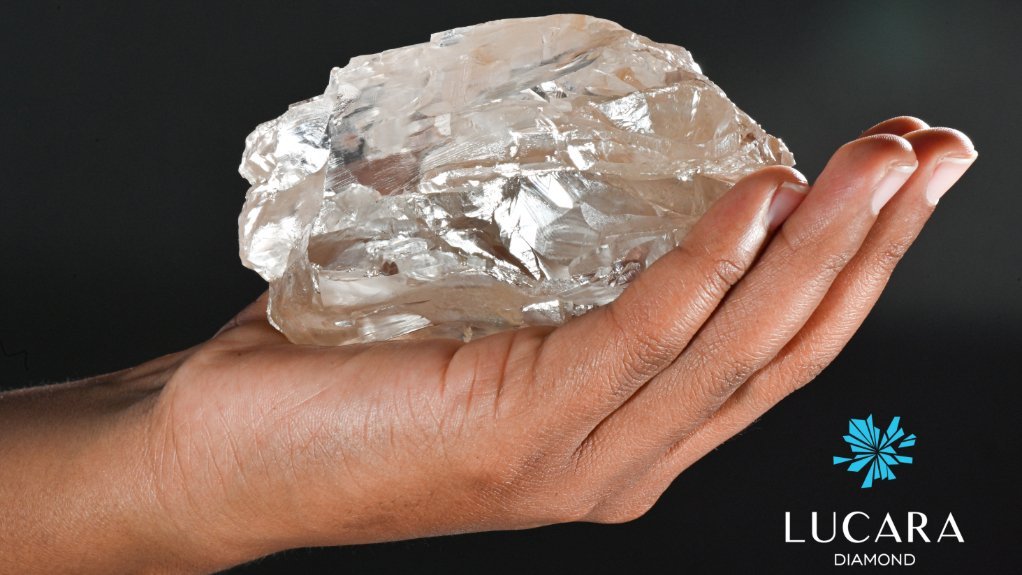
GIA helps to uncover the science, history and rarity behind diamonds that have captivated collectors, museums and the public for generations. It has since its establishment in 1931 been recognised as the world’s foremost authority in gemology and assesses more than four-million diamonds every year.
Among the most remarkable discoveries have been legendary diamonds such as the Hope Diamond, the Dresden Green, the Winston Red, the Taylor-Burton Diamond and the recently examined Motswedi diamond, the largest single crystal diamond ever examined by GIA.
These remarkable diamonds are admired for their beauty and the stories they carry through history.
The 45.52 ct Hope Diamond remains one of the world’s most famous coloured diamonds, known for its Fancy Dark grayish blue color and centuries-long journey from India to the Smithsonian Institution in Washington DC.
The Dresden Green, weighing about 41 ct, is recognized as the largest known natural green diamond, while the 2.33 ct Winston Red is one of the world’s rarest pure red diamonds and the only Fancy red diamond on public display.
More recently, GIA examined the 2 488 ct Motswedi diamond, recovered from Botswana in 2024. The rough diamond, a high-purity Type IIa gem, drew worldwide attention for its exceptional size and quality.
Being the second-largest gem-quality diamond ever discovered, the Motswedi offers scientists a rare window into how some of Earth’s largest diamonds form deep within the planet, where carbon crystallizes into diamond under extreme pressure and temperature hundreds of kilometres below the surface.
“For nearly a century, GIA has been at the center of advancing gemological knowledge, setting the global standards that underpin confidence in gems and jewelry,” said GIA president and CEO Pritesh Patel.
Notably, GIA established the standards for evaluating diamonds – the 4Cs of Diamond Quality and the GIA International Diamond Grading System – in the 1940s and 1950s. The association continues to evolve its scientific research and capabilities to bring clarity and confidence to an increasingly complex landscape.
“The examination of these extraordinary stones reflects not only their rarity and history, but also GIA’s enduring commitment to rigorous science, transparency and leadership that gem and jewelry buyers rely on,” Patel noted.
GIA has also examined royal treasures, such as the Marie-Thérèse Pink diamond, and historic objects such as the Antique Mughal Spectacles with gemstone lenses.
Through grading and research, GIA helps document the characteristics, origin insights and gemological significance of stones and objects that continue to shape culture, design and public fascination.
GIA’s role in examining notable stones reflects its broader mission to protect the public trust in gems and jewellery through science, education and unbiased analysis.
Related Articles

Investigation uncovers fraudulent identity documen...
10 Sep, 2024 08:08
The Top Five Gold-Producing Countries in Africa in...
10 Sep, 2024 08:46
AngloGold notes ‘enormous geological potential’ in...
10 Sep, 2024 09:29
Awalé Resources expands BBM gold zone at Odienné p...
10 Sep, 2024 11:38
Proposed amendment: Gold mines to be subject to th...
10 Sep, 2024 12:39
Pan African Resources Annual Result Improves; Expe...
12 Sep, 2024 07:42
African countries are joining the sovereign gold-b...
12 Sep, 2024 08:07
Platinum Group Metals Ltd. Announces Positive Inde...
16 Sep, 2024 09:11
At least 20 likely dead in violence near Papua New...
16 Sep, 2024 10:37