Stockage

Ethiopia to Host Africa’s 2026 Logistics and Communication Symposium


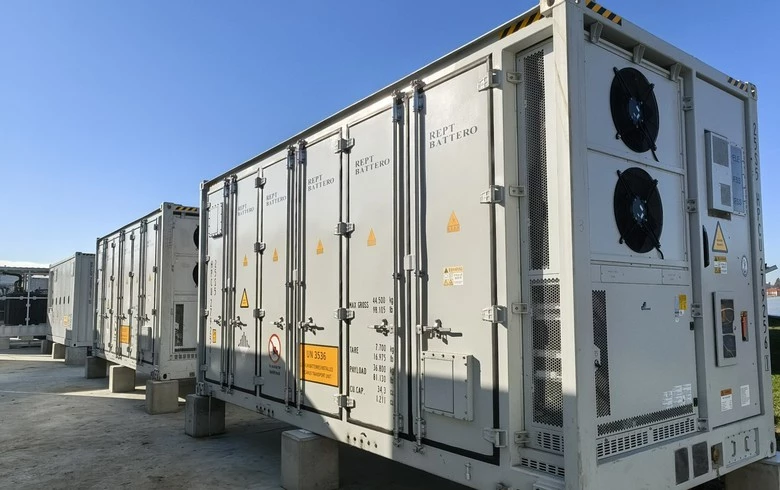
Malawi has completed the installation of Southern Africa's only utility-scale battery storage system outside South Africa and Namibia, a 20-megawatt facility designed to help stabilise power supplies in one of the world's least electrified countries. Officials from the Electricity Supply Corporation of Malawi (ESCOM) switched on the battery over the weekend as the country seeks to make its power network more resilient to climate shocks. A strong El Nino weather pattern is bringing higher temperatures that are expected to reduce flows in the Shire River, on which Malawi relies for most of its hydropower.
Only a quarter of Malawians have access to electricity, a figure the government aims to increase to 70% by 2030. Hydropower plants that provide about two-thirds of the country's electricity supply were severely damaged by Cyclone Freddy three years ago.
Solar currently provides about 100 MW of Malawi's 580-MW generating capacity.
“It is my hope that with this project, the experiences of blackouts are over. If there is constant power supply, it means more money and business for our livelihood as it used to be in the past,” said local business owner Harry Grant.
Malawi plans to add three more battery storage facilities with a combined capacity of 60 MW in two other cities. “We have commissioned this system and we are sure that now we will have a stable supply of power to the nation,” Energy Minister Jean Mathanga said on Friday at the site in the capital, Lilongwe.
The first project was funded by the Global Energy Alliance for People and Planet. The battery system will help connect 600,000 additional households and cut blackouts from four hours to less than two hours. "This BESS project does not require any continuous investment. It is not like diesel, where you have to keep buying diesel. This one will be using the power that is excess during the day and discharged during the night. Actually its making the grid more efficient. In any case there were going to curtail that power during the day. But now they say, lets keep it somewhere and use it later in the evening,” said Carol Koech Vice President of Global Energy Alliance for People and Planet
(Production: Siyabonga Sishi Camera: Eldson Chagara Editing Siyabonga Sishi, Xolani Nhlapo Writer: Siyabonga Sishi)
Articles similaires

Nigerian communities seek $310 mln from Shell, wan...
13 sept., 2024 09:26
Aramco to increase stake in EIG’s MidOcean to 49%,...
17 sept., 2024 07:50
Saudi Arabia starts operations for the 1st natural...
30 sept., 2024 13:20
Grid and regulatory hurdles stand in way of Ramokg...
01 oct., 2024 08:28
Libya Set to Revive Halted Oil Production as Bank ...
01 oct., 2024 09:10
5th Angola Oil & Gas Opens in Luanda with Calls to...
03 oct., 2024 11:43
How Heirs Energies turns around OML 17 in 100 days...
22 oct., 2024 08:28
Oil Updates – crude heads for weekly gain as Middl...
25 oct., 2024 08:31
Better news for petrol prices in South Africa...
28 oct., 2024 09:19