Métaux précieux

Endeavour Seeks Local Partners to Take Over Mali's Kalana Gold Project


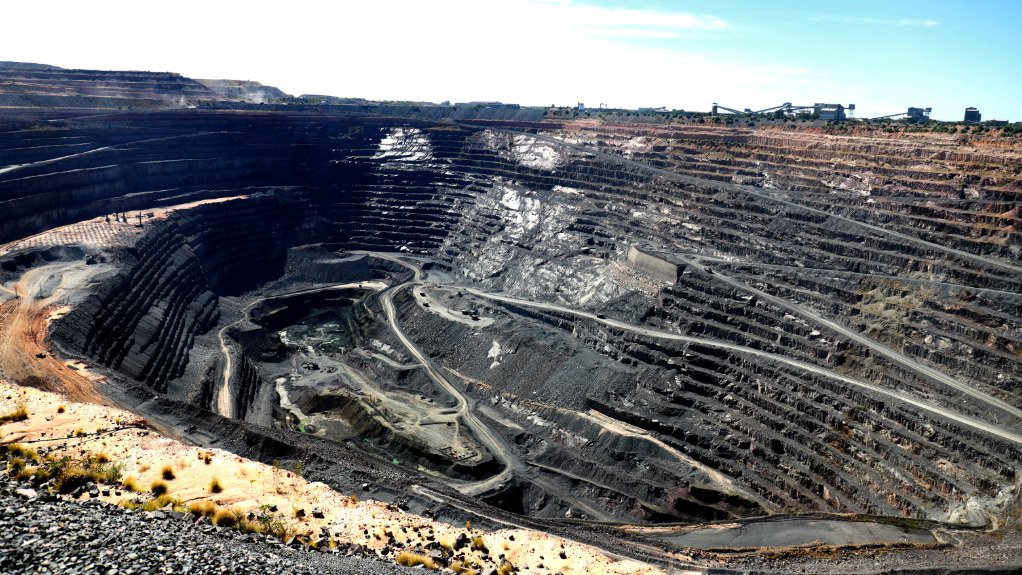
Endeavour Mining will not develop the Kalana gold mine in Mali itself and is seeking local partners to take over the project, the company confirmed to Ecofin Agency. The West African gold producer is walking away from the country's first industrial gold mine, less than a year after signing a memorandum of understanding with Bamako aimed at reviving the asset.
The clarification comes as Endeavour may be on the verge of a major expansion in Mali through a separate transaction. Barrick Mining and Endeavour are discussing an alliance centred on Barrick's African assets, Reuters reported on Monday, June 1. The deal under discussion would create a jointly held entity, listed in London and valued at around $30 billion, that would bring together Barrick's African mines. The Canadian group is seeking to refocus on North America and shed assets it considers higher-risk.
Endeavour declined to comment on that deal. The transaction would nonetheless represent a significant step up for the company. The leading gold producer in West Africa, with a market capitalisation of around $15 billion, Endeavour operates mines in Côte d'Ivoire, Burkina Faso and Senegal, but none in Mali. Its production rose by around 10% in 2025, to 1.21 million ounces.
It is against this backdrop that Endeavour has clarified Kalana's fate. A company spokesperson told Ecofin Agency that the project is not among its strategic assets and that it is working with local partners who may acquire and develop it. The statement provides the company's first update on the project in months.
In July 2025, Bamako and Endeavour signed a memorandum of understanding to revive Kalana. Abdoul Aziz Sy, director of Société des mines d'or de Kalana (Somika), said at the time that construction would begin six months after signing and that the mine would be operational within eighteen months. Ten months on, Endeavour has disclosed no progress on construction, financing or the firms tasked with carrying out the work.
The withdrawal also has accounting implications. In its 2025 annual report, Endeavour wrote down the value it assigns to Kalana by a further $9.5 million, after already impairing it by $133.1 million in 2024. The company attributed the reduction to a revision of its assumptions on project risk and the share of resources it considers economically recoverable.
A potential of more than 50 tonnes
Kalana entered production in 1984 with Soviet technical support and yielded around 500 kilograms of gold per year before operations halted in 1991. Endeavour acquired an 80% interest in the project in June 2017 for $122 million, paid as part of its acquisition of Avnel Gold. A pre-feasibility study published in 2021 estimated the mine could produce up to 150,000 ounces per year, for a total output of around 1.65 million ounces (51.3 tonnes) over eleven years. The same study put construction costs at $297 million.
That potential likely explains why Endeavour accepted Mali's revised mining terms. Under the July 2025 protocol, the company agreed to bring Kalana under the 2023 mining code, which allows the state to raise its stake to 35% -including 5% reserved for local investors- up from 20% currently. Endeavour is now choosing to step aside as it focuses on developing a new gold project -Assafou- in Côte d'Ivoire, where the company already operates two mines.
The contrast with Loulo-Gounkoto, Mali’s largest gold mine, is stark. The gold mine could come under Endeavour's control if the talks with Barrick result in a deal. It was largely idle throughout 2025 amid a dispute between Barrick and the Malian state. At the end of the year, it resumed production following an agreement between the Canadian company and Malian authorities.
Should the Barrick deal materialise, Endeavour would find itself in a singular position in Mali. The company would be walking away from an ageing, written-down project to become the operator of the country's principal gold mine, a major taxpayer and an established partner of the state. That scenario remains hypothetical, contingent on talks that neither party has confirmed.
Articles similaires
China’s ‘encouraging’ hydrogen progress witnessed ...
03 mars, 2026 07:55
Lucara posts lower 2025 revenue, says additional f...
04 mars, 2026 07:48
Gold bulls say broader rally is intact despite inv...
04 mars, 2026 08:00
WorldVest Launches Gold Finance Africa, Building a...
04 mars, 2026 10:44
Gold and silver rallies likely on pause despite ne...
04 mars, 2026 11:49
Gold prices climb over 1 percent to $5,164 as Midd...
04 mars, 2026 11:59
‘Extremely robust’ platinum investment demand expe...
04 mars, 2026 13:08
Trigon Metals Launches Silver Exploration Drive in...
05 mars, 2026 08:00
The Ekapa Mine liquidation – A tragedy compounded...
05 mars, 2026 08:05