Base Metals

Botswana is Now Digging for Copper After Betting Its Future on Diamonds


Botswana is trying to shift the center of gravity of its mining economy. Long dependent on diamonds, the country wants to attract more capital into copper, silver, and critical minerals while retaining a larger share of the resulting value at home. The government plans to increase non-diamond exploration spending to 150 million pula by 2029.
The shift is being accompanied by an overhaul of the mining framework. The government is pushing for more local processing, greater citizen participation in mine ownership, preferential procurement, and stronger environmental rehabilitation requirements. Regulations now being drafted are intended to establish minimum beneficiation thresholds and tighten permit-renewal rules to curb speculation in mining licenses.
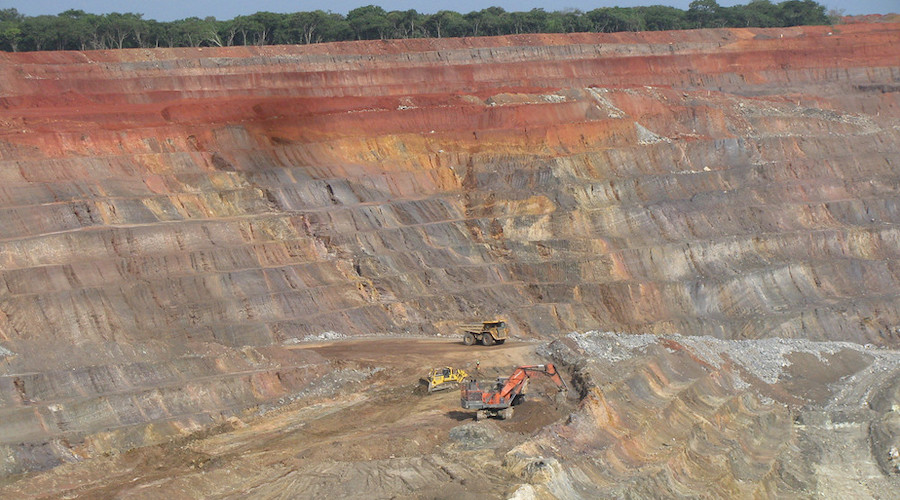
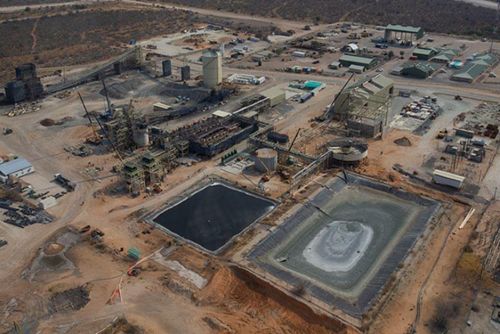
The Khoemacau project provides an industrial anchor for that strategy. MMG, a subsidiary of China Minmetals, approved a roughly 13 billion pula expansion — about $900 million — in December 2025 to increase annual copper output from 60,000 to 130,000 metric tons by the second quarter of 2028. The expansion includes a new processing plant and three new mining areas and is also expected to produce more than 4 million ounces of silver. The project is expected to support as many as 5,500 jobs at the peak of construction and more than 4,000 permanent jobs, while extending the mine's operating life beyond 20 years.
The project's economics should improve as production scales up. MMG expects average life-of-mine cash costs to fall below $1.60 per pound, down from $2.05 in the first half of 2025, and has indicated that capacity could eventually rise further, to 200,000 metric tons a year. At full production, the operation could generate about $1.4 billion in annual value, equivalent to nearly 7% of Botswana's GDP — making it large enough on its own to materially reshape the country's export mix.
The central challenge is balancing local value creation with competitiveness. Requirements that are too rigid could delay investment if domestic suppliers and processing capacity are not yet able to meet them; rules that are too weak risk perpetuating a raw-material export model. For a country that has generated extraordinary wealth from diamonds but developed relatively limited downstream processing around the industry, the copper pivot will test whether Botswana can capture more of that downstream value this time.
Botswana's diversification will be measured not just by how many mines it opens, but also by the engineering, services, manufacturing, and financing industries that develop around them. Copper demand is rising as electrification expands, and the timing favors a new producer. The key question is whether Botswana can capture more than the value of the metal itself — including fabrication, technical skills, and a deeper domestic supplier base. That is what the new rules are designed to achieve, and Khoemacau will provide the first major test.
Related Articles

Sanu Gold Announces $5 Million Private Placement L...
06 Sep, 2024 13:08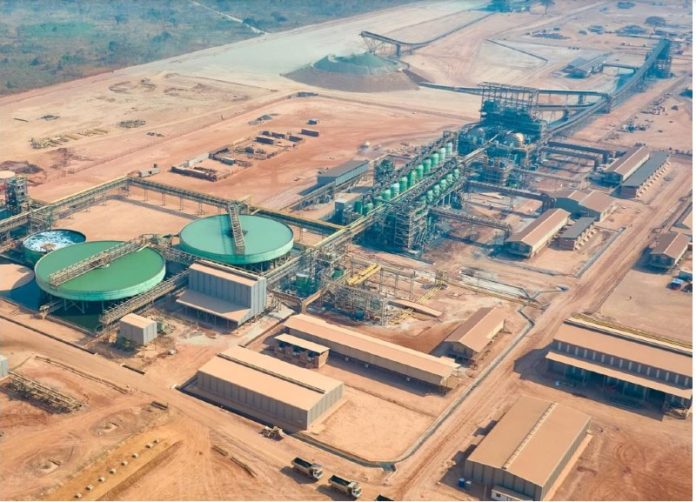
Ivanhoe Mines produces 40,347 tonnes of copper at ...
09 Sep, 2024 09:21
Andrada partners with SQM to develop Namibia lithi...
10 Sep, 2024 08:56
US, Saudi Arabia in talks to secure metals in Afri...
10 Sep, 2024 09:07
DRC: Eurasian Secures $150 Million to Develop a Co...
12 Sep, 2024 06:22
Zambian mines desperate for power turn to a surpri...
13 Sep, 2024 11:18
Africa at the cusp of a critical minerals boom...
17 Sep, 2024 07:40
Coolabah to unite Broken Hill assets, paving path ...
17 Sep, 2024 08:40
Marula Mining completes first manganese exports sa...
18 Sep, 2024 09:05