Autres (mines)

Africa’s Mining Explosives Market Grows, but Local Players Struggle to Break In


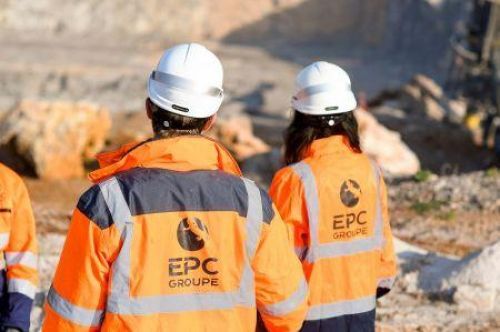
French group EPC, a specialist in civil explosives, reported revenue of €591 million ($684 million) for 2025 on March 30, up 6% year over year. The figure includes earnings from around ten African countries where the company supplies mining explosives.
EPC, which last year secured a five-year contract at the future Koné gold mine in Côte d’Ivoire, is among several foreign firms dominating a market where local players remain largely absent.
Mining explosives are powerful chemical compounds used to break rock formations through controlled blasting, enabling mineral extraction. They are essential for coal, metals, and quarry operations, and remain a critical input for any large-scale open-pit mining activity.
A foreign-dominated market
According to Market Research Future, the African market was valued at about $364 million in 2023 and is expected to reach nearly $593 million by 2032, reflecting average annual growth of 5.7%. The sector is currently controlled by a small group of foreign companies, including Australia’s Orica, Spain’s Maxam, Chile’s Enaex, and France’s EPC Groupe.
South African firms such as AECI Mining Explosives and BME are also active, although their footprint remains largely regional, leaving much of the continent to external operators.
At a time when African governments are seeking to increase local participation across mining value chains, there are no formal barriers preventing domestic investors from entering the explosives segment. However, structural constraints—common to mining subcontracting activities—make entry difficult. Limited access to capital, the need to build technical expertise, and competition from long-established international firms all restrict opportunities.
In a June 2025 analysis of French group Maxam, S&P Global noted that the sector is highly regulated, with requirements that have become more stringent over time, creating significant barriers to entry. The report adds that customer retention rates are high, with companies maintaining long-term contracts and strong renewal rates with existing clients.
The need for state support
In a market where mining companies tend to rely on a small group of established suppliers, the emergence of local players is unlikely without targeted policy support. In Mali, the government has opted for direct involvement, signing an agreement in November 2024 with Auxin Chemical Technology, a subsidiary of China’s Norinco.
The project to build a national civil explosives plant, FARATCHI-CO SA, advanced in January 2026 with its approval by the Council of Ministers. The Malian state will hold a 51% stake in the company, while Auxin will provide full financing and technical expertise.
While this approach mirrors local content strategies used in mining, other options remain available. Governments could require foreign suppliers awarded explosives contracts to partner with local firms or open part of their capital to African investors, similar to local participation rules already applied to mining companies in several countries.
The key question is whether political will will follow.
Articles similaires
Endeavour announces transaction in own shares...
10 sept., 2024 07:27
Ivanhoe Mines Announces MOU with Government of Zam...
10 sept., 2024 12:24
Feasibility Study on Lumwana Super Pit Expansion E...
12 sept., 2024 14:21
Endeavour achieves commercial production at BIOX e...
13 sept., 2024 08:20
Roscan Gold Announces Changes to the Board of Dire...
16 sept., 2024 10:40
Minerals Council pays tribute to Pravin Gordhan...
16 sept., 2024 12:17
Notification of an acquisition of beneficial inter...
18 sept., 2024 08:39
Newmont on track to get at least $2 billion from a...
18 sept., 2024 10:49
UAE firm plans to invest $500m in Tanzania...
19 sept., 2024 08:37