Autres (énergie)

AfDB Presses Africa to Make Clean Cooking Core to Energy Transition


By: OrePulse
The African Development Bank Group called on African governments and development partners to place clean cooking at the center of the continent's energy transition, telling a United Nations gathering in New York that nearly one billion people across Africa still lack access to clean cooking solutions.
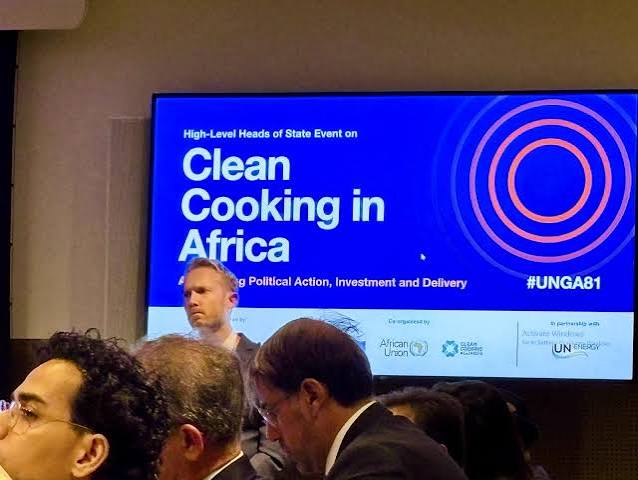
The appeal came during a High-Level Heads of State Event on Clean Cooking in Africa, held September 23 on the sidelines of the UN General Assembly. African leaders and development partners used the session to address the continent's persistent reliance on traditional biomass fuels for cooking.
Organizers included the governments of Kenya and Norway, working alongside the International Energy Agency, the Clean Cooking Alliance and UN Energy. Participants pointed to a web of related problems tied to households still cooking over open fires or with traditional stoves burning wood, charcoal or other biomass. Women and children bear a disproportionate share of the health damage caused by household air pollution, and the hours many spend gathering fuel are hours not spent in school or earning income.
Kenyan President William Ruto called for clean cooking to be built into national development planning. Kenya is set to host the second Summit on Clean Cooking in Africa in January 2027, where organizers expect governments to unveil new investment pledges.
African Development Bank Group Senior Vice President Marie-Laure Akin-Olugbade framed the issue broadly, saying the way a family cooks affects health, forests, productivity and gender equality in millions of households, and describing clean cooking as central to both development and climate action.
The bank's financial commitment dates to a 2024 summit, when it pledged $2 billion over ten years to expand access to clean cooking across the continent. Of that pledge, roughly $135 million has since been channeled into projects, all of them concentrated so far in three East African countries: Uganda, Tanzania and Rwanda. Ireland has separately pledged 300,000 euros toward carrying the initiative forward, a modest addition alongside the bank's much larger long-term commitment.
Measured against the scale of the problem, the money deployed remains small: roughly $135 million in projects on the ground compares with a population of close to one billion people the bank says still cook without clean fuels or stoves. That gap is likely to frame discussion at the Kenya summit in January, where organizers expect participating governments to put forward new funding pledges. Whether those commitments reach beyond the three countries currently receiving bank financing, and how quickly, remains to be seen.
Articles similaires
Voltamp Energy secures control of Saudi joint vent...
03 mars, 2026 08:18
Gold, crude oil prices trend higher amid world’s n...
04 mars, 2026 07:52
African Development Bank approves US$58 Million fo...
04 mars, 2026 11:57
Oil prices up 1% as Iran crisis disrupts Middle Ea...
04 mars, 2026 13:20
East Africa Prepares Regional Power Market to Deep...
05 mars, 2026 08:04
STEG Seeks €40 Million EBRD Loan For 50 MW Solar A...
05 mars, 2026 08:21
South African President Says Hormuz Crisis Sharpen...
06 mars, 2026 11:12
How Aramco can keep oil flowing during Iran confli...
06 mars, 2026 11:36
CESI Boosts Ancillary Services in Gulf Power Syste...
06 mars, 2026 12:21