Generation

Mideast boosts renewable energy investment amid security push


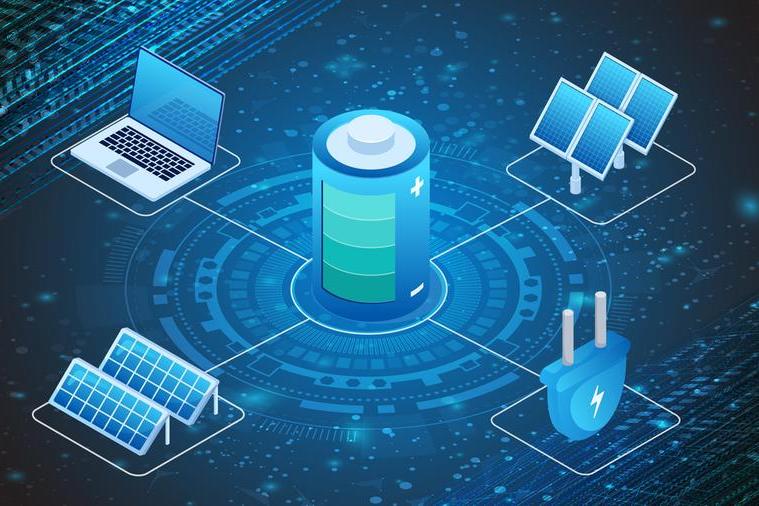
Investment in renewable energy projects in the Middle East has jumped by 28 per cent, year-on-year, according to a new report from Ansarada, a mergers and acquisitions (M&A) and infrastructure procurement platform.
The 2026 Renewable Energy Infrastructure Outlook Report, produced in partnership with Infralogic, notes that globally, investment in the renewable energy sector has surged to a total of $496B, with increasing AI compute demand cited as a key driver of this activity.
Investment in renewable energy projects in the Middle East totalled $12.9 billion in 2025, up from $10.1 billion in 2024.
Surveying 150 senior executives across APAC, EMEA, and the Americas, the report highlights how the Middle East is establishing itself as a strategic market, with 25 per cent of respondents citing the region as a top growth market for renewable energy investment.
As Western markets grapple with grid congestion and permitting delays, the region's sovereign-backed model enables "rapid supply chain mobilisation and bankable pipelines," sidestepping the permitting friction and multi-year grid queue bottlenecks plaguing Europe and North America.
The Middle East's integrated delivery approach exemplifies a different path to market, building renewables and transmission infrastructure in parallel rather than sequentially. This model leverages sovereign capital and streamlined regulatory frameworks to accelerate deployment at scale.
"The Middle East demonstrates what's possible when projects are designed and delivered holistically," said Justin Smith, Managing Director at Ansarada. "Building renewables and transmission together represents a fundamentally different approach than the fragmented delivery model common in Western markets."
The urgency is amplified by AI-driven energy requirements.
With over $500 billion in AI infrastructure capital expenditure projected for 2026 and US data centre energy consumption forecast to hit 409 TWh by 2030, the report identifies this as the primary catalyst for new renewable development, cited by 37 per cent of respondents globally and 36 per cent in EMEA.
The UAE's emergence as a regional AI hub is driving increased focus on energy infrastructure capable of supporting compute-intensive operations.
As the country positions itself at the forefront of AI adoption across the Middle East, the need for integrated renewable energy and storage solutions becomes increasingly critical.
"AI compute demand is the single biggest driver of new renewables development," Smith said. "But the shift from distributed solar to integrated, dispatchable systems, the 'solar-plus-storage' configurations needed to manage grid stability, dramatically increases procurement complexity."
The report reveals battery storage transitioning to essential infrastructure: 34 per cent of EMEA respondents expect strong growth in large-scale storage.
In EMEA broadly, macroeconomic uncertainties (44 per cent) and high interest rates (44 per cent) lead to regional concerns.
Despite widespread technology adoption, the report exposes critical weaknesses. While 91 per cent use purpose-built procurement software, organisations deploy an average of 3-4 disconnected systems, and 55 per cent still rely on email for sensitive bidder correspondence.
"Organisations think they've digitised, but they've actually created a 'Frankenstack' of disconnected tools," Smith said. "The technology fragmentation gap was one of the most surprising findings."
Only 37 per cent of respondents globally described their most recent procurement process as "very efficient," dropping to 8 per cent in EMEA and 29 per cent among government agencies.
While 95 per cent believe their processes are transparent internally, 43 per cent admit processes lack clarity for external parties, creating litigation risk.
In EMEA, 80 per cent of respondents deeply embed ESG in procurement, with 90 per cent describing transparency and auditability as at least "very important."
Without auditable ESG data, projects may not be eligible for tender or financing in many jurisdictions."
The Middle East demonstrates what's possible when projects are designed holistically.
That integrated approach, combined with proper digital infrastructure for procurement, separates projects that deliver from those that stall,” Smith concluded.
Related Articles

Parliament Committee says no need to review three ...
10 Sep, 2024 07:57
Zimbabwe’s Biggest Miners Seek $182 Million for So...
12 Sep, 2024 06:57
GreenGo Energy Expands into Namibia with Strategic...
12 Sep, 2024 07:51
OPEC Fund approves $1.2 billion for development pr...
13 Sep, 2024 08:59
Floating solar starts to gather pace in Africa, as...
13 Sep, 2024 13:18
Prominent South African energy company files for l...
16 Sep, 2024 11:00
Libyan Export Decline and Fed Speculation Propel O...
17 Sep, 2024 08:00
South Sudan says it is ready to restart pumping oi...
17 Sep, 2024 13:23
Interest grows in Africa’s oil and gas hotspot...
18 Sep, 2024 10:42