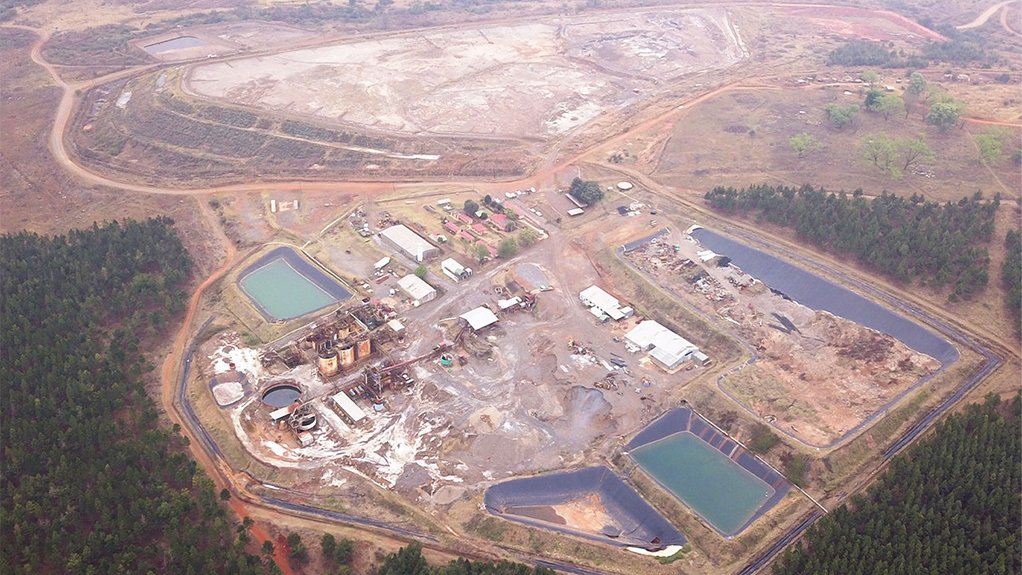
Precious Metals

Guinea Opens Talks With Miners to Advance Domestic Gold Refining



Through a series of decrees read on national television on July 3, Guinea announced a 30-day negotiation period with mining operators to finalize new measures linked to the suspension of raw gold exports. The talks will define the regulatory framework supporting the country’s domestic gold-refining strategy.
At the same time, Conakry introduced a 90-day transition period during which mining companies may continue exporting raw gold on an exceptional basis. The term refers to gold ore and doré bars, semi-refined bullion containing gold, silver and other impurities.
However, the government will subject those exports to enhanced reporting requirements. Companies must also submit compliance plans to the Ministry of Mines. The transition phase will prepare the implementation of reforms designed to make refineries located in Guinea the primary buyers of domestically produced raw gold.
Negotiations Focus on Local Supply
The upcoming negotiations will center on how mining companies supply gold volumes to local refineries for processing.
The parties will also discuss pricing mechanisms, tax and customs conditions, commercial and financial guarantees for operators, and the timetable for gradually implementing the new obligations.
These measures coincide with the planned commercial launch of Nimba Gold Refinery later this month. Reuters, citing Mines Minister Bouna Sylla, reported last week that the facility represents a $30 million investment and will initially process 530 tonnes of gold annually, equivalent to roughly 17 million ounces.
Implementation Remains the Main Challenge
From announcing the suspension of raw gold exports in June to publishing the implementation timetable for the new measures, the Guinean government has sought to lay the groundwork for upgrading its gold industry. The strategy mirrors a broader regional trend. Producer countries such as Mali, Burkina Faso and Ghana have also launched initiatives to increase domestic processing. However, the position of mining companies operating in Guinea remains uncertain.
Guinea hosts international gold producers including AngloGold Ashanti and Predictive Discovery. Nevertheless, artisanal mining still dominates national output.
Authorities have long struggled with informality and smuggling in the artisanal sector. In 2025, artisanal miners accounted for 1.59 million ounces of Guinea’s 2.33 million ounces of gold exports, exceeding industrial and semi-industrial production.
That structure highlights the need for a consultation framework tailored to the realities of each segment if the reforms are to succeed.
Traceability Becomes a Priority
Conakry has already identified traceability as one of the central issues. Authorities plan to create a national gold traceability registry that will centralize records of production, collection, transport, refining and exports.
The government must now demonstrate whether these measures can turn Guinea’s local-processing ambitions into reality for a commodity that ranks alongside bauxite and iron ore among the country’s leading exports.
Beyond Guinea, other West African states have already recorded progress in their value-addition strategies. In Ghana, authorities recently increased the share of annual industrial mine production that the state entity GoldBod may purchase from 20% to 30%. The measure should channel larger gold volumes toward local refineries.
Related Articles

Investigation uncovers fraudulent identity documen...
10 Sep, 2024 08:08
The Top Five Gold-Producing Countries in Africa in...
10 Sep, 2024 08:46
AngloGold notes ‘enormous geological potential’ in...
10 Sep, 2024 09:29
Awalé Resources expands BBM gold zone at Odienné p...
10 Sep, 2024 11:38
Proposed amendment: Gold mines to be subject to th...
10 Sep, 2024 12:39
Pan African Resources Annual Result Improves; Expe...
12 Sep, 2024 07:42
African countries are joining the sovereign gold-b...
12 Sep, 2024 08:07
Platinum Group Metals Ltd. Announces Positive Inde...
16 Sep, 2024 09:11
At least 20 likely dead in violence near Papua New...
16 Sep, 2024 10:37