Precious Metals

BRICS Plus countries increase gold reserves to more than 6 000 t


Russia leads BRICS Plus with 2 336 t, while China holds 2 298 t and India 880 t of gold. Together, Russia and China control about 74% of the bloc’s total gold holdings.
Between 2020 and 2024, BRICS Plus member central banks bought more than 50% of all gold bought by sovereigns globally.
In the first nine months of 2025, BRICS Plus nations added 663 t of gold, worth about $91-billion, to gold holdings.
Brazil made its first gold purchase since 2021, adding 16 t in September 2025.
EBC attributes this structural shift to when Western nations froze about $300-billion in Russian foreign exchange reserves in 2022.
As a result, central bank gold purchases jumped from an estimated 500 t/y before 2022 to over 1 000 t/y in each of the three years since.
Gold stored in domestic vaults cannot be frozen or confiscated through the Society for Worldwide Interbank Financial Telecommunication, or SWIFT, system, EBC explains.
It points out that the gold accumulation is one side of the shift, with the other being the declining dollar share of global reserves.
International Monetary Fund (IMF) Currency Composition of Official Foreign Exchange Reserves (COFER) data shows the dollar’s share fell from 71% in 1999 to about 57% by the end of 2025, its lowest reading since 1994.
Foreign central bank holdings of dollar-denominated assets have remained essentially flat since 2014, the note informs.
EBC explains that the decline in share is driven by faster growth in reserves held in euros, yen, gold and a growing basket of non-traditional currencies, rather than active selling.
The World Gold Council’s (WGC’s) 2025 survey found that 73% of central bankers globally believe the dollar’s reserve share will decrease further over the next five years, while 43% of surveyed central banks plan to increase their gold holdings, both record-high readings.
Gold’s share of official reserve assets has more than doubled from below 10% in 2015 to over 23% presently, EBC points out in its market note.
While much of this reflects gold’s price appreciation, it is also because central banks are allocating a growing share of their portfolios to gold, with the Hormuz crisis reinforcing the urgency, the note posits.
Saudi Arabia holds about 323 t of gold, just 2.6% of its total reserves. EBC says this allocation is notably low, given that the country has over $500-billion in reserves.
A move to just 5% gold allocation would require purchases equivalent to the entire projected central bank demand for 2026 from a single buyer, it points out.
The Kingdom has not publicly announced plans to increase gold holdings, but its BRICS Plus membership, its participation in the mBridge platform and its deepening ties with Beijing all point toward a strategic repositioning that could logically include gold, EBC states.
The WGC projects 750 t to 850 t of central bank purchases this year, still far above historical norms.
That volume represents about 20% of yearly global mine supply, absorbed as a one-directional flow regardless of price.
This creates a structural floor that has made each correction shallower than the last, the note points out.
Central bank demand is being reinforced by institutional flows. Gold exchange-traded fund inflows accelerated throughout 2025, and China’s insurance sector has been allocated pilot positions in gold, EBC points out.
It highlights three developments that would accelerate the current trend.
First, if China resumes public reporting of gold reserve additions and reveals larger-than-expected holdings, that would be an immediate catalyst, as the country has not publicly reported purchases since May 2024.
Second, any formal gold allocation increase by Saudi Arabia or the United Arab Emirates would confirm that the newest BRICS Plus members are following the Russia-China playbook.
The third development would depend on further declines in the dollar’s reserve share in the next IMF COFER release, as each incremental drop reinforces the narrative driving sovereign gold demand, EBC avers.
Related Articles

China’s ‘encouraging’ hydrogen progress witnessed ...
03 Mar, 2026 07:55
Lucara posts lower 2025 revenue, says additional f...
04 Mar, 2026 07:48
Gold bulls say broader rally is intact despite inv...
04 Mar, 2026 08:00
WorldVest Launches Gold Finance Africa, Building a...
04 Mar, 2026 10:44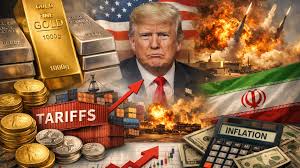
Gold and silver rallies likely on pause despite ne...
04 Mar, 2026 11:49
Gold prices climb over 1 percent to $5,164 as Midd...
04 Mar, 2026 11:59
‘Extremely robust’ platinum investment demand expe...
04 Mar, 2026 13:08
Trigon Metals Launches Silver Exploration Drive in...
05 Mar, 2026 08:00
The Ekapa Mine liquidation – A tragedy compounded...
05 Mar, 2026 08:05