Mining Other

Africa's mining boom is destroying forests at unprecedented rates, study finds


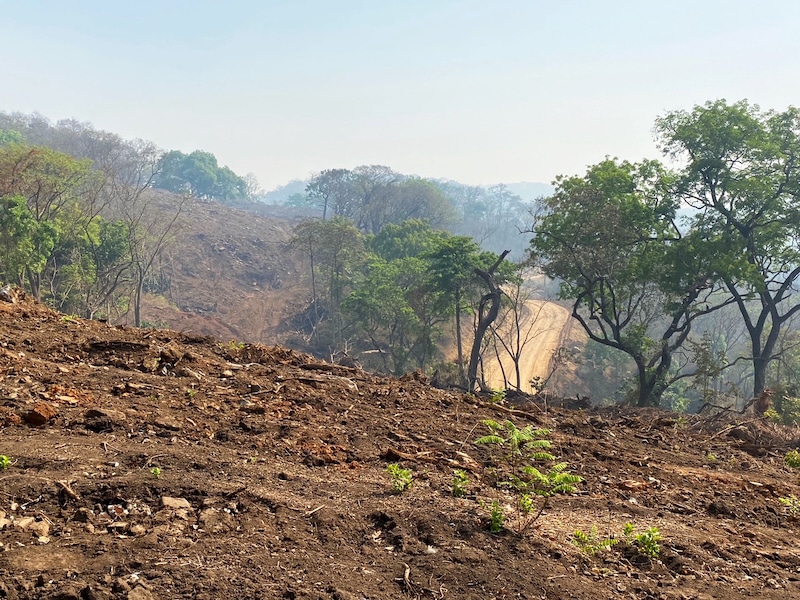
New research examining mining across Africa suggests the sector is driving far more forest loss than the size of mine sites alone would indicate. The study points to impacts that spread into surrounding landscapes, with consequences for communities that depend on forests for food, water, and stability.
What happened?
University of Sheffield-led research found that each hectare (roughly 2.74 acres) of active mine site in Africa is linked to 34 additional hectares (84 acres) of forest loss tied to related infrastructure.
The researchers said the study is the first broad, continent-wide analysis of deforestation connected to mining in Africa, according to the Institute of Materials, Minerals, and Mining. Using satellite imagery and statistical modeling, the team compared forest loss in mined areas with that in comparable non-mining regions.
The analysis showed that a large share of the damage happens outside the mines themselves, with roads, housing settlements, and farmland created to support operations accounting for significant forest loss. From 2001 to 2020, mining activity in Africa accounted for 187,000 hectares (over 462,000 acres) of forest loss — almost twice the area of Dallas, Texas.
The team examined more than 16,000 mines, from multinational industrial operations to smaller artisanal sites. Cobalt and copper mining caused the highest overall deforestation rates, while gold, silver, and iron mining were also associated with greater forest loss.
Why does it matter?
That broader impact could hinder progress toward a healthier future with rising demand for minerals used in modern technologies, including those tied to the energy transition.
Land cleared for worker housing, transport links, and agriculture can push the effects far beyond the original mine footprint, destroying wildlife habitat, increasing exposure to flooding and extreme heat, and making local food systems more fragile.
Forests help safeguard water supplies, store planet-warming pollution, and support the livelihoods of people living nearby. When those forests are fragmented or erased, the burden can fall most heavily on families that depend on them most directly.
The pressure is also rising quickly. Metal ore extraction in Africa has quadrupled since 1970, according to the institute, while demand for key minerals is expected to be 40 times higher by 2040. If protections do not improve, that growth could carry environmental and human costs far greater than mine maps alone would suggest.
What are people saying?
Co-lead author Dr. Oscar Morton said: "The actual mines themselves are just the tip of the iceberg. It's the extent of additional deforestation triggered by mining that is far greater, with new settlements, agriculture, and transport routes posing a serious threat to vital forests across the continent."
Morton also warned that the problem is likely to worsen without action: "As demand for minerals continues to rapidly grow, it's crucial that robust measures are put in place to limit the extra deforestation caused by mining and its supply chains."
Related Articles
Endeavour announces transaction in own shares...
10 Sep, 2024 07:27
Ivanhoe Mines Announces MOU with Government of Zam...
10 Sep, 2024 12:24
Feasibility Study on Lumwana Super Pit Expansion E...
12 Sep, 2024 14:21
Endeavour achieves commercial production at BIOX e...
13 Sep, 2024 08:20
Roscan Gold Announces Changes to the Board of Dire...
16 Sep, 2024 10:40
Minerals Council pays tribute to Pravin Gordhan...
16 Sep, 2024 12:17
Notification of an acquisition of beneficial inter...
18 Sep, 2024 08:39
Newmont on track to get at least $2 billion from a...
18 Sep, 2024 10:49
UAE firm plans to invest $500m in Tanzania...
19 Sep, 2024 08:37