Mining Other

South Africa's informal miners fight for their future in coal's twilight


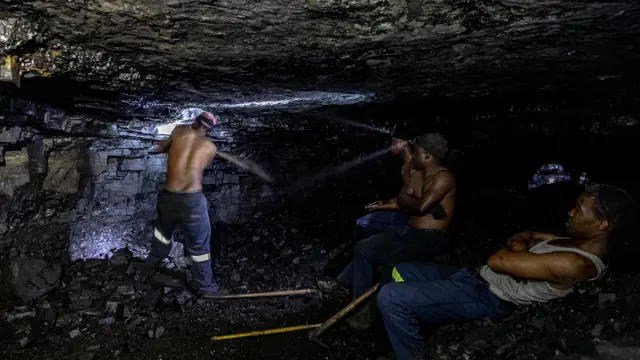
In South Africa’s coal heartland of Mpumalanga, informal miners like Cyprial risk their lives daily in dangerous, abandoned tunnels, extracting coal by hand in near-total darkness. Though the government labels them "illegal miners," they refer to themselves as artisanal workers, providing a critical source of income in a region where unemployment exceeds 34% and many locals cannot afford the electricity produced from the coal they mine.
Despite South Africa’s commitment to a just energy transition, backed by an $8.5 billion international deal, these miners fear being left behind. They argue that formalizing and supporting small-scale mining could correct historical injustices and ensure communities benefit from the nation’s mineral wealth. An application for a collective mining permit has been lodged, but the costly, slow formalization process—requiring millions of rands for permits and environmental rehabilitation—remains out of reach for those living hand-to-mouth.
Advocates stress that a truly "just transition" must include pathways for artisanal and small-scale miners to operate legally and sustainably, especially as demand shifts toward critical minerals for green technology. Without inclusion, they warn, the shift to renewable energy risks repeating the exclusion and inequality that have long characterized South Africa’s mining sector.
Related Articles
Endeavour announces transaction in own shares...
10 Sep, 2024 07:27
Ivanhoe Mines Announces MOU with Government of Zam...
10 Sep, 2024 12:24
Feasibility Study on Lumwana Super Pit Expansion E...
12 Sep, 2024 14:21
Endeavour achieves commercial production at BIOX e...
13 Sep, 2024 08:20
Roscan Gold Announces Changes to the Board of Dire...
16 Sep, 2024 10:40
Minerals Council pays tribute to Pravin Gordhan...
16 Sep, 2024 12:17
Notification of an acquisition of beneficial inter...
18 Sep, 2024 08:39
Newmont on track to get at least $2 billion from a...
18 Sep, 2024 10:49
UAE firm plans to invest $500m in Tanzania...
19 Sep, 2024 08:37