Mining Other

Mining of critical minerals not as big an emissions contributor as many expect - ICMM


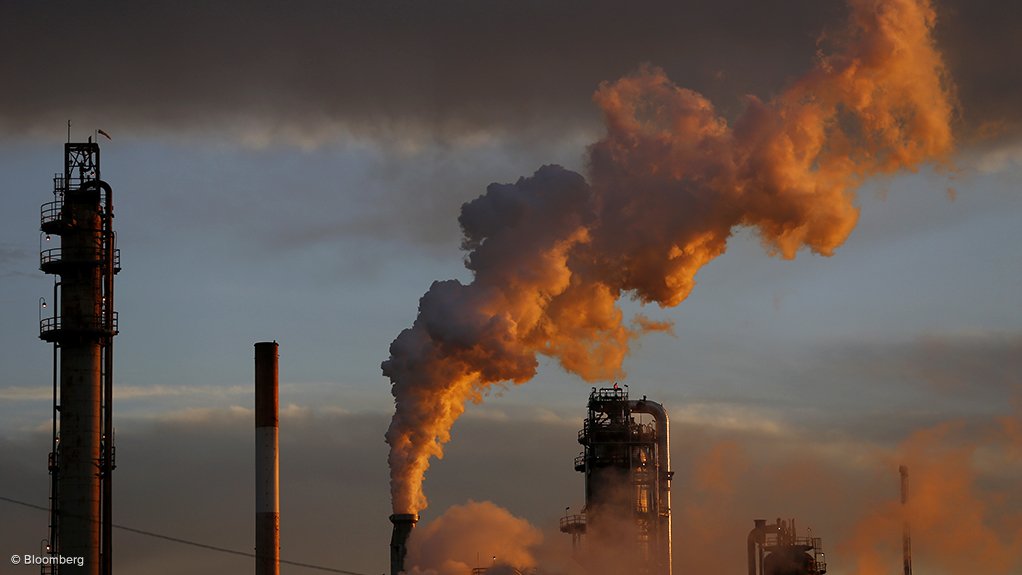
Currently, non-coal mining represented just 0.54% of global GHG emissions in 2024.
By comparison, fugitive emissions from coal, which must be phased out to meet global climate goals, accounts for 2.46% of global GHG emissions.
In total, Scope 1 and 2 emissions from mining, which account for 3% of global GHG emissions, and metal processing, which account for 8% of global GHG emissions, positioned the mining sector as the sixth-largest source of global GHG emissions.
The sector contributed less GHG emissions than the power generation, transport and agriculture sectors, and about as much as all other industrial processing activities.
Steel and aluminium production, along with coal mining, were the largest sources of GHG emissions in 2024, having accounted for 93% of Scope 1 and 2 emissions.
This while demand for steel and aluminium is poised to increase in the coming years. These commodities are equally important for infrastructure that underpins the green transition.
ICMM finds that 80% of the mining sector’s global Scope 1 and 2 emissions originate in Asia owing to its concentration of primary mines and processing facilities for most global commodities.
ICMM tasked consultancy Wood Mackenzie to analyse facility-level data from 1 700 facilities across 14 commodities in compiling the ‘Global Mining & Metals Greenhouse-Gas Emissions Dataset’, which together represent 87% of global production. ICMM modelled emissions using regional commodity-level averages for the remaining 13% of production volumes.
The dataset was designed for high-level sector and regional insights only and is not suitable for benchmarking companies or assets, or for assessing corporate progress against targets.
Rather, ICMM says the dataset offers an industrywide picture, explores regional and commodity-specific emissions profiles and allows comparisons of mining and metals GHG emissions with emissions from other major industries.
The findings offer important context at a time when demand for minerals and metals is rising rapidly to support the global energy transition and the infrastructure and urbanisation needs of a growing population.
As the world progresses towards the goal of tripling renewable energy capacity by 2030, demand for minerals and metals is projected to grow significantly, reflecting the sector’s essential role in building clean technologies.
Simultaneously, producing these materials is energy-intensive, which means the mining and metals industry is both a contributor to GHG emissions and a key enabler of the energy transition.
By publishing this dataset – the second in a planned series of data-backed reports - ICMM intends to strengthen its collective understanding of the mining and metals sector’s contribution to GHG emissions and support informed decision-making for policymakers, investors and all relevant stakeholders
ICMM data and research director Dr Emma Gagen says despite the mining sector’s importance to the energy transition, up-to-date, publicly available and industrywide data has been lacking, while misleading estimates are often circulated.
“ICMM’s mining emissions dataset provides data and data-driven insights to underpin more informed dialogue about the sector’s contribution to global GHG emissions while providing the building blocks for sustainable development and the global energy transition,” Gagen explains.
She adds that, like all large-scale datasets, this one will evolve, but establishing a transparent, industrywide baseline was a necessary starting point.
Related Articles
Endeavour announces transaction in own shares...
10 Sep, 2024 07:27
Ivanhoe Mines Announces MOU with Government of Zam...
10 Sep, 2024 12:24
Feasibility Study on Lumwana Super Pit Expansion E...
12 Sep, 2024 14:21
Endeavour achieves commercial production at BIOX e...
13 Sep, 2024 08:20
Roscan Gold Announces Changes to the Board of Dire...
16 Sep, 2024 10:40
Minerals Council pays tribute to Pravin Gordhan...
16 Sep, 2024 12:17
Notification of an acquisition of beneficial inter...
18 Sep, 2024 08:39
Newmont on track to get at least $2 billion from a...
18 Sep, 2024 10:49
UAE firm plans to invest $500m in Tanzania...
19 Sep, 2024 08:37