Precious Metals

Gold ETF inflows hit record as investors poured $89bn into the market in 2025


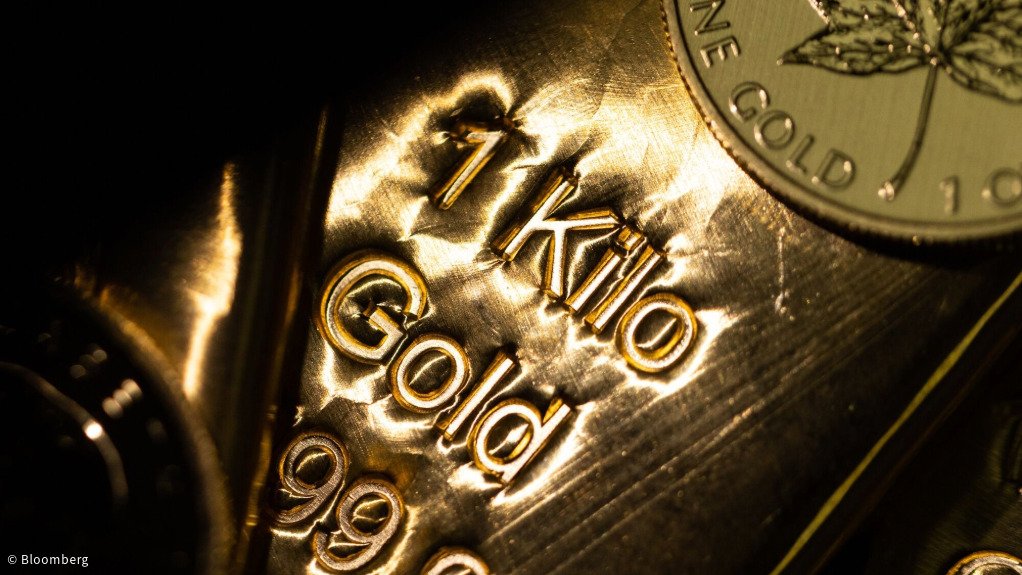
The surge in investment followed a year in which the gold price broke records 53 times, delivering its strongest yearly performance since 1979. As a result, global gold ETF assets under management doubled to a record $559-billion by year end, while total holdings rose to a historic peak of 4 025 t, up from 3 224 t in 2024.
This marked the second strongest year for gold ETF demand on record, with accumulation levels below those seen during previous periods of extreme financial stress.
North American funds accounted for the majority of global inflows during the year, while Asian holdings almost doubled and Europe also recorded strong demand. Investor interest was driven by rising safe-haven demand amid escalating global trade disputes, geopolitical tensions and financial market volatility, as well as momentum buying as the gold price climbed.
Falling opportunity costs also supported inflows as US Treasury yields declined and the dollar weakened.
Momentum continued into December, which marked the seventh consecutive month of positive global gold ETF flows. Global funds recorded inflows of $10-billion during the month, led by North America, with Asia and Europe also posting gains.
Supported by continued strength in the gold price and steady inflows, global gold ETF assets under management rose 5% during December, while holdings increased by 2%, Goldhub noted.
North America recorded its seventh straight month of inflows in December, adding $6-billion, well above the year-to-date monthly average of $4-billion. Shifting expectations around US monetary policy and ongoing safe-haven demand underpinned investor activity.
A December meeting of the US Federal Reserve delivered 25 basis point rate cut, with policymakers signalling limited scope for further reductions. However, the restart of the Fed’s bill-buying programme was viewed by markets as a form of easing that would support liquidity conditions. Expectations of additional easing also strengthened ahead of the anticipated appointment of a new Federal Reserve chair in early 2026.
Geopolitical tensions, including developments in US relations with Venezuela and Nigeria, added to safe-haven demand. At the same time, concerns about volatility linked to an artificial intelligence-driven equity market rally sustained interest in gold, which is typically viewed as having a low correlation with shares.
North American gold ETFs recorded inflows of $51-billion for the year, the strongest result on record and accounting for nearly 57% of global inflows. Assets under management and holdings in the region both rose to all-time highs.
European funds extended their inflow streak in December, adding $1-billion, led by the UK and Switzerland. Heightened geopolitical tensions and stalled negotiations between Russia and Ukraine supported demand, while continued strength in the gold price also encouraged investment.
Currency appreciation against the dollar boosted interest in foreign-exchange-hedged products, particularly in Switzerland. Europe recorded total inflows of $12-billion in 2025, reversing two consecutive years of losses and marking the second highest yearly inflow on record for the region, according to Goldhub.
Asian gold ETFs attracted $2.5-billion in December, extending inflows to a fourth consecutive month. India led regional demand during the month, recording its largest monthly inflow on record and registering positive flows for eight months in a row.
Investors in China and Japan also continued to add gold ETFs to their portfolios, supported by ongoing geopolitical tensions and rising gold prices. In China, a value-added tax reform announced in November continued to encourage jewellery buyers with investment motives to shift towards gold ETFs.
For the full year, Asian gold ETF inflows reached $25-billion, exceeding total inflows recorded between 2007, when the first fund was listed in the region, and 2024.
Funds in other regions recorded inflows of $200-million in December, mainly driven by Turkey and Australia. This lifted yearly inflows in these markets to $902-million, the highest level on record.
Trading activity across the global gold market also reached record levels during 2025. Average daily trading volumes reached $361-billion for the year, a 56% increase compared with 2024. Over-the-counter trading rose to an average of $180-billion a day, driven by strong activity in the London Bullion Market Association market.
Exchange-traded volumes climbed to $174-billion a day, led by growth on the Commodity Exchange and the Shanghai Futures Exchange. Global gold ETF liquidity more than doubled to $7-billion a day, with North America accounting for the bulk of activity, Goldhub reported.
In December alone, global gold trading volumes averaged $410-billion a day, slightly below the previous month but above the yearly average. Over-the-counter volumes increased month on month, while lower price volatility weighed on derivatives trading. Gold ETF trading volumes edged higher to $9-billion a day, remaining well above the 2024 average of $2.9-billion a day.
In tonnage terms, global gold trading volumes averaged 3 247 t/d in 2025, up 8% year-on-year and marking a record. While over-the-counter volumes were broadly flat, exchange-based trading and ETF activity recorded strong growth.
Positioning data showed total net long positions on the Commodity Exchange rose 15% in December to 683 t. Money manager net long positions increased to 395 t, while other net long positions rose to 288 t, reflecting the strong rise in precious metal prices during the month.
However, despite the higher gold price, money manager net long positions remained 30% lower than at the end of 2024, Goldhub said.
Related Articles

Investigation uncovers fraudulent identity documen...
10 Sep, 2024 08:08
The Top Five Gold-Producing Countries in Africa in...
10 Sep, 2024 08:46
AngloGold notes ‘enormous geological potential’ in...
10 Sep, 2024 09:29
Awalé Resources expands BBM gold zone at Odienné p...
10 Sep, 2024 11:38
Proposed amendment: Gold mines to be subject to th...
10 Sep, 2024 12:39
Pan African Resources Annual Result Improves; Expe...
12 Sep, 2024 07:42
African countries are joining the sovereign gold-b...
12 Sep, 2024 08:07
Platinum Group Metals Ltd. Announces Positive Inde...
16 Sep, 2024 09:11
At least 20 likely dead in violence near Papua New...
16 Sep, 2024 10:37