
Distribution

Saudi Pipeline Outage Triggers European Crude Crunch as Yanbu Runs Critically Low


By: OrePulse
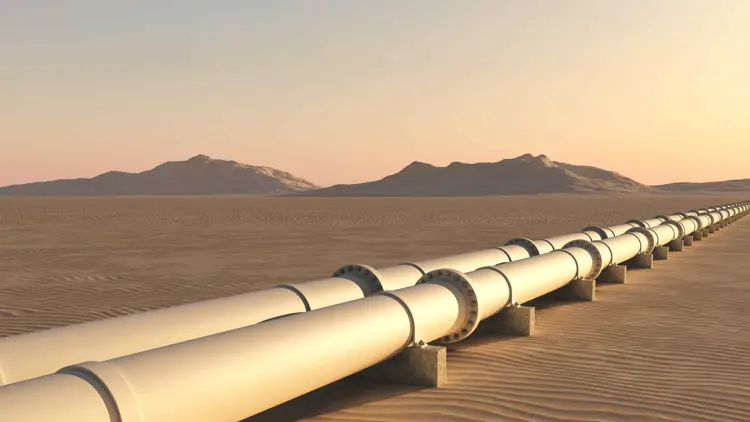
Saudi Aramco has begun cancelling and postponing crude oil shipments to refiners across Europe as the kingdom's East-West pipeline remains out of commission nearly a week following a September 10 attack, with the Red Sea export hub at Yanbu reportedly nearing dangerously low inventory levels.
Market sources indicate that at least three European refiners have already had their late-September cargo shipments either cancelled outright or pushed back to November, while two more refiners anticipate similar notices for their September deliveries. One market source warned that virtually every Saudi cargo scheduled for the last ten days of September could face disruption, estimating that Yanbu's remaining crude stockpile amounts to roughly five days' worth of supply. Aramco has not responded to requests for comment.
The pipeline at the centre of the disruption — capable of carrying 7 million barrels per day — normally transports crude from Saudi Arabia's oil-rich eastern region to the Yanbu export terminal, functioning as a vital alternative route that lets the kingdom avoid shipping through the Strait of Hormuz entirely. Tracking data from Vortexa shows no crude has left Yanbu since September 11. Meanwhile, Saudi crude exports moving through Egypt's Sidi Kerir terminal — part of the SUMED pipeline network, another alternate route — averaged 1.95 million barrels daily during the first half of September, with corresponding arrivals at Ain Sukhna averaging 1.40 million barrels per day over the same stretch.
Poland's PKN Orlen, which typically sources about 40% of its crude supply from Aramco, moved swiftly to secure alternative barrels once the disruption became apparent. The refiner has since purchased North Sea crude grades — including Grane, Johan Sverdrup and Johan Castberg — through spot market tenders, and is now also pursuing U.S. WTI Midland crude and Kazakhstan's CPC Blend. At least four tanker shipments scheduled to move crude from Sidi Kerir to Gdansk in September failed to go through as planned. Despite the turmoil, Orlen has said its refining operations in Poland, Lithuania and the Czech Republic continue to receive the feedstock they need.
Oil markets have responded sharply to the ongoing outage, with prices hovering near $108 a barrel. Brent crude closed the previous trading session at $108.75 — its highest settlement since May 19 — while U.S. West Texas Intermediate held above $105 following a 4% single-day surge. Estimates of how long repairs to the pipeline might take vary widely, ranging from days to several weeks, leaving oil traders uncertain when normal flows might resume.
This disruption arrives at a particularly fragile moment for regional oil supply more broadly. Saudi Arabia has halted crude loading operations at Yanbu altogether, Houthi forces continue posing a threat to additional export infrastructure in the region, and oil production in Libya has ground to a halt amid local unrest — all while shipping through the Strait of Hormuz remains under separate strain. One industry analyst observed that the system's capacity to absorb yet another major disruption is shrinking fast, noting that traders are now less concerned with pricing risk and more focused on whether crude oil can physically reach its intended destinations.
The fallout has extended beyond crude oil itself and into refined fuel markets, with U.S. diesel prices climbing to record highs as the strain on physical crude supply chains works its way downstream into derivative fuel products.
As of now, Aramco has not released any public timeline indicating when the East-West pipeline might be restored to full operation.
Articles similaires

World Bank Backed Fund targets solar energy projec...
09 sept., 2024 13:34
Libya oil exports plunge as NOC cancels cargoes du...
12 sept., 2024 08:31
Caterpillar introduces groundbreaking dynamic ener...
18 sept., 2024 07:42
Saudi Arabia strikes $1 bln deal as aluminum drive...
18 sept., 2024 09:03
Egypt and Petronas Discuss Expanding LNG Investmen...
19 sept., 2024 13:00
6 Regional Banks Transforming Africa’s Oil & Gas I...
20 sept., 2024 13:00
Giyani Metals advances battery-grade manganese dem...
30 sept., 2024 09:20
Middle East tensions spike oil prices, but surge w...
01 oct., 2024 07:59
Uganda receives first batch of line pipes for EACO...
01 oct., 2024 09:21