
Marchés de l’énergie

Oil prices slip to $89.78 as investors shift focus to supply flows through key Mideast chokepoints


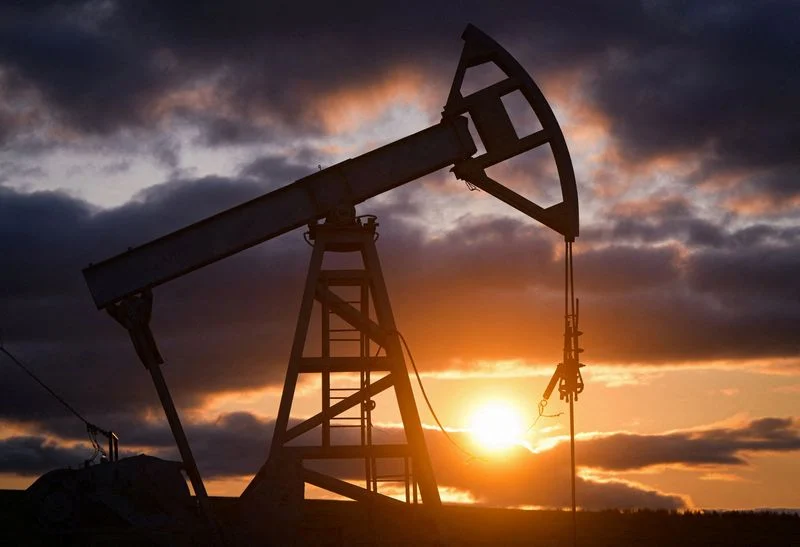
Oil prices gave back some of their earlier gains on Thursday as oil tankers continued to transit out of the Middle East despite escalating regional tensions, with the U.S.-Iran conflict expanding beyond its primary battlegrounds.
As of 4:29 GMT, Brent crude futures slipped 0.96 cents, or 1.06 percent, to $89.78 a barrel, while U.S. West Texas Intermediate (WTI) crude fell 69 cents, or 0.82 percent, to $83.77 a barrel.
The declines followed sharp gains in the previous session, when Brent surged 7.91 percent and WTI climbed 6.56 percent, marking one of the biggest rallies since the Iran conflict began. The previous session’s rebound came after Tuesday’s roughly 5 percent drop after a brief lull in fighting during the five-month war.
Oil prices fall as Red Sea traffic grows
Oil prices fell as preliminary shipping data showed that 39 commodity vessels entered the Red Sea through the Bab el-Mandeb Strait on Tuesday, the highest daily count since July 19. Meanwhile, only a limited number of ships continued to transit the Strait of Hormuz.
The Strait of Hormuz, the world’s most critical oil shipping chokepoint, previously handled around one-fifth of global oil and gas flows. However, it has remained largely blocked since the U.S.-Iran war erupted in February, despite ongoing diplomatic efforts to secure safe passage for commercial vessels.
Iran has rejected an Omani proposal for joint regional management of the Strait of Hormuz, a senior Iranian official said on Wednesday.
Meanwhile, U.S. and Saudi forces carried out airstrikes against Iran-backed paramilitary groups in Iraq, marking the first publicly acknowledged Saudi participation in U.S.-led strikes. The attacks were launched in response to drone strikes on Saudi oil facilities that were allegedly launched from Iraq.
The strikes also marked the resumption of U.S. military operations in the Middle East after President Donald Trump halted a bombing campaign over the weekend amid concerns about dwindling munitions.
U.S. crude oil inventories fall to lowest since 2018
Separately, Iran said it had targeted U.S. military bases in Jordan and attacked three tankers transiting the Strait of Hormuz via what it described as an unauthorized route. Reports also revealed that Saudi Arabia is seeking to form a coalition to safeguard shipping in the Red Sea against attacks by Yemen’s Houthi forces.
The Iran-backed Houthi group in Yemen announced on July 20 that it would impose a naval blockade on Saudi Arabia in the Red Sea, broadening its campaign against commercial tankers and opening a new front in the U.S.-Iran conflict. The move is also aimed at disrupting traffic through the Bab el-Mandeb Strait, the world’s second-most important oil shipping chokepoint.
Providing further support to oil prices, data from the U.S. Energy Information Administration showed crude oil inventories fell by 7.2 million barrels last week to their lowest level since 2018, far exceeding market expectations for a smaller draw.
The larger-than-expected decline reinforced expectations of tighter near-term oil supplies in the world’s largest crude-consuming nation.
Articles similaires

Oil prices jump over 3 percent to $84.41 as supply...
05 mars, 2026 07:30
Oil prices fall 1 percent to $84.56 as U.S. grants...
06 mars, 2026 07:40
Oil prices drop to $86.98 on report of IEA plannin...
11 mars, 2026 07:16
Oil prices surge back above $100 as Mideast tensio...
12 mars, 2026 08:07
Oil gains 9 percent this week as prices remain abo...
13 mars, 2026 07:50
Oil prices surge to $104.87 as Trump seeks naval c...
16 mars, 2026 07:48
Oil prices recoup losses, surge to $102.85 as supp...
17 mars, 2026 08:01
Oil prices contract by 2.21 percent to $101.13 fol...
18 mars, 2026 11:34
Oil prices rise to $107.34 as investors balance ge...
23 mars, 2026 08:30