Marchés de l’énergie

Oil prices rise above $90 as U.S.-Iran tensions fuel Hormuz disruption concerns


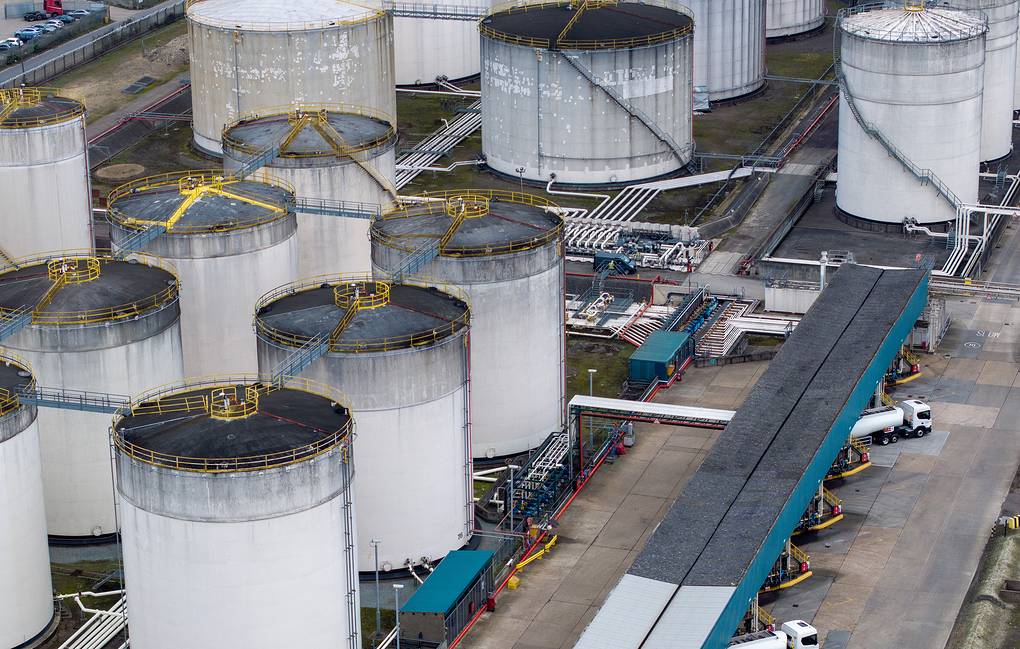
Oil prices climbed more than 2 percent on Monday to trade above $90 a barrel, as heightened tensions between the United States and Iran fueled concerns over disruptions to oil flows through the Strait of Hormuz.
As of 4:08 GMT, Brent futures rose $2.14 or 2.43 percent to $90.24 a barrel, reaching their highest level since June 11 after surging 15.9 percent last week, marking the strongest weekly advance since April.
Meanwhile, U.S. West Texas Intermediate (WTI) crude gained $1.86 or 2.25 percent to $84.35 a barrel, its highest since June 12, following a 15.5 percent jump last week, the biggest weekly increase since early March.
Oil rallies as Middle East tensions intensify
Oil prices rallied as the conflict in the Middle East intensified over the weekend, with the United States carrying out a ninth consecutive night of strikes on Iran, while Kuwait and Bahrain also reported fresh Iranian attacks.
Iran’s Islamic Revolutionary Guard Corps (IRGC) said on Monday that two oil tankers were disabled after explosions while attempting to transit what it described as an unsafe southern route through the Strait of Hormuz.
The latest developments come amid growing threats to maritime traffic in the region. Washington says it is enforcing a naval blockade on Iranian ports, while Tehran has stated it is targeting ships that violate its navigation rules in the Strait of Hormuz, a critical waterway through which roughly one-fifth of global oil trade passes.
Separately, the United Kingdom Maritime Trade Operations (UKMTO) agency reported early on Monday that a vessel was on fire northwest of Oman’s Kumzar, underscoring the heightened risks facing shipping in the region.
Hormuz shipping activity falls
Shipping activity through the Strait of Hormuz remained severely disrupted, with traffic still well below pre-conflict levels, heightening concerns over further supply disruptions and adding a larger geopolitical risk premium to oil prices.
According to LSEG data, only four vessels transited the strategic waterway on Sunday, down from eight the previous day. The data also showed that since Friday, at least three oil product tankers and one Very Large Crude Carrier (VLCC) have entered the Strait of Hormuz to load crude, reflecting the sharp slowdown in maritime traffic through one of the world’s most important energy chokepoints.
Articles similaires

Oil prices jump over 3 percent to $84.41 as supply...
05 mars, 2026 07:30
Oil prices fall 1 percent to $84.56 as U.S. grants...
06 mars, 2026 07:40
Oil prices drop to $86.98 on report of IEA plannin...
11 mars, 2026 07:16
Oil prices surge back above $100 as Mideast tensio...
12 mars, 2026 08:07
Oil gains 9 percent this week as prices remain abo...
13 mars, 2026 07:50
Oil prices surge to $104.87 as Trump seeks naval c...
16 mars, 2026 07:48
Oil prices recoup losses, surge to $102.85 as supp...
17 mars, 2026 08:01
Oil prices contract by 2.21 percent to $101.13 fol...
18 mars, 2026 11:34
Oil prices rise to $107.34 as investors balance ge...
23 mars, 2026 08:30