
Video News / Energy Other
How does a Houthi blockade in the Red Sea hit energy markets?...
An armed faction in Yemen aligned with Iran said on Monday it will impose a maritime blockade on Saudi Arabia, joining Tehran's efforts to throttle global energy markets in response to U.S. strikes.
The Houthi faction controls much of Yemen's Red Sea coastline along a narrow choke point called the Bab el Mandeb Strait, a waterway that is increasingly vital for Riyadh, which has been diverting its oil exports to Red Sea ports and away from the Strait of Hormuz.
But will the Houthi threat further constrain global energy flows?
What is the risk to energy markets?
Iran's near total blockade of the Strait of Hormuz for much of the year pushed Saudi Arabia to divert more than 70% of its normal daily crude exports to the Red Sea port of Yanbu.
Data from Kpler and Signal Ocean show shipments from Yanbu averaged 4 million barrels per day in recent weeks.
Ships from Yanbu bound for Europe go north through the Suez Canal. Those heading to Asia go south through Bab el-Mandeb.
Data show total petroleum volumes transiting Bab el-Mandeb amounted to 7.4 million bpd in June, or about 7% of global oil output.
Can the Houthis stop the ships?
It is not clear how the Houthis could impose a blockade on Saudi Arabia.
The faction is a military, political and religious movement fighting a civil war against Yemen's Saudi-backed, internationally recognized government for more than a decade.
Beginning in 2023, Houthi forces attacked and even boarded international cargo ships in what they said was solidarity with Palestinians in Gaza.
The attacks severely disrupted global shipping.
A U.S.-led mission to restore free navigation in the Red Sea involved repeated strikes on Houthi targets.
Red Sea traffic has not recovered since. Data from the Suez Canal Authority shows traffic through the waterway down at its lowest in at least 50 years.
Why target Saudi Arabia?
In their statement, the Houthis' armed forces said they were declaring "a maritime embargo against the criminal Saudi enemy, based on the equation of 'an eye for an eye', effective immediately."
They said the embargo was in response to what they called "an unjust and oppressive siege" imposed on Yemen by the Saudis.
A 2022 ceasefire between the Houthis and the Saudi-backed government had held until last week, when Yemen's internationally recognized government said it had struck Sanaa airport to stop an Iranian plane landing.
The Houthis said Saudi Arabia was responsible and in response fired missiles at Abha airport in the kingdom's mountainous southwest.
Next

Boeing predicts Africa aircraft fleet will more than double by 2045...
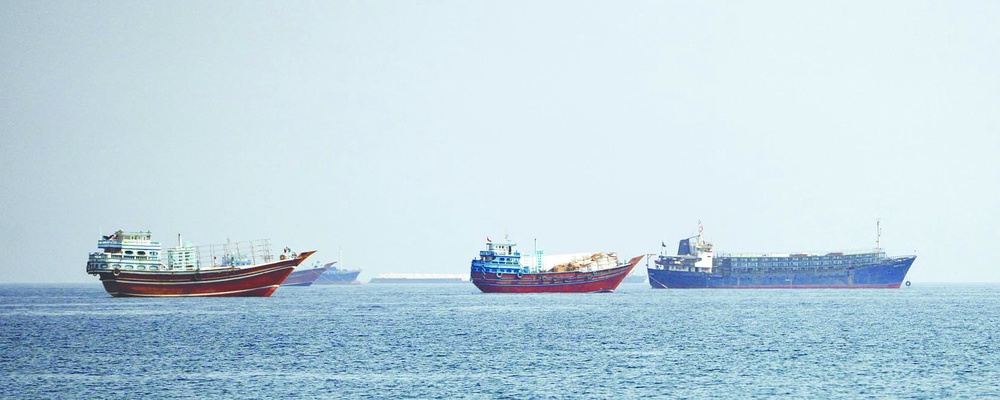
Six months into Iran war, almost half of global oil flows from war zones...
Tanzania commissions country's largest hydropower plant, boosting economic growth hopes...

Archive footage of Saudi Aramco as the company posts 44% rise in net profit...

Archive footage of Saudi Aramco as the company posts 44% rise in net profit...
Latest News

US July copper imports hit highest level on record...
04 Sep, 2026 10:56
Nigeria's Dangote says refinery IPO to open within...
04 Sep, 2026 10:50
African Rainbow Minerals profit up 19% on higher p...
04 Sep, 2026 10:43
Impala Platinum annual earnings soar on stronger m...
03 Sep, 2026 10:38
Oil prices extend gains as US and Iran trade fresh...
02 Sep, 2026 11:05
Sibanye presses ahead with first copper project as...
02 Sep, 2026 10:44
India revives talks with Zambia to invest in criti...
01 Sep, 2026 13:49
Central bank gold holdings, as per IMF data...
01 Sep, 2026 11:08
Qatar's first-quarter GDP falls 7% as Iran war wei...
01 Sep, 2026 10:27