Distribution

Ghana union, policy institute push to scrap NPA bill over BOST risk


By: OrePulse
Ghana's General Transport, Chemical and Petroleum Workers Union (GTPCWU) and the Institute of Economic Research and Public Policy (IERPP) have called on Parliament to withdraw the National Petroleum Authority (NPA) Bill, 2026, arguing that in its current form it would weaken state-owned BOST Energies Limited financially and operationally.
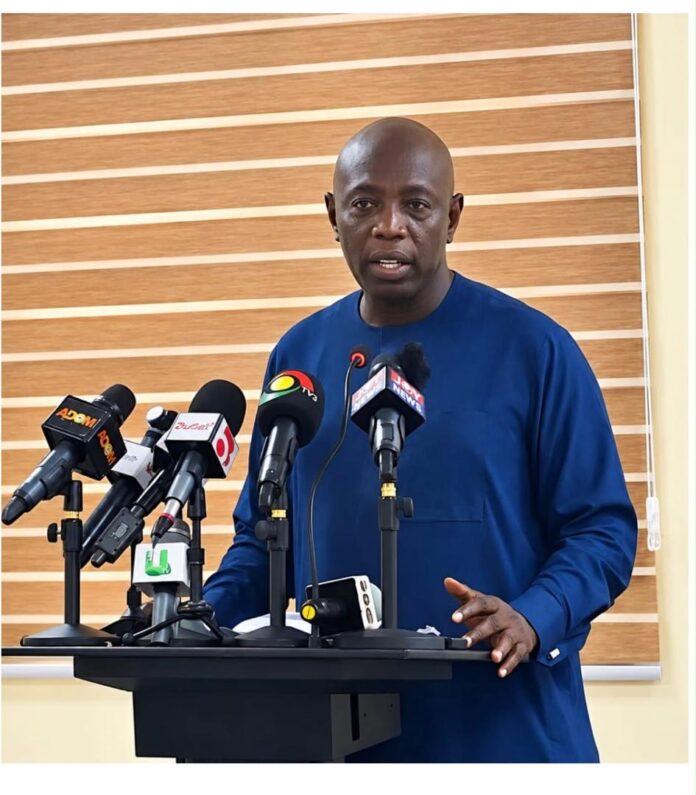
GTPCWU set out its objections in a letter addressed to the chairperson of Parliament's Energy Committee. At the same time, IERPP presented its position at a news conference held Wednesday, led by its executive director, Professor Isaac Boadi.
Both organizations warned that the measure would allow regulators to grant licenses to multiple competing depot operators, ending the current system in which one company holds sole rights to the network. They also said the bill stopped short of explicitly assigning management of strategic storage depots to BOST Energies on the government's behalf, a responsibility they said earlier NPA legislation had clearly established. The groups added that the bill would reroute the BOST margin — a fee they described as vital to maintaining and growing petroleum infrastructure — away from that purpose.
In its letter, signed by General Secretary Fuseini Iddrisu, GTPCWU said prior legislation had required the sector minister to name specific storage sites as strategic depots under BOST Energies' or another body's control on the state's behalf, a provision it said carried real institutional weight rather than being a mere formality.
"That provision was not a technicality; it was Parliament's clear and deliberate acknowledgment that BOST is the principal institution entrusted with safeguarding Ghana's strategic petroleum reserves and national fuel security," the union said.
The union warned that failing to fix this gap could leave responsibility for the country's reserves unclear, weaken investor confidence, and endanger jobs, along with the technical know-how and institutional memory built up at BOST Energies. It called on lawmakers to revise the bill before passage so that BOST Energies is explicitly named as the entity responsible for managing Ghana's strategic petroleum reserves on the government's behalf. It asked that the BOST margin be protected for that purpose rather than redirected elsewhere.
IERPP said it welcomes tighter rules for Ghana's fuel distribution sector and does not believe any government-owned body deserves a pass from scrutiny. However, the think tank argued the bill risked leaving BOST Energies responsible for national fuel security while stripping away some of the financial and operational levers it needs to fulfill that role.
The think tank asked how the state company could keep its finances sound if newly licensed rivals lure away profitable business while BOST Energies alone continues paying to maintain infrastructure the nation relies upon.
"This is not a technical or bureaucratic quibble; it goes to the heart of national fuel security and the protection of a public asset," IERPP said.
The institute urged lawmakers to pull the NPA Bill, 2026 back for renewed consultation with industry stakeholders and a rewrite, citing dangers it saw to BOST Energies' autonomy, its financial footing, and its ability to guard the nation's fuel security. It urged that BOST Energies retain primary authority over procurement, storage, rotation, release, and replenishment of strategic reserves, and pressed for steady, ring-fenced financing for reserve infrastructure so the company does not have to underwrite a national-security duty out of its own commercial earnings. It also proposed steering the BOST margin toward reserve upkeep and infrastructure needs, including building new depots.
Articles similaires
Gas disruptions in Middle East send prices soaring...
03 mars, 2026 13:47
Saudi Energy board proposes $773m dividend for 202...
03 mars, 2026 13:58
Nigeria Regulator Orders Power Distributors to Ref...
06 mars, 2026 08:25
Diesel markets, upended by Middle East conflict, t...
11 mars, 2026 08:09
SAA on guard as Middle East tensions threaten fuel...
11 mars, 2026 11:58
Africa’s Longest Oil Pipeline Nears Completion as ...
12 mars, 2026 08:38
Shell, TotalEnergies and others declare FM to thei...
12 mars, 2026 09:21
Egypt aims to boost oil, gas output with horizonta...
12 mars, 2026 09:37
Iran Warns of $200 Oil Prices Amid Escalating Gulf...
13 mars, 2026 08:12