Métaux de base

Copper's Congo panic says more about copper than Congo


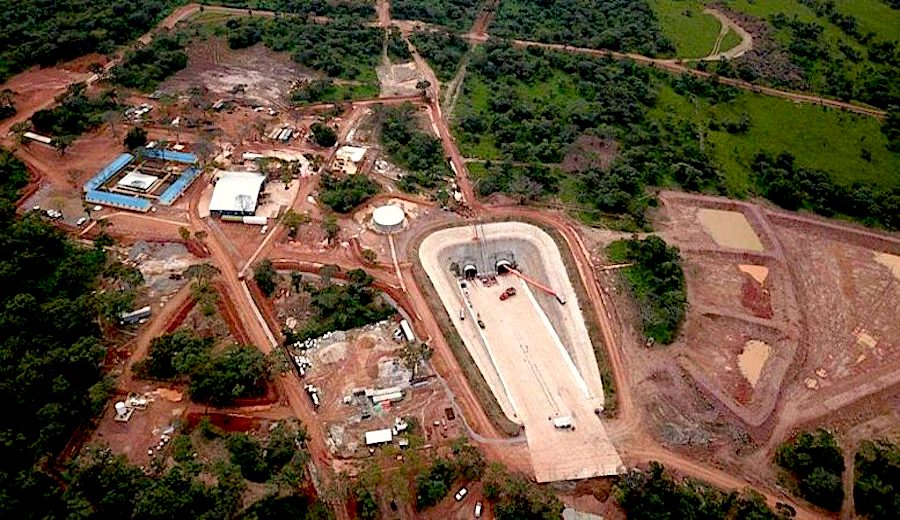
Doctor Copper suffered a panic attack last week after the Democratic Republic of Congo banned exports of copper and cobalt concentrates with immediate effect.
London Metal Exchange (LME) three-month copper CMCU3 leapt to a six-month high of $14,369.50 per metric ton on the news. As spreads simultaneously tightened, the cash price CMCU0 hit an all-time high of $14,453.60 per ton.
The CME cobalt price, however, did not react at all, even though Congo is the world's largest supplier of the battery metal. Indeed, cash cobalt OCBc1 closed Friday at $25.99 per lb, down by 0.9% on the week.
The cobalt market's indifference is easily explained. Congo doesn't export cobalt concentrates, but rather cobalt hydroxide, an intermediate product which is already subject to export quotas.
Congo also exports relatively little copper concentrate, focusing instead on refined metal. Moreover, Kinshasa has banned copper concentrate exports on three previous occasions, with repeated exemptions softening the impact on miners.
The real news here is not Congo's long-standing ambition to move down the value chain, but copper's acute sensitivity to any sign of supply disruption.
TIGHTENING THE SCREWS
Congo's rich copper deposits lend themselves to electrowinning, meaning most operators can convert what they mine straight to metal. On-site refined copper production accounted for 82% of the country's total output last year, according to analysts at StoneX.
But Kinshasa has made no secret of its desire to process the balance of concentrate output itself.
The first two export bans in 2013 and 2019 failed for the simple reason that Congo didn't have any large-scale smelting capacity. Rolling waivers allowed concentrate export flows to continue.
The country got its first modern smelter in 2020 thanks to investment by China's state-owned mining company CNMC and Yunnan Copper 000878.SZ. The Lualaba smelter can process 400,000 tons of concentrate per year, but this is still insufficient to cover Congo's mined concentrate production.
The 2023 export ban therefore also came with waivers, particularly for the giant Kamoa-Kakula mine complex, a joint venture between Ivanhoe Mines IVN.TO and Zijin Mining Group 601899.SS, which began production in 2021.
The quid pro quo was Ivanhoe's commitment to build a new smelter, which it has done. The massive 500,000-ton-per-year plant came online last year and has operated at 60% of design capacity since February, the company said in its second-quarter results.
It's noticeable that China's imports of copper concentrate from Congo slumped by 31% year-on-year in the first half of 2026.
As the smelter ramps up further, Congo's processing gap should close. Just in case it doesn't, the latest ban includes the option of "strategic" waivers.
SUPPLY SENSITIVITY
The latest export ban will have "no material impact" on global copper market balances, according to Goldman Sachs.
However, it will tighten an already stressed raw materials market, which has seen smelter processing fees turn negative amid fierce competition for copper concentrate.
The smelter squeeze is a running leitmotif for copper bulls, hence the outsize reaction to last week's news.
The sensitivity to any supply-side disruption is most acute on the London market, which is caught between China's pull on metal and the even stronger gravitational force emanating from the U.S., thanks to the continuing threat of import tariffs.
LME copper stocks have slumped from 401,000 tons in early May to 214,550 tons, with 58% held as cancelled warrants awaiting physical load-out from exchange warehouses.
Another 138,408 tons of copper are sitting in LME off-warrant storage, but 79% of this shadow stock is located at U.S. ports, ready to pass through customs if the CME delivery premium over the LME widens further.
The tension on the London market is manifest in tightening time-spreads.
While the outright copper price has retraced from last week's highs, the benchmark cash-to-three-month time-spread CMCU0-3 has tightened further. The cash premium reached $171 per ton on Monday, the widest it's been since October last year.
If LME stocks continue to drain away both eastwards and westwards, Doctor Copper's panic attack is unlikely to be the last.
(The opinions expressed here are those of Andy Home, a columnist for Reuters.)
Enjoying this column? Check out Reuters Open Interest (ROI), your essential new source for global financial commentary. Follow ROI on LinkedIn, and X.
And listen to the Morning Bid daily podcast on Apple, Spotify, or the Reuters app. Subscribe to hear Reuters journalists discuss the biggest news in markets and finance seven days a week.
London Metal Exchange copper curve tightens https://tmsnrt.rs/4zcozhS
(Writing by Andy Home;Editing by Marguerita Choy)
Articles similaires

Iran conflict disrupts China's Middle East steel e...
03 mars, 2026 08:26
Emirates Global Aluminium's annual profit rises as...
03 mars, 2026 08:42
Tumas Uranium Project technically ready for develo...
03 mars, 2026 11:56
PDAC: Secure uranium sources key to fixing supply ...
04 mars, 2026 10:42
DRC Mining Week Returns to Africa’s Largest Copper...
04 mars, 2026 11:38
URU begins ground-based geophysical programme at S...
05 mars, 2026 07:48
MMG eyes copper deals as profit more than triples...
05 mars, 2026 08:46
Atomic Eagle increases uranium resources by 24% at...
06 mars, 2026 09:10
Iron-ore extends rally on surging energy, rising f...
09 mars, 2026 08:08