Autres (mines)

Middle East Tensions Put Africa’s Oil and Gas Back on the Global Radar


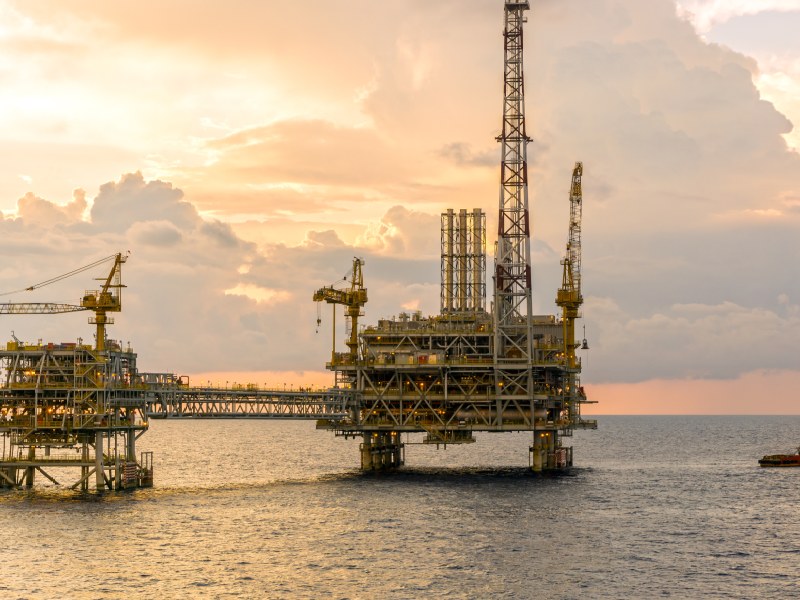
The ongoing conflict involving Iran, the United States and Israel has sent shockwaves through global energy markets. Attacks on oil infrastructure and partial closures of the Strait of Hormuz – a chokepoint historically carrying roughly 20% of global oil flows – have pushed crude briefly above $115 per barrel and injected fresh volatility into global markets.
For African producers, this creates a structural advantage. West and North African exports are largely insulated from the conflict, meaning barrels from Nigeria, Angola, Gabon, Algeria and Libya are viewed as lower-risk alternatives. Buyers in Europe, China and India increasingly value this “risk‑discounted” supply: lower insurance premiums, reliable logistics and fewer geopolitical interruptions make African crude and LNG attractive relative to Gulf benchmarks.
Historically, similar dynamics have played out during sanctions cycles or conflicts in the Middle East. European refiners pivoted toward West African grades such as Nigeria’s Bonny Light and Angola’s Girassol when Iranian and other Gulf barrels faced restrictions or elevated premiums. North African producers, including Algeria and Libya, also benefit from proximity to Mediterranean markets, offering complementary grades for refiners seeking diversity and stability. Recent trading activity in Libya has attracted Western traders including Vitol, Trafigura, and TotalEnergies, as reported by Reuters, reflecting broader diversification trends.
African LNG is also in focus. The continent supplied roughly 70 million tons in 2025, with production projected to rise toward 120 million tons by 2035. Projects such as Congo LNG illustrate that African gas can be deployed quickly to meet growing global demand, providing buyers with alternative sources that don’t rely on Persian Gulf transit.
Not all African producers are equally positioned. Countries with established regulatory frameworks, strong national oil companies and reliable export infrastructure – notably Nigeria, Angola and Equatorial Guinea – are best placed to capture incremental demand. Emerging frontier markets may struggle to respond quickly, emphasizing the importance of predictable policy, midstream capacity and investment readiness.
The current dynamics also highlight the strategic value of Africa’s ongoing upstream licensing and development programs. Angola’s deepwater projects, Libya’s 2026 licensing round and Nigeria’s investment incentives under the Petroleum Industry Act all present opportunities to scale production sustainably while locking in long-term contracts. These measures could allow African producers to capture a durable share of global flows amid Middle Eastern uncertainty.
The strategic takeaway? Higher oil prices and risk‑discounted supply are not a silver bullet. Africa will not suddenly replace Gulf volumes. But these factors are reshaping the continent’s energy landscape, redirecting capital toward African oil and gas projects and creating a window for longer-term upstream and LNG development that strengthens both domestic and global energy security.
Articles similaires
Endeavour announces transaction in own shares...
10 sept., 2024 07:27
Ivanhoe Mines Announces MOU with Government of Zam...
10 sept., 2024 12:24
Feasibility Study on Lumwana Super Pit Expansion E...
12 sept., 2024 14:21
Endeavour achieves commercial production at BIOX e...
13 sept., 2024 08:20
Roscan Gold Announces Changes to the Board of Dire...
16 sept., 2024 10:40
Minerals Council pays tribute to Pravin Gordhan...
16 sept., 2024 12:17
Notification of an acquisition of beneficial inter...
18 sept., 2024 08:39
Newmont on track to get at least $2 billion from a...
18 sept., 2024 10:49
UAE firm plans to invest $500m in Tanzania...
19 sept., 2024 08:37