Autres (mines)

Africa's critical minerals moment: Sovereignty or a scramble for control?


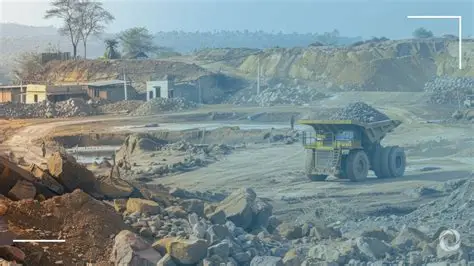
Africa is home to many of the critical minerals that the world’s superpowers are fighting over in their efforts to drive global energy and technological transition. However, as Africa’s refining capacity is almost non-existent, producing countries have no choice but to export raw materials and reimport finished products at much higher costs.
The surging demand for critical minerals has handed African producers unprecedented leverage. Yet, leverage alone does not guarantee prosperity. Turning mineral wealth into domestic processing, skilled employment and industrial growth requires funding, deliberate policy choices and regional coordination. Can Africa ensure all of this? Will it manage to break a cycle that goes back to colonial times while navigating pressure from both Beijing and Washington?
Why critical minerals matter now
Global demand for critical minerals is accelerating as clean-energy technologies, battery storage, electric vehicles and digital infrastructure expand. The International Energy Agency predicts that mineral demand for clean energy technologies will nearly triple by 2030 and quadruple by 2040. A single electric vehicle, for instance, requires roughly six times more mineral inputs than a conventional combustion-engine car. Defense modernization and advanced technologies, from AI to 5G, further intensify the urgent need.
Both the production and processing of critical minerals are heavily dominated by China. The U.S. has been struggling to keep pace, diversifying its partners as much as possible. Heavily reliant on Chinese processing, the European Union is forging new partnerships to meet the 65% supply diversification target under its Critical Raw Materials Act.
After Beijing banned certain critical mineral exports to the United States in December 2024, Washington promised multi-billion-dollar investments to several African countries, seeking access to the continent’s cobalt and copper that power everything from AI and electric vehicles to advanced weapons.
Africa as a mineral battlefield for China, U.S. and EU
Approximately 30% of the world’s mineral wealth is concentrated in Africa. The Democratic Republic of Congo (DRC) produces around 70% of global cobalt, South Africa accounts for 75% of platinum group metals, Guinea holds about 25% of global bauxite reserves, and Zambia and the DRC remain major copper producers. Zimbabwe and Namibia are emerging as lithium suppliers as global battery demand accelerates.
China’s dominance in Africa has not been an overnight success. Over two decades, Beijing secured influence through infrastructure-for-minerals deals worth billions of dollars. Although Chinese companies currently control just 6-8% of Africa’s total mining output by value, they control roughly 41-50% of African cobalt production, including 15 of the DRC’s 19 cobalt operations, and approximately 30% of copper production.
The real battle is no longer over who owns the resources, but who controls their processing, infrastructure and value chain.
The U.S. is entering the race 20 years later, relying on offtake agreements rather than ownership by securing future supply in exchange for financing and guarantees.
“This is the U.S. deploying financial firepower rather than industrial presence,” Vincent Rouget, analyst at Control Risks, told Reuters. Washington formalized this approach in its Strategic Partnership Agreement with the DRC in December 2025, linking mineral access to governance reforms and export infrastructure.
Since 2023, the EU has pursued Africa’s critical minerals through a policy-driven approach under the Critical Raw Materials Act and the Global Gateway initiative, signing strategic partnerships with the DRC, Zambia, Namibia, Rwanda, and South Africa to support local processing, sustainable mining, and infrastructure, thereby offering an alternative to Chinese dominance.
Infrastructure competition is also intensifying. China is funding a US$1.4 billion upgrade of the TAZARA railway that will connect Zambia and the DRC to Tanzania’s Dar es Salaam port.
Global powers are investing billions across Africa, but leverage without strategy risks becoming another missed historic opportunity.
Meanwhile, westward, the U.S. and EU-backed US$6.1 billion Lobito Corridor to Angola’s Atlantic port, scheduled for completion by 2030, has been designed to bypass Chinese-linked routes.
Can Africa move up the critical minerals value chain?
Despite its mineral wealth, Africa captures only a fraction of the economic value generated. The continent holds 55% of global cobalt reserves but less than 1% of its clean energy technology value, while fewer than 5% of critical minerals are refined locally. Overall, Africa captures roughly 10% of the value added across the mineral export chain.
However, several governments are now pushing back against raw-export dependency.
South Africa signed a landmark framework agreement with China in February 2026 that is designed to secure investment for domestic industrial projects and prevent minerals from being exported without delivering meaningful benefits.
Zimbabwe has banned raw lithium exports, forcing companies such as China’s Huayou Cobalt to build US$400 million processing plants locally.
At least 13 African countries, including Tanzania, Ghana, and Malawi, have enacted similar export restrictions since 2023 to encourage domestic processing.
The economic payoff is considerable. The Publish What You Pay model estimates that refining resources could add up to US$24 billion to Africa’s GDP and create 2.3 million new jobs.
Yet there are serious challenges. Mineral processing is energy-intensive, capital-heavy, and technologically demanding. Many producing countries face unreliable electricity, skills shortages, and weak regulatory frameworks.
Export bans and fiscal incentives alone are insufficient, the International Institute for Sustainable Development has warned. Stable legal frameworks, modern infrastructure, reliable energy, and domestic markets capable of absorbing the refined products are equally essential.
Leverage or a lost decade?
The growing global competition for minerals has given African governments negotiating power, but it has also exposed divisions between national interest and continental coordination.
At the Mining Indaba 2026, tensions surfaced over how countries should approach foreign partnerships. Debates centered on whether bilateral deals undermine broader African bargaining power or represent pragmatic diversification. South Africa noted that it was a strategic imperative for Africa to speak with one voice, and called for a continental strategy on critical minerals, warning against narrow-interest bilateral deals.
The core dilemma, analysts explain, is not choosing between partners, but ensuring that agreements, regardless of origin, strengthen domestic industries rather than perpetuate raw material extraction.
Opportunity or lost cycle?
Africa’s mineral moment represents both opportunity and risk. If governments prioritize value addition, infrastructure, and skill training, the continent could transform mineral wealth into manufacturing capacity and technological leadership. If not, history may repeat itself: exporting raw resources while importing finished goods at higher costs, remaining rich in minerals but poor in industrial power.
Articles similaires
Endeavour announces transaction in own shares...
10 sept., 2024 07:27
Ivanhoe Mines Announces MOU with Government of Zam...
10 sept., 2024 12:24
Feasibility Study on Lumwana Super Pit Expansion E...
12 sept., 2024 14:21
Endeavour achieves commercial production at BIOX e...
13 sept., 2024 08:20
Roscan Gold Announces Changes to the Board of Dire...
16 sept., 2024 10:40
Minerals Council pays tribute to Pravin Gordhan...
16 sept., 2024 12:17
Notification of an acquisition of beneficial inter...
18 sept., 2024 08:39
Newmont on track to get at least $2 billion from a...
18 sept., 2024 10:49
UAE firm plans to invest $500m in Tanzania...
19 sept., 2024 08:37