
Sea

When Both Ends of the Red Sea Corridor Go Dark: Yanbu's Pipeline Outage Meets a Widening Houthi Foothold


By: OrePulse
Middle East shipping routes are facing compounding pressure after two vessel attacks over the weekend, a Saudi pipeline shutdown following a drone strike, and further Houthi advances along Yemen's Red Sea coast.
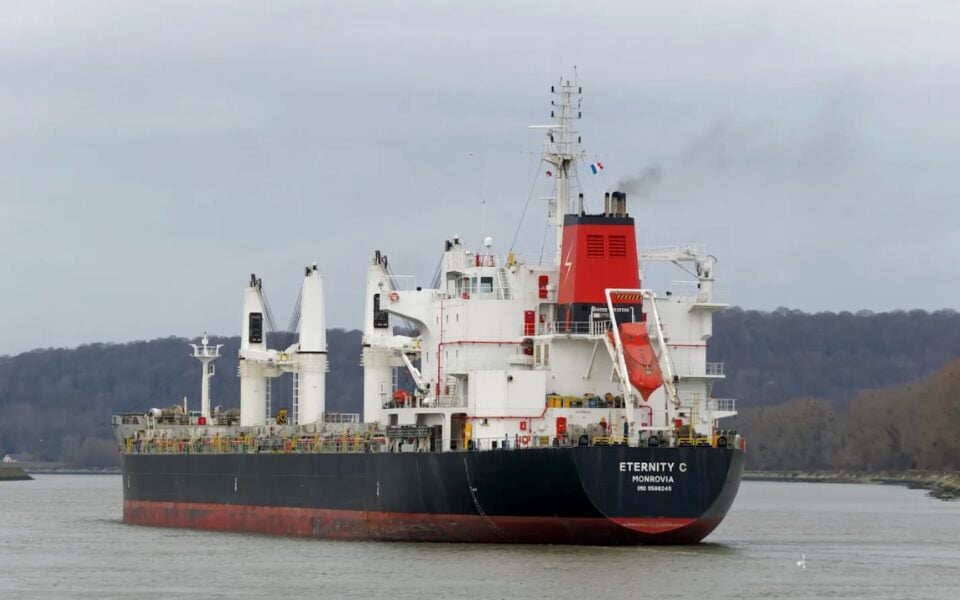
Two ships came under fire on Sunday. Off the coast of Oman, gunfire struck the Panama-flagged product tanker El Gaia (47,999 dwt); one Indian crew member is still missing, though the other 13 people on board reached safety. Separately, near Iran's Qeshm and Hengam islands, an unidentified Iranian containership was hit by a projectile, killing one person and injuring several others, according to Iranian officials.
A drone strike on Friday disabled a pumping station on Saudi Arabia's East-West pipeline, a 1,200-kilometer system that normally carries roughly 4 million barrels of crude a day — about 4% of global supply — to the export terminal at Yanbu on the Red Sea. Saudi authorities shut the pipeline down entirely in response. Industry sources say Yanbu's existing crude reserves can sustain exports for only five to seven more days, and estimates for restoring the pipeline range from days to five or six weeks.
Meanwhile, Iran-backed Houthi fighters have pushed deeper into Yemen's Bab el-Mandeb corridor, seizing ground on Perim Island (also known as Mayun) after already taking the port of Mokha and the town of Dhubab on the mainland. Together, these gains give the group meaningfully tighter leverage over one of the world's most heavily trafficked shipping chokepoints, linking the Red Sea to the Gulf of Aden. The Houthis have said commercial vessels can still pass safely, while keeping their existing ban on ships flagged to Saudi Arabia in place.
A meeting scheduled for Monday in Oman, where Gulf states and Iran were expected to discuss safe-passage terms through the Strait of Hormuz, has been postponed with no new date announced.
The overlapping disruptions at Hormuz and Bab el-Mandeb — the two narrow passages through which most of the region's seaborne oil and container cargo must move — raise the risk of compounding costs and insurance exposure for vessel owners and charterers working the region. Both chokepoints have weathered periodic attacks in recent years, but a pipeline outage, direct vessel strikes, and a Houthi territorial push arriving within days of each other point to a broader, overlapping risk period rather than an isolated flashpoint.
For tanker operators, losing pipeline throughput to Yanbu could force more Saudi crude back through the Strait of Hormuz just as that route grows riskier — a combination likely to push freight rates and war-risk insurance premiums higher. Container and general cargo carriers already rerouting around the Cape of Good Hope to avoid the Red Sea now have even less reason to expect a near-term return to Suez Canal transits, given the Houthis' expanding grip on the Bab el-Mandeb approaches.
With the Oman talks on hold, no active diplomatic channel is currently working toward a safe-passage arrangement at Hormuz, even as risk there is climbing in step with events in the Red Sea. And with Yanbu's crude buffer limited, any further delay in pipeline repairs — or a new disruption elsewhere along Gulf shipping lanes — would leave exporters with increasingly few alternative routes to reach international markets.
Related Articles
Mawani, Sultan Logistics to build logistics zone i...
03 Mar, 2026 08:39
AD Ports Group confirms business continuity across...
04 Mar, 2026 12:04
AD Ports says rerouted maritime traffic may lift v...
04 Mar, 2026 12:07
Aqaba port maintains operations as cargo vessels d...
04 Mar, 2026 12:43
All Jebel Ali terminals are operating normally...
06 Mar, 2026 09:06
Kuehne+Nagel holds top sea freight rank in 2025...
06 Mar, 2026 10:48
War-risk cover for Gulf shipping may take months t...
06 Mar, 2026 10:58
CMA CGM posts $54.4bn revenue despite volatile shi...
09 Mar, 2026 08:58
DP World handles multi-country shipments for T20 W...
10 Mar, 2026 09:32