Base Metals

How the DRC Is Reshaping a U.S. Supply Chain Long Dominated by Others


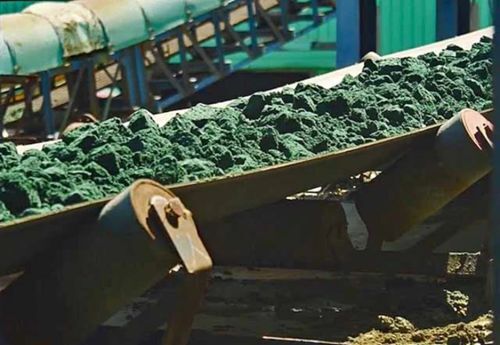
Entreprise Générale du Cobalt (EGC) announced on Wednesday May 13, 2026, that it was in talks with EVelution Energy to establish a cobalt supply chain between the Democratic Republic of Congo and the United States. The initiative is designed to meet up to 40% of U.S. demand for the metal and is one of several partnerships emerging in recent months that could strengthen the DRC’s position as a supplier to the United States.
Norway, Finland and Canada among top suppliers
Cobalt is a critical metal used in electric vehicles, defense and aerospace industries. The United States still relies heavily on imports to meet domestic demand. According to the U.S. Geological Survey (USGS), only 300 tonnes of cobalt were mined in the country in 2025. As in 2024, the leading suppliers were Norway, Finland, Canada and Japan, which together accounted for roughly 70% of imported volumes. The origin of the remaining 30% was not specified.
Those imports include several products across the cobalt value chain, including refined cobalt metal, cobalt oxides and cobalt sulfate. Among those suppliers, only Canada has significant primary cobalt production, while Norway, Finland and Japan mainly act as refining hubs.
Meanwhile, the DRC, the world’s largest cobalt producer with 73% of global supply last year according to the USGS, was absent from that list of suppliers. It was also absent in 2023, when a more detailed breakdown of U.S. import sources identified other African countries, including Zambia, Morocco and Madagascar.
The DRC, an increasingly sought-after supplier
U.S. interest in Congolese cobalt supplies intensified in 2025, a year during which Congolese cobalt exports were largely concentrated in January and February while an export embargo was in place. According to Congolese mining statistics, the United States alone imported 1,103 tonnes of cobalt in February. That shift came before the two countries signed a mining partnership in December, under which the EGC initiative is being developed.
Under the agreement, EGC would supply cobalt hydroxide to provide feedstock for a processing plant currently under construction in Arizona by EVelution Energy. EGC is a state-owned company created in 2019 to hold a monopoly over the purchase, processing and export of cobalt from artisanal mines. The volumes targeted under the partnership have not yet been specified, although EGC has been allocated quotas of 1,775 tonnes for 2026 and 5,640 tonnes for 2027 under the system introduced after the embargo was lifted.
U.S. interest in Congolese cobalt is not limited to the public sector. In April, U.S. company Virtus Minerals finalized its acquisition of Chemaf SA, operator of the Etoile and Mutoshi copper and cobalt mines in the DRC. The company described the transaction as a strategic step aimed primarily at supplying the U.S. market. Once fully optimized, the two sites could together produce around 20,000 tonnes of cobalt annually, according to Chemaf.
Separately, Orion Critical Minerals, a consortium established last year with backing from Washington, also plans to acquire a 40% stake in Glencore’s Mutanda and Kamoto mines.
Several hurdles remain
For Washington, strengthening its presence in one of the world’s main cobalt-producing regions represents a strategic opportunity to diversify supply sources. The push also reflects a broader geopolitical objective, as Western powers seek to reduce China’s dominance in critical minerals. The stakes are particularly high given that China remains the main destination for Congolese cobalt, supplying its refining industry, the world’s largest.
Whether the announced initiatives will materialize remains uncertain. From the proposed transaction with Glencore to the partnership under discussion with EGC, the projects still depend on final binding agreements. For Virtus Minerals, the challenge now lies in delivering on commitments to restart Chemaf SA’s operations. A budget of $700 million has been mentioned for that purpose, although the financing structure remains unclear, as trade publication Bankable recently noted.
The coming months should show whether U.S. ambitions in Congolese cobalt can result in long-term supply deals and ultimately reshape the global balance of supply for this strategic metal.
Related Articles
Guinea weighs bauxite export quotas as prices slid...
17 Mar, 2026 07:31
Cobalt shortages driven by Congo curbs seen lastin...
18 Mar, 2026 12:31
Orion to pay final R14.74m for a controlling inter...
19 Mar, 2026 08:39
KoBold Metals targets early-2030s copper output at...
19 Mar, 2026 08:44
Algeria begins construction of Oued Amizour zinc-l...
19 Mar, 2026 11:04
Bahrain’s Alba shuts 19% of aluminum capacity as H...
19 Mar, 2026 11:42
Botswana Minerals to raise £1.15m, makes board cha...
23 Mar, 2026 12:27
Jubilee reports delay in Molefe Phase 1 drilling r...
24 Mar, 2026 13:09
Rio Tinto expects Resolution Copper mine to open b...
25 Mar, 2026 08:48