Mining Other

Beneficiation drive bears fruit as mineral export earnings soar


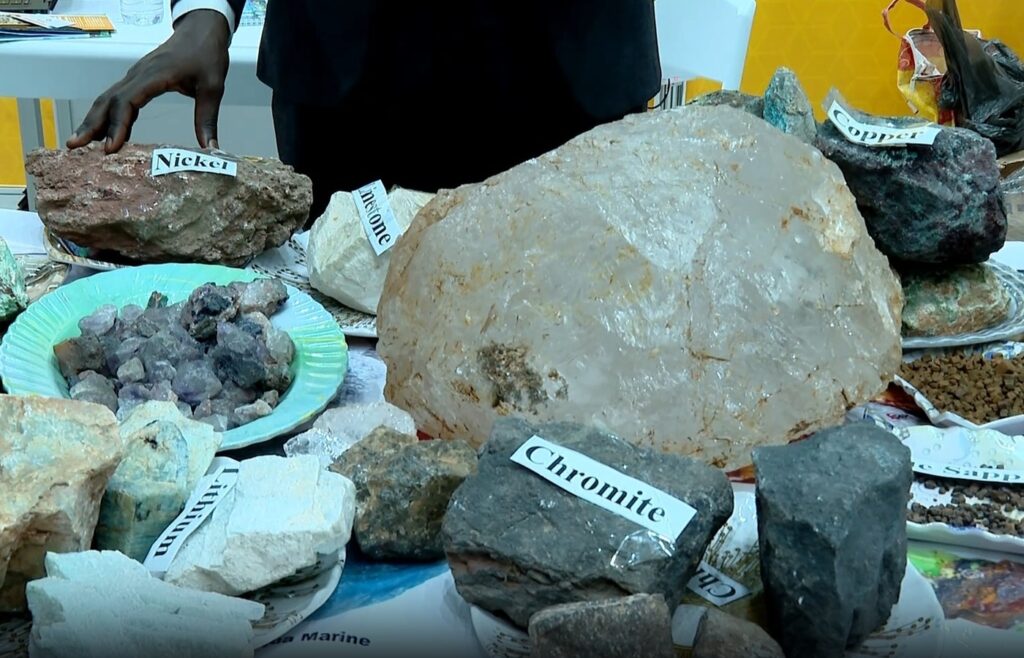
The Government’s policy thrust of moving beyond raw mineral extraction and embracing local value addition is yielding significant dividends, with the country recording a substantial increase in export earnings and achieving major processing milestones across key sectors.
Aritifical Inteligence usesAritifical Inteligence uses
Officially opening the Chamber of Mines of Zimbabwe Annual Mining Conference in Victoria Falls yesterday, the Minister of Mines and Mining Development, Polite Kambamura, declared that the era of simply exporting raw ores and concentrates is over, replaced by a new chapter focused on industrialisation and transformation.
“Our beneficiation strategy is therefore founded on a simple principle: local value creation beyond extraction,” Minister Kambamura said.
He cited the lithium subsector as a prime example, saying the Government has progressively moved from restricting raw ore exports towards promoting downstream processing.
This strategy has already produced tangible results.
He highlighted the recent historic shipment of battery-grade lithium sulphate by Prospect Lithium Zimbabwe as a landmark achievement not just for the country but for the entire African continent.
This milestone demonstrates that beneficiation is achievable where policy certainty, investor commitment, and Government support converge.
The impact of this value-addition drive is clearly reflected in national mineral export data.
The first quarter of 2026 saw mineral sales reach nearly US$1 billion, with export values surging by 79 percent, driven largely by a 106 percent increase in lithium export earnings. This was achieved despite a marginal increase in export volumes, proving that value, not volume alone, must drive the mining sector’s future, as per the Minister’s directive.
Minister Kambamura emphasised that Zimbabwe is positioning itself not merely as a supplier of raw materials for the global energy transition, but as an active player in the entire value chain.
“Zimbabwe is not going to be a spectator but an active player in the entire matrix,” he said.
The country boasts the largest hard-rock lithium deposits in Africa and hosts the world’s third-largest platinum group metals resource base, providing a strategic advantage for developing downstream industries.
The gold sector, the backbone of Zimbabwe’s mining industry, is also transforming. With the country targeting to surpass 50 tonnes of gold production in 2026, significant strides are being made to curb leakages and enhance formalisation.
The licensing of a second gold refinery in Bulawayo is a critical step in this direction, aimed at easing pressure on the state-owned Fidelity Gold Refinery and bolstering the country’s capacity to process its gold domestically.
Furthermore, the Minister reaffirmed the Government’s commitment to creating a stable and predictable regulatory environment.
He noted that the reservation of small-scale gold mining operations for locals is not anti-investment but clarifies participation frameworks while preserving vast opportunities for foreign investment in large-scale mining, beneficiation, and infrastructure.
“The future of Zimbabwe’s mining industry lies not only beneath our soil, but in our policies, our partnerships, our innovation, our discipline and our collective determination to convert geological wealth into sustainable national development,” Minister Kambamura said.
Related Articles
Endeavour announces transaction in own shares...
10 Sep, 2024 07:27
Ivanhoe Mines Announces MOU with Government of Zam...
10 Sep, 2024 12:24
Feasibility Study on Lumwana Super Pit Expansion E...
12 Sep, 2024 14:21
Endeavour achieves commercial production at BIOX e...
13 Sep, 2024 08:20
Roscan Gold Announces Changes to the Board of Dire...
16 Sep, 2024 10:40
Minerals Council pays tribute to Pravin Gordhan...
16 Sep, 2024 12:17
Notification of an acquisition of beneficial inter...
18 Sep, 2024 08:39
Newmont on track to get at least $2 billion from a...
18 Sep, 2024 10:49
UAE firm plans to invest $500m in Tanzania...
19 Sep, 2024 08:37