Mining Other

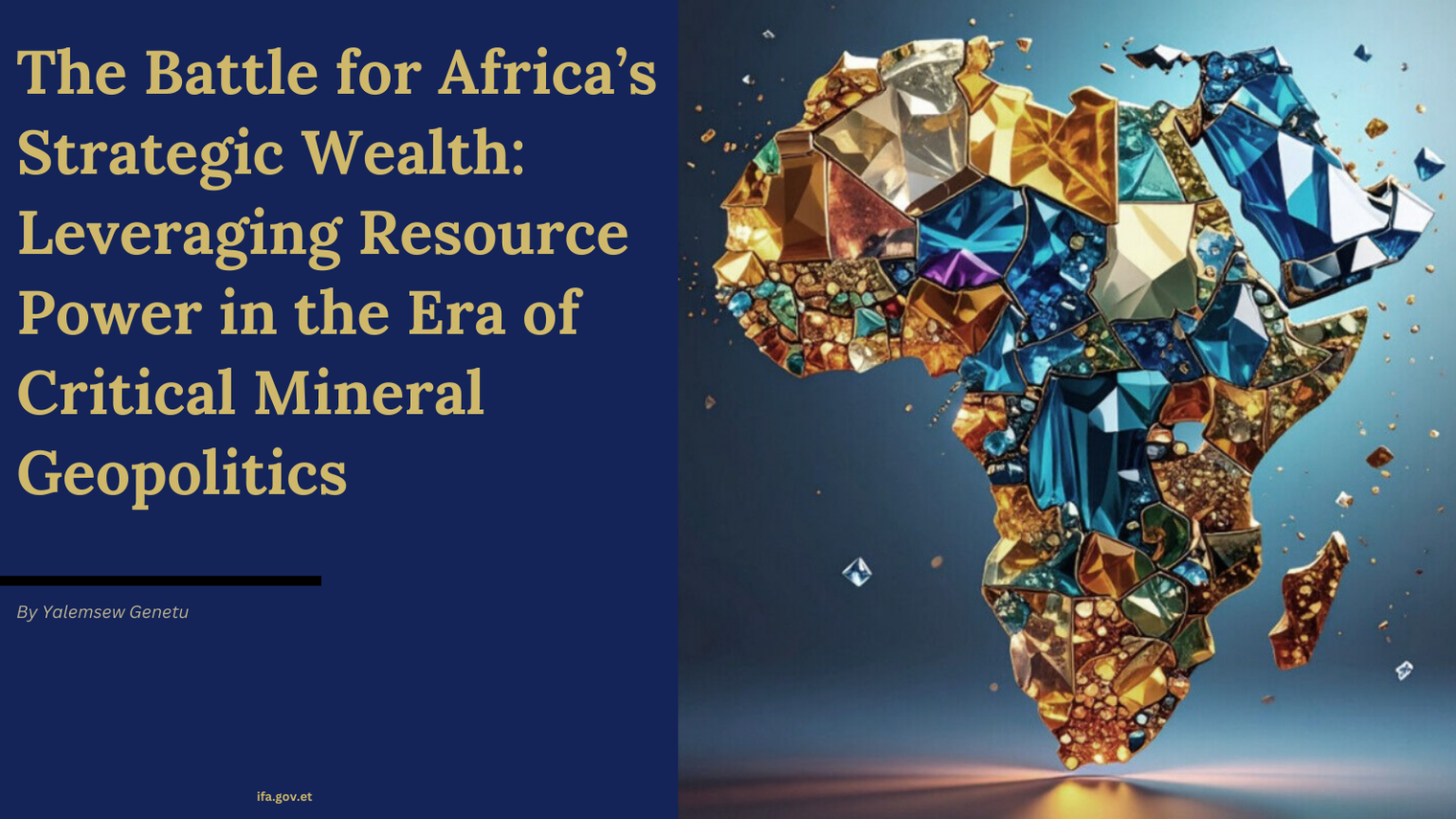
The Battle for Africa’s Strategic Wealth Leveraging Resource Power in the Era of Critical Mineral Geopolitics


FDRE Institute of foreign affairs
The global shift toward artificial intelligence and green technologies is driving unprecedented demand for critical minerals such as lithium, cobalt, graphite, and rare earth elements. Africa, holding about 30% of the world’s mineral reserves—including dominant shares of manganese, platinum, chromium, and cobalt—is positioned at the forefront of this transformation. As demand for these minerals is projected to surge by at least 500% by 2050, Africa's resources are becoming central to the global energy transition and technological race.
This strategic importance has intensified geopolitical competition, with major powers like the United States, China, the European Union, and Japan deepening engagement through infrastructure investments, mineral partnerships, and diplomatic initiatives. The U.S. is advancing projects like the Lobito Corridor and forming bilateral agreements to reduce reliance on Chinese supply chains, while China continues to dominate processing capacity and infrastructure development through initiatives like the Belt and Road. Meanwhile, the EU and Japan are also securing partnerships to ensure access to raw materials.
For Africa, this heightened interest presents a crucial opportunity to leverage its mineral wealth for greater diplomatic influence, economic development, and local value addition. Countries like Zimbabwe, Namibia, the DRC, and Zambia are already implementing policies to restrict raw mineral exports and promote domestic processing. To maximize benefits, African nations must strengthen governance frameworks, negotiate favorable terms with international partners, and channel investments into local refining and manufacturing. By doing so, the continent can transform its resource wealth into sustainable development and secure a influential role in the global political economy.
Related Articles
Endeavour announces transaction in own shares...
10 Sep, 2024 07:27
Ivanhoe Mines Announces MOU with Government of Zam...
10 Sep, 2024 12:24
Feasibility Study on Lumwana Super Pit Expansion E...
12 Sep, 2024 14:21
Endeavour achieves commercial production at BIOX e...
13 Sep, 2024 08:20
Roscan Gold Announces Changes to the Board of Dire...
16 Sep, 2024 10:40
Minerals Council pays tribute to Pravin Gordhan...
16 Sep, 2024 12:17
Notification of an acquisition of beneficial inter...
18 Sep, 2024 08:39
Newmont on track to get at least $2 billion from a...
18 Sep, 2024 10:49
UAE firm plans to invest $500m in Tanzania...
19 Sep, 2024 08:37